
Artificial intelligence is often associated with futuristic robots, self-driving taxis, and technology that feels years away from everyday life. Yet for millions of drivers, AI is already part of the daily journey.
From helping you stay in your lane on the motorway to automatically adjusting your speed in heavy traffic, artificial intelligence is quietly working behind the scenes. In many cases, you are probably using AI-powered features every day without even realising it.
As technology evolves, the role of AI in car development is becoming central to the driving experience. Manufacturers are investing heavily in smarter vehicles, safer driving systems, and more personalised experiences. While fully autonomous cars still face practical hurdles, there is no doubt that AI is changing the way we navigate the roads today.
Let’s take a closer look at how AI is already influencing the roads around us.
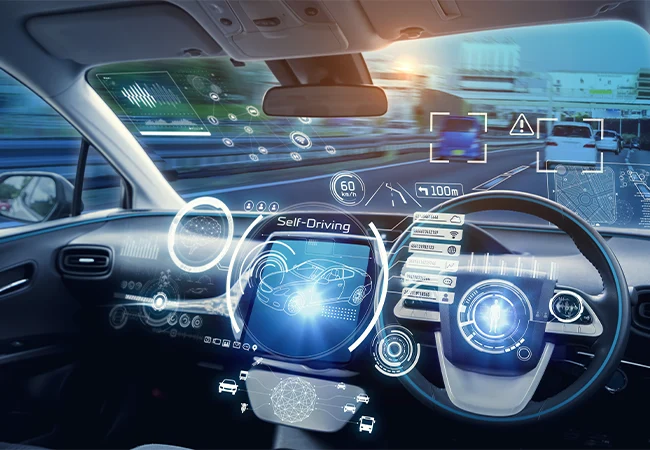
From Cruise Control to Copilot: How AI Already Lives in Your Car
The idea of an AI car may sound futuristic, but many vehicles on UK roads already rely on machine learning and smart sensors.
One of the most common examples is adaptive cruise control. Unlike traditional cruise control, which simply maintains a fixed speed, adaptive systems use cameras, radar, and sensors to monitor traffic ahead. The vehicle automatically slows down or accelerates to maintain a safe, consistent distance from other road users.
Lane keeping assistance is another familiar feature. By analysing road markings in real time, the system detects when a vehicle begins to drift and gently guides it back into position. For drivers tackling long motorway journeys, this technology significantly reduces fatigue.
Traffic sign recognition, automatic emergency braking, and intelligent speed assistance are also becoming standard across both premium and mainstream models. These systems constantly gather and process information from the vehicle’s surroundings, helping you make better decisions and react more quickly to potential hazards.
In many ways, vehicle technology has already evolved from a luxury convenience into a trusted driving companion.
The Safety Net You Never Notice: AI and Accident Prevention
Every second behind the wheel involves countless micro-decisions. Drivers must judge speed, distance, road conditions, and the unpredictable behaviour of other road users.
Official data shows that human error contributes to roughly 88% of all road accidents—a figure that vehicle manufacturers are actively trying to slash using predictive AI.
Automatic emergency braking (AEB) is a prime example of this safety net. If the system detects an imminent collision and the driver fails to react, it applies the brakes automatically. This technology has dramatically reduced low-speed, rear-end shunts in urban environments.
Driver monitoring technology is also becoming highly sophisticated. Many modern vehicles now use interior cameras to identify signs of driver fatigue, distraction, or micro-sleeps. If the system detects unusual eye movement or steering patterns, it issues an audible alert encouraging you to take a break.
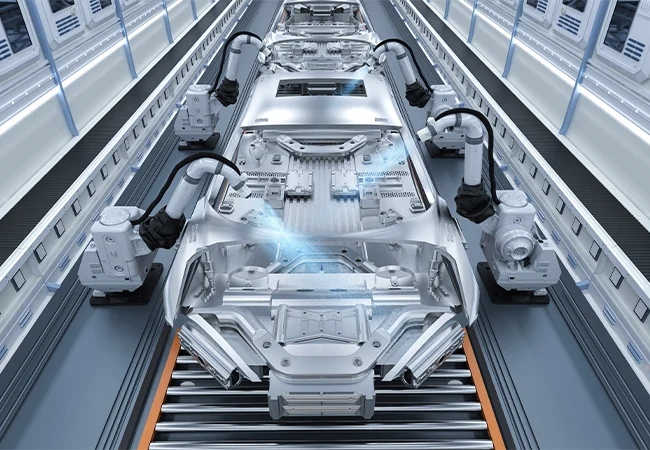
Getting Smarter Every Mile: How Cars Learn From the Road
Modern vehicles are essentially computers on wheels, allowing manufacturers to improve systems long after a car has left the showroom floor.
Many new vehicles receive over-the-air (OTA) software updates, much like smartphones. These updates don’t just fix bugs; they can optimise electric battery efficiency, sharpen safety algorithms, and introduce entirely new infotainment features.
By analysing vast amounts of anonymous driving data across thousands of vehicles, AI can identify trends and improve performance. For example:
- Electric vehicles (EVs) learn your personal driving style to provide highly accurate, realistic range estimates.
- Adaptive suspension can log frequent potholes or rough roads to automatically soften the ride next time you pass through.
- Navigation systems use real-time fleet data to suggest routes before traffic jams even form.
The Self-Driving Reality in 2026
Few topics generate as much excitement—and confusion—as self-driving vehicles.
For years, headlines suggested that fully autonomous cars were just around the corner. The reality in 2026 is far more nuanced. While autonomous technology has made staggering progress, consumer cars still require an attentive driver.
The UK’s ground-breaking Automated Vehicles Act has officially set the legal framework for safe deployment, including strict new laws in 2026 that prevent car brands from marketing vehicles as “self-driving” unless they are fully certified to travel without human intervention.
Most consumer vehicles currently operate at Level 2 automation. This means the car can handle steering and speed simultaneously in specific environments (like motorways), but you remain legally responsible and must keep your hands on or near the wheel. AI works best right now as a brilliant co-driver, rather than a replacement driver.
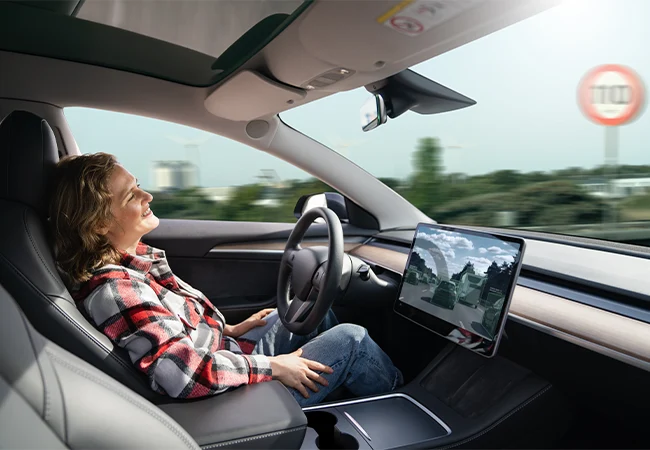
Your Car as a Personal Assistant: AI Beyond the Wheel
Artificial intelligence is transforming how you interact with your car’s cabin just as much as how it handles the road.
Voice assistants have evolved past rigid, pre-programmed commands. Thanks to natural language processing, you can simply say, “I’m cold,” or “Find me a coffee place nearby,” and the car will adjust the climate control or rewrite your navigation seamlessly.
Personalisation has also gone digital. Vehicles can now recognise individual drivers via their smartphones or key fobs, instantly adjusting seat positions, mirror angles, climate preferences, and favourite playlist settings before you’ve even fastened your seatbelt.
Road Bumps Ahead: The Challenges Still Facing AI
Despite the impressive progress, the automotive industry still faces key hurdles:
- Edge Cases: AI systems perform exceptionally well in standard conditions, but blinding rain, faded road markings, and erratic human behaviour can still test the limits of optical sensors.
- Data Privacy: Connected vehicles generate gigabytes of data every hour. Ensuring this data is securely handled, anonymised, and protected against cyber threats remains a top priority for regulators.
- Infrastructure: For vehicles to fully communicate with the road networks, the UK requires consistent updates to digital mapping, smart traffic signals, and 5G connectivity.
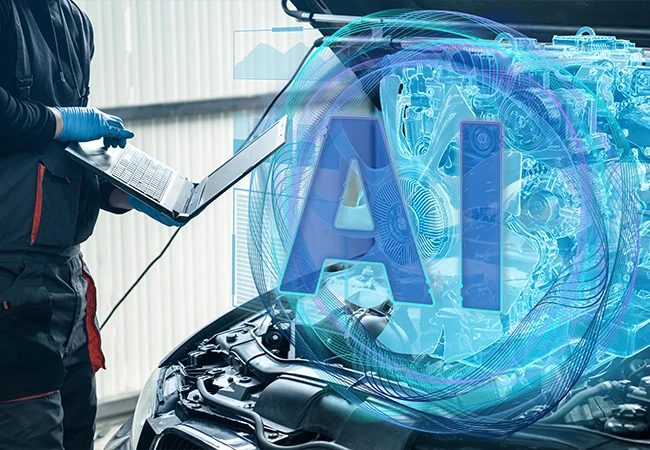
The Next Ten Years: What Driving Will Actually Look Like
Looking ahead, the future of driving is a gradual evolution rather than a sudden revolution.
We are moving toward a world where AI-powered safety systems are standard on even the most affordable entry-level cars. Predictive maintenance will become normal—your car will look ahead, identify a component that is wearing out, and communicate with your local dealership to order the part before a breakdown ever happens.
The future isn’t a world where human driving is banned. Instead, it will be an environment where the tedious, stressful parts of driving—like sitting in gridlocked traffic or parking in tight spaces—are safely managed by technology, leaving you to enjoy the open road.
Discover the Future of Driving with Stoneacre
AI is already reshaping the driving experience in ways many of us barely notice. From advanced safety systems to cabins that adapt to your exact preferences, intelligent technology is making motoring safer and more relaxed.
If you’re curious about how the latest innovations feel from the driver’s seat, explore the latest smart-tech equipped models at Stoneacre. You might be surprised by just how much intelligent technology is already waiting for you behind the wheel.
*Images are for illustrative purposes only.