
The hard shoulder is one of the most misunderstood parts of motorway driving in the UK. Many drivers are unsure when it’s legal to use it, whether they can stop briefly, and how the rules have changed with the rise of smart motorways.
For some, it’s simply “that bit on the left you’re not allowed to drive in”. For others, it feels like a spare lane during heavy traffic. The truth sits firmly between those ideas — and misunderstanding it can lead to fines, penalty points, or serious danger.
In this guide, we’ll clearly explain what the hard shoulder is, when you can (and absolutely cannot) use it, and how to stay safe if you ever need to stop there.
What Is a Hard Shoulder?
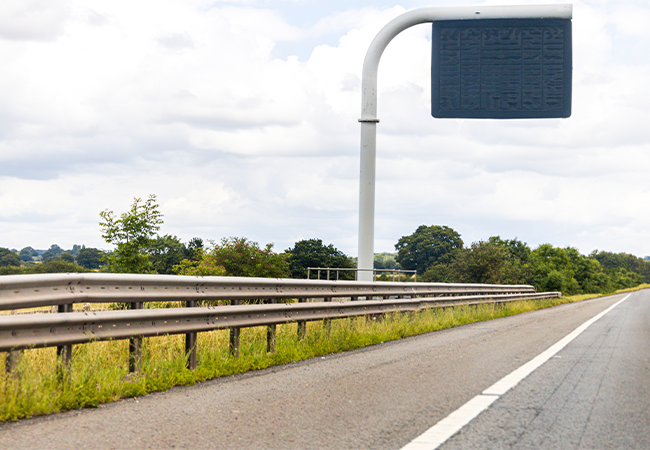
A hard shoulder is the emergency lane that runs along the left-hand side of a motorway. It is separated from the main carriageway by a solid white line and is not part of the normal running lanes.
You’ll usually recognise it by:
- A solid white line marking its boundary
- Reflective road studs (often red on the left edge)
- Slightly different surface texture
- Emergency roadside telephones placed at regular intervals
If you’re interested in how motorway markings and reflective studs guide drivers at night, our guide to road studs and “cat’s eyes” explains more about how they work.
Unlike normal lanes, the hard shoulder is not for general traffic use. It exists solely for emergencies and authorised vehicles.

Why Is It Called a Hard Shoulder?
The term “hard shoulder” comes from road construction terminology.
The “shoulder” refers to the strip at the edge of a road that supports the carriageway structure. On motorways, this section is built with a hardened surface capable of bearing the full weight of vehicles — even heavy goods vehicles — in an emergency.
This contrasts with a “soft verge”, which is typically grass or compacted soil and cannot safely support vehicles. Without a properly constructed hard shoulder, broken-down vehicles would be forced onto unstable ground, creating greater danger and damaging the road edge.
In short, it’s called “hard” because it is structurally reinforced — designed to carry traffic weight when absolutely necessary.
Which Motorways Have a Hard Shoulder?
Not all motorways now operate in the same way.
Traditional Motorways
Traditional motorways have a permanent hard shoulder running continuously along the left side. It is always present and is never used as a standard traffic lane.
If you’re brushing up on motorway rules generally, our full guide to motorway driving in the UK covers lane discipline and safety advice.
Smart Motorways (All Lane Running)
Some sections of UK motorway — known as All Lane Running (ALR) smart motorways — do not have a permanent hard shoulder. Instead, the hard shoulder has been converted into a live traffic lane.
On these roads:
- There is no continuous hard shoulder
- Emergency Refuge Areas (ERAs) are placed at intervals
- Overhead gantries display lane control signals
You can read more about how these operate in our guide to smart motorways.
Understanding the difference is vital, as the advice for breakdowns changes depending on the motorway type.
What Is the Hard Shoulder Used For?
The hard shoulder is primarily for:
- Broken down vehicles
- Road traffic accidents
- Medical emergencies
- Serious vehicle faults
It is also used by:
- Emergency services (ambulance, fire, police)
- Police pulling vehicles over
- National Highways traffic officers
Crucially, it is not an extra lane, unless overhead signs specifically indicate that it is temporarily open to traffic (this happens on some smart motorways with dynamic hard shoulder systems).
If there are no signals instructing you to use it — you must not drive in it.
When Should I Use the Hard Shoulder?
The Clear Rule: You should only use the hard shoulder in a genuine emergency. That means when continuing to drive would be unsafe or could cause further danger.
Common Questions Answered:
Can I stop for a rest?
No. Use a service station or leave the motorway.
Can I change drivers?
No. Plan driver changes at services or after exiting.
Can I check directions?
No. Pull off the motorway safely.
Can I change a wheel?
Only if absolutely unavoidable and you cannot safely reach the next exit. Motorway hard shoulders are extremely dangerous places to carry out repairs. If in doubt, call for recovery.
Can I use my mobile phone
Yes, in an emergency — but it is safer to use the roadside emergency telephone where possible.
If your vehicle is still drivable, it is almost always safer to continue slowly to the next exit or service station rather than stopping on the hard shoulder.
Emergency Telephones on Motorways
Motorway emergency phones are placed approximately every mile along the hard shoulder.
They are safer than mobile phones because:
- They connect directly to National Highways
- They automatically pinpoint your exact location
- Operators can immediately arrange assistance
If you have the option, use the emergency phone instead of relying solely on your mobile.
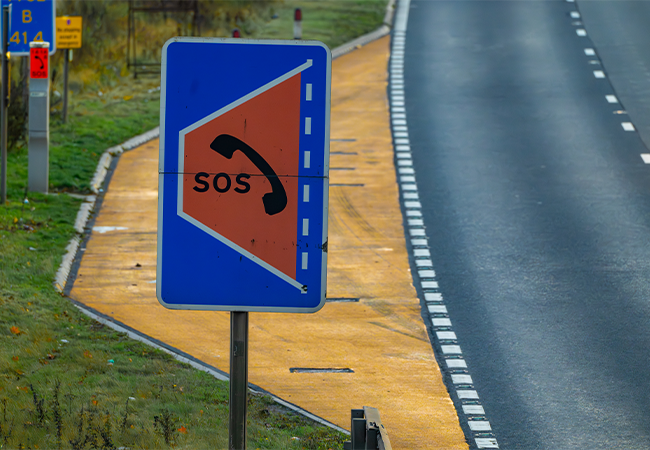
| How to Use the Hard Shoulder Safely | What to Do If You Break Down on the Hard Shoulder | How to Use an Emergency Phone on the Motorway |
|---|---|---|
| – Indicate left and move over smoothly. – Stop as far to the left as possible. – Turn your front wheels to the left. – Switch on your hazard warning lights. – Exit the vehicle via the passenger side if safe. – Ensure all passengers exit on the left side. – Stand well behind the safety barrier. – Call for assistance. | – Pull over safely as described above. – Switch on hazard lights immediately. – Exit safely and stand behind the barrier. – Use the emergency roadside phone if possible. – Wear a high-visibility jacket if you have one. – Keep pets inside the vehicle if removing them is unsafe. – Do not attempt roadside repairs unless absolutely necessary. | – Walk facing oncoming traffic. – Follow the marker posts (with arrows pointing to the nearest phone). – Lift the receiver — it connects automatically. – Clearly explain your situation. – Return to a safe position behind the barrier. |
| Never remain sitting in the vehicle on the hard shoulder unless you cannot exit safely. | Motorway traffic travels at high speed, and even stationary vehicles on the hard shoulder are at risk from drifting drivers. | Stay well away from the carriageway while waiting. |
How to Rejoin the Motorway After Breaking Down
Only rejoin when it is completely safe to do so.
- Build up speed on the hard shoulder first.
- Use your indicators early.
- Wait for a large enough gap in traffic.
- Merge confidently but cautiously.
If you cannot safely build up enough speed to merge, call for assistance instead of attempting to force your way into traffic.
What If I Break Down on a Motorway Without a Hard Shoulder?
On smart motorways without a permanent hard shoulder, you should:
- Move to an Emergency Refuge Area (ERA) if possible.
If you cannot reach one:
- Stay inside your vehicle.
- Keep your seatbelt fastened.
- Call 999 immediately.
- Look for Red X signals on overhead gantries and follow instructions.
Smart motorway breakdown procedures differ significantly, and we’ll cover Emergency Refuge Areas in more detail in a dedicated guide.
The hard shoulder exists to save lives — but only when used correctly.
It is not a convenience lane, a rest stop, or a place for minor adjustments. Understanding when and how to use it properly could prevent serious accidents and keep you within the law.
Whether you’re driving on a traditional motorway or navigating a smart motorway system, knowing the rules around the hard shoulder ensures you stay safe, confident, and fully in control on every journey.