
When the British summer finally decides to show up, the mood of the entire nation instantly lifts. Windows go down, sunglasses go on, and we immediately start planning a great escape to the nearest beach or countryside pub. We pack the boot with picnics and windbreakers, completely ready to enjoy the rare sunshine. However, while you are busy applying the sunscreen, your car is silently sweating under the bonnet.
Most drivers naturally assume that the true automotive villain is winter. We vividly picture frozen windscreens, icy roads, and dead engines on frosty January mornings. Yet, breakdown professionals across the UK regularly see a massive surge in callouts during a proper summer heatwave. The reality is that extreme heat throws a massive spanner in the works for two of your vehicle’s most vulnerable components: the battery and the tyres.

Can hot weather mess with car batteries?
It sounds completely counterintuitive, does it not? We always blame the frost when our cars refuse to start. However, winter usually just delivers the final blow to a battery that was already cooked and compromised by the previous summer.
Inside that plastic box under your bonnet is a delicate chemical soup made of water and sulphuric acid. When the temperature outside climbs to 30 degrees Celsius, the temperature under your bonnet can easily skyrocket to over 60 degrees Celsius. This creates a literal pressure cooker environment for your electrical system.
This extreme heat acts as an unwanted accelerator for the internal chemical reactions. While a warm battery might initially feel quite energetic, this hyperactive state speeds up internal corrosion. This process permanently degrades the internal lead plates.
Even worse, the liquid electrolyte solution inside the battery begins to evaporate in high temperatures. Once that liquid drops, the tops of the internal plates are exposed to the air, causing them to dry out and fail. The heat is effectively boiling your battery from the inside out.
How long should a car battery last in a hot climate?
In the traditionally mild and rainy UK climate, a healthy car battery can comfortably last between three and five years. However, if our summers continue to break records, or if you take your vehicle on extended road trips through scorching Mediterranean climates, you need to recalibrate your expectations.
In a consistently hot climate, the average lifespan of a car battery drops down to just two or three years. Think of it like a smartphone battery that is constantly left sitting in direct sunlight on a windowsill. The constant thermal stress acts like an absolute fast-forward button for the battery’s ageing process. Every single day of intense baking removes a few more weeks from its ultimate lifespan.
What are common signs of a dying battery?
Batteries are surprisingly dramatic when they are on their last legs, provided you know how to read the signs. They rarely just stop working without dropping a few major hints beforehand.
- The Lazy Crank: When you turn the key or press the start button, the starter motor sounds like it is dragging itself out of bed on a Monday morning.
- Dimming Lights: Your headlights or dashboard displays look remarkably dim when you are waiting at a red light, only to brighten up slightly when you press the accelerator.
- The Bloated Look: An overheated battery can actually warp, causing the plastic casing to look bloated, swollen, or strangely misshapen.
- The Rotten Egg Odour: If you smell a severe plumbing disaster under the bonnet, your battery is likely venting toxic gas because it has been cooked past its limit.
How to fix an overheated battery?
If you suspect your battery has suffered a severe case of heatstroke, you must treat it with extreme caution. An overheated battery is a volatile box of hot acid and flammable gases, so this is not the time for amateur mechanics.
First, pull over safely away from traffic, turn off the engine, and lift the bonnet to let the trapped heat dissipate into the air. Let the car sit completely undisturbed for at least an hour to cool down.
If you have an older, non-sealed battery, a mechanic can technically top up the cells with distilled water. However, the vast majority of modern cars use completely sealed, maintenance-free units. If a modern battery has warped, bloated, or died due to heat damage, it is fundamentally broken. You cannot revive it with a magic trick. While a jump-start might get you to the nearest garage, the battery must be replaced immediately before it ruins your car’s expensive alternator.

How to protect a car battery from heat?
Fortunately, you do not need an engineering degree to shield your vehicle from the worst of the summer sun. A few simple habits can make a massive difference.
Whenever you are parking up, seek out the shade like a heat-seeking missile. Look for multi-storey car parks, residential garages, or the shadow of a large building. If you absolutely must park in an open car park, try to park with the rear of the vehicle facing the sun. This keeps the direct glare off your windscreen and prevents the engine bay from acting like a greenhouse.
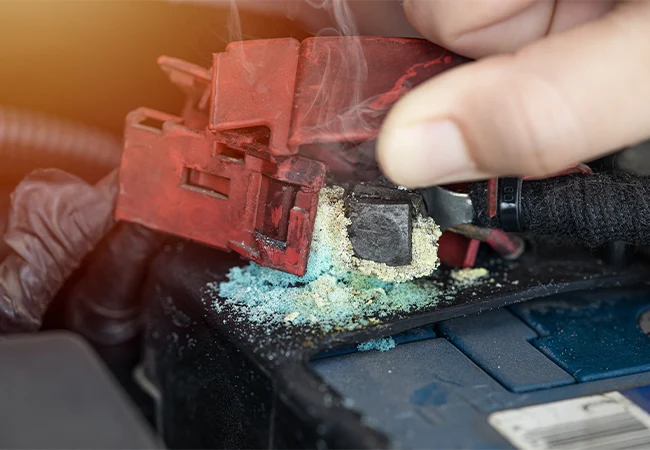
Regular cleaning also pays huge dividends. Pop the bonnet and check for any crusty, powdery white or green deposits around the battery terminals. This buildup creates electrical resistance, forcing the battery to work much harder and generate even more internal heat. A quick wipe with a stiff brush can keep things running smoothly.
The EV exception: What about electric cars?
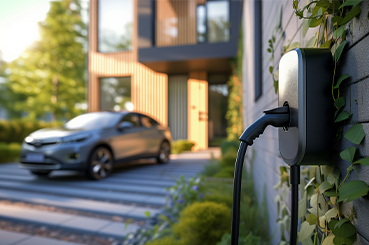
Electric vehicles handle the summer heat quite differently to traditional petrol and diesel cars. You do not have to worry about a standard starter battery boiling over, and most modern EVs come equipped with a clever Battery Management System (BMS). This system constantly monitors the temperature and actively cools the battery pack when things get too toasty, meaning your car has its own built-in defence mechanism.
Even so, intense summer heat does alter performance in a few ways that every EV driver should know about.
Here is what you might notice when the British summer peaks:
- A slight drop in range: High temperatures affect how efficiently the battery cells discharge their energy. On a particularly scorching day, you might see a small dip in your estimated range, which typically sits around a 5% to 10% drop during extreme UK heatwaves.
- Slower rapid charging speeds: To protect itself from permanent degradation, an EV battery will restrict the rate at which it accepts electricity if the cells are already running hot. If you are planning a long motorway road trip that relies on rapid charging stops, it is wise to build a little extra time into your travel schedule.
- The heavy toll of air conditioning: Unlike a petrol car, an EV pulls power for the climate control directly from the main traction battery. Blasting the AC on a hot afternoon will have a much more noticeable impact on your available mileage than it would during a mild spring day.
- Pre-conditioning is your secret weapon: If your vehicle has a cabin pre-conditioning feature, make sure to use it. Activating the cooling via your smartphone app while the car is still plugged into your home charger is a total game-changer. It cools the interior using grid power rather than draining your battery, allowing you to start your journey with a maximum charge and a chilled cabin.
Ultimately, the core rules of summer motoring still apply to electric car owners. Keep your tyre pressures in check, park in the shade whenever you can, and if you ever spot an unusual battery warning light or a sudden, unexplained plunge in your range, get it checked out by a specialist garage right away.
Does hot weather affect car tyres?
While your battery is baking away under the bonnet, your tyres are dealing with an entirely different kind of summer hell. They are quite literally where the rubber meets the road, and during a heatwave, that road is scorching.
Dark tarmac behaves like a giant radiator, absorbing the sun’s rays until the road surface temperature is vastly higher than the actual air temperature. As your tyres roll over this sizzling surface at 70 miles per hour on the motorway, the internal friction creates an incredible amount of extra heat.
This extreme thermal energy softens the rubber compound of your tyres. While warm rubber is great for track cars needing maximum grip, sustained overheating causes the tyre structure to break down. The rubber can begin to dry out, leading to microscopic cracks along the sidewall. These hidden structural weaknesses are precisely what cause sudden, terrifying tyre blowouts when you are cruising down the motorway.
Is it normal to lose tyre pressure in hot weather?
This is one of the most common misconceptions among British motorists. People often notice their tyres looking a bit strange in the summer and assume they are losing air. In reality, the laws of physics cause the exact opposite to happen. Hot weather makes tyre pressure rise, not fall.
Air expands when it gets hot. For every 5.5 degrees Celsius increase in the ambient temperature, the pressure inside your tyres will naturally shoot up by roughly one PSI (pound per square inch).
If you set your tyre pressures on a cool morning, and then embark on a long journey on a scorching afternoon, your tyres can easily become dangerously over-inflated. This reduces the footprint of the tyre, meaning less rubber is actually gripping the road. It ruins your braking performance, alters your steering feel, and causes the centre of the tyre tread to wear out incredibly fast.
The deadly summer tyre paradox: Under-inflation
While hot weather naturally increases tyre pressure, the absolute biggest danger in summer comes from starting your journey with under-inflated tyres.
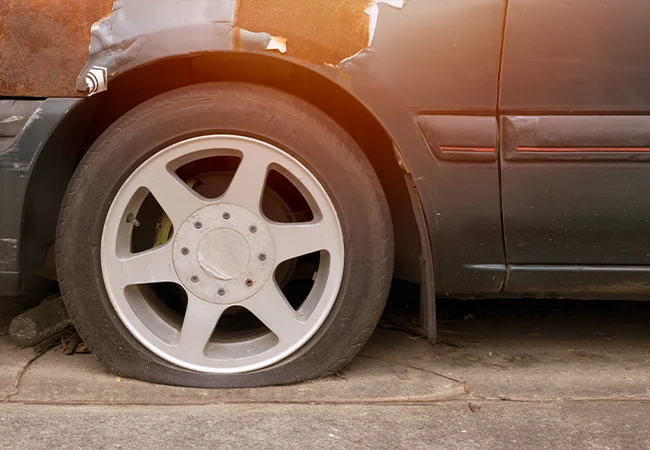
When a tyre does not have enough air inside, its sidewalls flex and bend drastically as it rolls along the road. This constant, heavy flexing creates an immense amount of internal friction and heat. When you combine this internal heat with a road surface that is already baking in the sun, the tyre quickly reaches a critical breaking point. An under-inflated tyre will overheat far quicker than a correctly inflated one, making it the primary cause of dramatic summer blowouts.
Don’t forget the hidden tyre in the boot
While you are busy checking the four tyres on the road, do not forget about the forgotten spare tyre tucked away beneath your boot floor. The inside of a car boot can become an absolute oven in the summer. This trapped heat can cause the spare tyre to degrade and lose pressure silently over time. The last thing you want is to suffer a blowout on the motorway, only to discover your spare tyre is completely flat and perished from the heat.
Simple steps for summer tyre care
To keep your rubber in top shape, you just need a quick checklist:
- Check when cold: Always check your tyre pressures first thing in the morning before the car has been driven. Checking them right after a long motorway drive will give you a completely false, artificially high reading.
- Never vent hot tyres: Never let air out of a hot tyre just because the pressure looks high on a pressure gauge. If you do, you will end up with dangerously under-inflated tyres once the evening rolls around and the air inside cools down.
- Inspect the tread and sidewalls: Keep a close eye on your tread depth, ensuring it is well above the legal UK minimum of 1.6 millimetres, and look out for any unusual lumps, bumps, or cracks on the sidewalls.
A brilliant British summer is something to be celebrated, not feared. You do not need to leave your car locked away in a dark garage until autumn arrives. By keeping a close eye on your tyre pressures first thing in the morning, remembering to check your spare, and listening out for any warning signs from your battery, you can easily outsmart the heatwave. A tiny bit of preventative care ensures that your summer road trip stays memorable for all the right reasons.
Ready to Heatwave-Proof Your Vehicle?
Don’t leave your summer road trip to chance. If you want complete peace of mind before hitting the motorway, let the experts take a look under the bonnet. Book a comprehensive Stoneacre Car Service today to ensure your battery, tyres, and cooling systems are fully prepared to handle the summer heat.