
When you are looking to buy a new or used car, safety is likely right at the top of your priority list. You want to know that if the worst happens, your vehicle will protect you and your passengers. That is where those familiar five-star safety ratings come in.
However, car safety has changed dramatically over the last few years. Euro NCAP has introduced its most significant testing shake-up in over a decade. Touchscreens are being re-evaluated, driver monitoring is stricter, and the star ratings are tougher to achieve than ever before. Here is a practical, clear guide to what these changes mean for UK drivers.
What Is Euro NCAP?
Established in 1997, the European New Car Assessment Programme (Euro NCAP) is an independent consumer safety organisation. It puts new vehicles through rigorous crash testing and safety evaluations to give buyers clear, unbiased information about a vehicle’s true safety performance.
The testing process is highly transparent:
- Anonymously Purchased: The organisation buys cars anonymously from regular dealerships, ensuring they test the exact same vehicles that you or I would drive off a forecourt.
- Real-World Simulations: Vehicles face demanding physical tests at dedicated facilities, including head-on collisions, side impacts, and pedestrian impact tests.
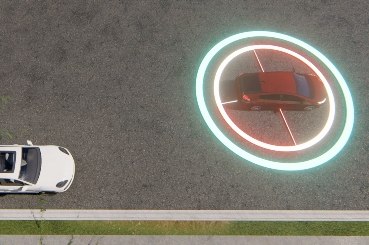
- Active Prevention: They evaluate how effectively the car’s built-in computer systems can avoid an accident altogether.
Before Euro NCAP arrived, manufacturers only had to pass basic, legal minimum safety requirements. By setting a much higher voluntary standard, it has forced car manufacturers to innovate, making modern cars vastly safer than those built thirty years ago. For UK motorists, it provides a transparent, reliable benchmark to compare different models before spending hard-earned money.
Is Euro NCAP mandatory?
No, Euro NCAP testing is completely voluntary. It is not a government regulatory body, meaning car manufacturers are not legally required to submit their cars for testing to sell them in the UK. However, because British consumers and insurance groups rely so heavily on these scores, a poor rating—or no rating at all—is a commercial disaster. It forces brands to voluntarily meet these incredibly high safety standards.
How the Testing Works
The testing process is highly transparent:
- Anonymously Purchased: The organisation buys cars anonymously from regular dealerships, ensuring they test the exact same vehicles that you or I would drive off a forecourt.
- Real-World Simulations: Vehicles face demanding physical tests at dedicated facilities, including head-on collisions, side impacts, and pedestrian impact tests.
- Active Prevention: Engineers evaluate how effectively the car’s built-in computer systems can avoid an accident altogether.
Before Euro NCAP arrived, manufacturers only had to pass basic, legal minimum safety requirements. By setting a much higher voluntary standard, it has forced car manufacturers to innovate, making modern vehicles vastly safer than those built thirty years ago. For UK motorists, it provides a transparent, reliable benchmark to compare different models before spending hard-earned money.
How Euro NCAP Ratings Are Calculated
The system might look like a simple star count, but the underlying data relies on a strict threshold system. Vehicles receive an overall rating ranging from zero to five stars, calculated by scoring the car across multiple safety categories to give each a percentage score.
The Threshold Rule: The overall star rating is determined by the lowest score the car achieves in any single core category. A car cannot mask a terrible pedestrian safety score with an outstanding adult protection score.
Generally, a four-star or five-star rating is considered excellent. In fact, Euro NCAP recently reported record safety testing levels, with an incredible 98 per cent of vehicles tested achieving four stars or higher. However, because the rules are updated regularly, a five-star car from a few years ago might only achieve a three-star rating under today’s protocols.
UK insurance groups rely heavily on these metrics to determine premium brackets, meaning these scores directly impact your annual running costs.
Deciphering the Star Ratings
| Rating | What It Means for Your Protection |
| ⭐⭐⭐⭐⭐ | The Gold Standard. Pinacle of modern safety. The vehicle excels at handling crashes, actively preventing accidents, keeping the driver alert, and facilitating rapid rescue post-crash. |
| ⭐⭐⭐⭐ | Solid Performance. Impressive achievement with robust overall crash protection and reliable safety features, falling just short of the ultra-stringent 5-star requirements. |
| ⭐⭐⭐ | Average Protection. Meets basic safety standards and delivers decent occupant protection, but lacks advanced driver assistance tech or shows minor vulnerabilities in specific crashes. |
| ⭐ / 0 | High Risk. The car meets the bare minimum legal requirements to be sold, but completely lacks modern crash protection and active safety technology. Modern buyers should actively avoid these. |
What Are the Changes in Euro NCAP 2026?
The latest 2026 testing framework marks a massive shift from reactive crash safety toward a holistic safety ecosystem. The new protocol expands both the scope of testing and the expectations placed on manufacturers, organising vehicle evaluation into chronological stages: before, during, and after an accident.
1. Safe Driving
This category covers occupant monitoring, driver engagement, and vehicle assistance. Road validation now stretches up to 2,000 km to thoroughly test speed functions, Adaptive Cruise Control (ACC), and steering scenarios.
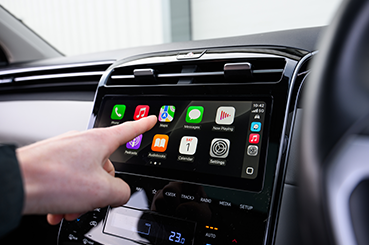
The standout change here is the return of the physical button. To score top marks, manufacturers can no longer hide vital driving functions inside a touchscreen menu. They must provide physical, tactile buttons or levers for five core operations:
- Indicators
- Windscreen wipers
- Hazard warning lights
- The horn
- The SOS eCall emergency system
2. Crash Avoidance
This protocol uses unified systems with advanced motorcycle and junction scenarios, higher testing speeds, emergency steering, and performance testing under degraded conditions like heavy rain or poor light.
3. Crash Protection
When a collision is unavoidable, the focus shifts to structural integrity:
- Adult Occupant Safety: Uses advanced dummies in full-scale crash tests simulating frontal, side-barrier, and rear impacts. Sensors measure the forces exerted on vital organs and limbs.
- Child Safety: Evaluates how well the car accommodates standard child restraints and ISOFIX anchoring systems using dummies representing six- and ten-year-old children.
- Vulnerable Road User Protection: Tests the front structure (bonnet, bumper, and windscreen base) against simulated impacts with pedestrians and cyclists, while checking if the car automatically brakes for someone stepping off a pavement.
4. Post-Crash Safety
A vital category evaluating manufacturer rescue sheets, advanced eCall systems, multi-collision braking, and rapid electric vehicle (EV) battery isolation.
Why Newer Ratings Are Harder to Achieve in Euro NCAP
Are Euro NCAP ratings stricter than before? Without a doubt. The current framework targets modern driving risks directly, such as driver distraction from massive touchscreens and driver impairment from alcohol or medical emergencies.
Furthermore, the introduction of Virtual Testing means simulation is now accepted under strict rules to complement proving ground validation. Manufacturers cannot simply optimise a car to pass a single physical test layout; the vehicle must prove its safety across thousands of simulated virtual environments.
The Used Car Dilemma: Are Older Ratings Valid?
An older rating remains a valid snapshot of how safe that car was when it was built, but it cannot be directly compared to a brand-new score. A five-star car from 2016 is fundamentally less safe than a five-star car today because it lacks a decade’s worth of structural engineering, virtual optimisation, and active crash avoidance software.
Because technology moves so fast, Euro NCAP ratings now have an official expiry date of six years. After this, the rating is considered outdated. Furthermore, if a design flaw is spotted or a manufacturer alters a car’s design mid-cycle, Euro NCAP can actively strip or downgrade the score.
Beyond the Stars: The Assisted Driving Grading
If you are looking at modern car listings, you will frequently see safety features like “Highway Assist,” “Autopilot,” or semi-automated cruise control heavily advertised.
Many UK drivers assume that if a vehicle has a perfect 5-star safety rating, its self-driving features must be top-tier too. However, this is a major misconception. Euro NCAP treats automated convenience systems as an entirely separate assessment.
The Difference Between Star Ratings and Assisted Driving Gradings
A standard Euro NCAP star rating and an Assisted Driving grading measure completely different things, use separate scores, and are published independently on the database.
| Feature | Standard Euro NCAP Star Rating | Assisted Driving Grading |
| What it measures | Core crash protection and standard accident prevention. | The performance of semi-automated highway systems. |
| The Score Format | 0 to 5 Stars | Entry, Moderate, Good, or Very Good |
| Equipment Tested | Standard equipment fitted to the base-model vehicle. | Often optional or premium tech packages not included on cheaper trims. |
| The Core Focus | Can the car survive an accident and slam on its brakes in an emergency? | Can the car comfortably share driving duties with a human on the motorway? |
How These Systems Are Evaluated
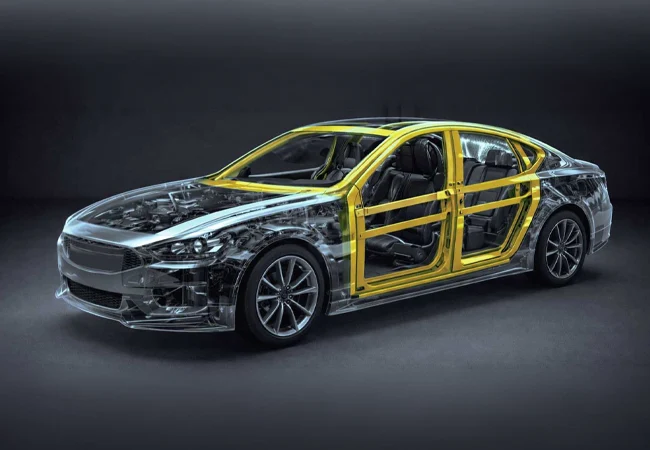
When testing semi-automated setups (systems combining Adaptive Cruise Control and Lane Centring), Euro NCAP judges cars using the Balance Principle. The testing looks at two core areas:
Safety Backup: This evaluates the worst-case scenarios. If a camera gets blocked by heavy UK rain or mud, does the car give a clear warning? If a driver suffers a medical emergency and stops responding, does the vehicle safely pull over to the hard shoulder, activate hazard lights, and trigger the SOS eCall system?
Assistance Competence: This scores the balance between how well the car drives itself (managing speed and lane position) and how effectively it ensures the human is still paying attention. Euro NCAP heavily penalises cars if their marketing overpromises what the tech can do, or if their driver-facing cameras fail to spot a distracted driver. Systems are also scored on user acceptance and smoothness to ensure drivers aren’t frustrated into turning them off entirely.
The Over-Reliance Rule: If a car has incredibly advanced lane steering but terrible driver-monitoring cameras, Euro NCAP will deliberately give it a low score. A car that drives “too well” without keeping the driver engaged encourages dangerous over-reliance and distraction.
What the Gradings Mean for Used and New Car Buyers
When you look up a model’s automated tech on the Euro NCAP database, it will fall into one of four tiers: Very Good, Good, Moderate, or Entry.
Before paying thousands extra for an optional driver-assistance package on the forecourt, it pays to check this separate grading.
Frequently Asked Questions about Euro NCAP
Who funds Euro NCAP?
It is funded by a coalition of European governments, motoring organisations (such as the AA and RAC in the UK), consumer groups, and insurance federations. It receives zero funding from car manufacturers, ensuring its total independence.
Are electric cars tested differently?
Electric vehicles go through the exact same rigorous crash scenarios as petrol and diesel cars. However, they face strict additional post-crash requirements. For example, rules mandate that electric vehicles must feature thermal runaway detection systems to ensure the high-voltage battery remains isolated and safe for at least 90 minutes, allowing emergency services to execute rescues safely.
Summary for UK Buyers
Checking safety ratings gives you confidence on the road. Whether you are looking at a brand-new electric vehicle with the latest driver-tracking systems or filtering through the second-hand market for a reliable family hatchback, visiting the official Euro NCAP website to check the exact test year and score breakdown is the smartest move a UK driver can make.