
Whether you’re a seasoned driver or you’ve just peeled off your ‘L’ plates, there is one sensation that is guaranteed to make your heart skip a beat: the feeling of your car losing its grip on the road. Skidding in a car can be a terrifying experience, especially on a rainy Tuesday on the M6 or a frosty morning in the Peak District.
But here’s the good news: skidding isn’t just some random act of bad luck. It’s physics. And once you understand the physics, you can learn how to prevent it and—more importantly—how to handle it if it happens.
In this guide, we’ll break down everything you need to know about car skidding, from why it happens to the “steer into the skid” technique that could save your bacon.
What is Skidding in a Car?
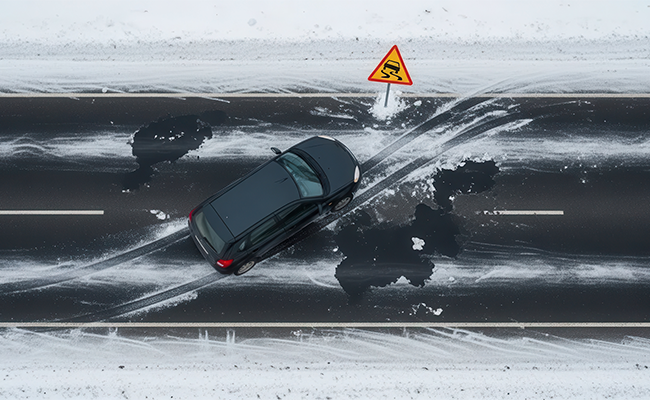
So, what is skidding exactly? In simple terms, skidding in driving occurs when the tyres lose their grip (traction) on the road surface.
This means the tyres are no longer rolling; they are sliding.
When this happens, the driver loses the ability to steer or brake effectively because the friction between the rubber and the tarmac has been compromised.
What happens during a skid
When you’re skidding in a car, the vehicle stops following the path you’ve set with the steering wheel. Instead, it follows the laws of momentum. If you’re heading into a corner and your front wheels skid, the car will likely continue straight on regardless of how much you turn the wheel. If the back wheels lose grip, the rear of the car might try to overtake the front, causing the vehicle to spin.
Why it’s dangerous
The danger of skidding wheels is twofold. First, you lose control over the direction of the vehicle, which significantly increases the risk of colliding with other cars, kerbs, or pedestrians. Second, your stopping distance increases dramatically. If your wheels are locked and sliding, you won’t be able to slow down nearly as quickly as you would with a controlled, rolling stop.
What Causes a Car to Skid?
Understanding what is the main cause of skidding is the first step toward avoiding it. While road conditions play a part, the main cause of skidding is usually a combination of driver input and the environment.
Driver input errors
Most skids are triggered by sudden or “harsh” inputs. This includes:
- Hard braking: Slamming on the anchors can lock the wheels.
- Aggressive steering: Turning the wheel too sharply for the speed you’re travelling.
- Heavy acceleration: Putting the power down too quickly, especially in a powerful rear-wheel-drive car.
Road conditions
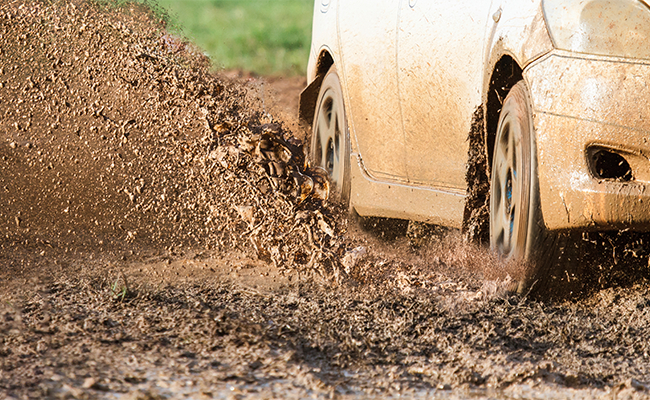
The UK is famous for its “four seasons in one day” weather. Wet roads, ice, snow, and even loose gravel or mud left by tractors can drastically reduce the friction between your tyres and the road.
Excessive speed
Physics doesn’t care how late you are for work. If you enter a bend faster than the level of grip allows, the centrifugal force will overcome the friction of your tyres, and you’ll find yourself drifting wide.
Poor tyre condition
Your tyres are the only part of the car in contact with the road. If they are bald or have low tread depth, they can’t disperse water or “bite” into the surface. Similarly, incorrect tyre pressure can reduce the contact patch, making a skid more likely.
Vehicle maintenance issues
Faulty suspension or unevenly worn brakes can also cause a car to become unstable during cornering or braking, leading to a loss of control.
Types of Car Skids Explained
Not all skids are created equal. Identifying which end of the car is sliding is vital for knowing how to fix it.
Understeer
This is most common in front-wheel-drive cars. Understeer happens when the front tyres lose grip while turning. Instead of the car turning into the corner, it “ploughs” straight ahead. You turn the wheel, but the car refuses to follow.
Oversteer
Oversteer is often seen in rear-wheel-drive cars (and occasionally front-wheel-drive cars if you lift off the throttle suddenly in a corner). This is when the rear tyres lose grip, causing the back of the car to swing out. It feels like the car is trying to spin around its own centre.
Wheelspin
Skidding wheels during acceleration is known as wheelspin. This happens when you apply more power than the tyres can handle, causing them to spin rapidly without gaining traction. You’ll often see this when trying to pull away quickly on a wet or icy incline.
Aquaplaning
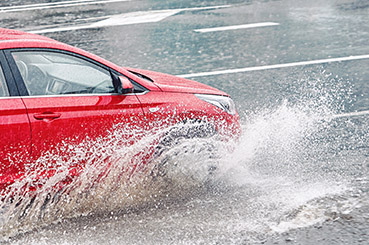
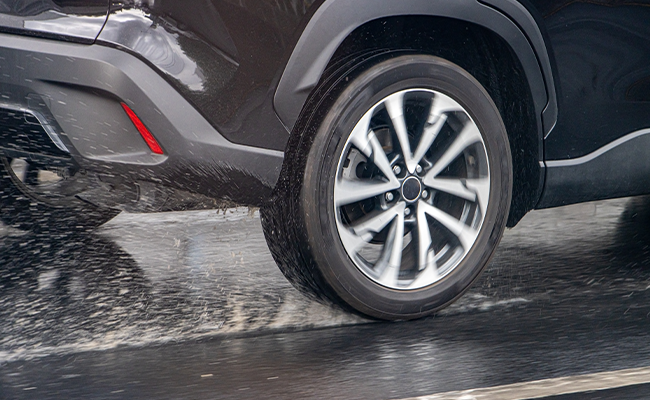
This is a specific, very dangerous type of skid. Aquaplaning occurs when a layer of water builds up between your tyres and the road surface, essentially lifting the car off the ground. When this happens, you have zero steering or braking control.
For a deeper dive into this, check out our comprehensive guide to aquaplaning here.
How to Prevent Your Car from Skidding
Prevention is always better than a cure. Here is how to keep your car planted:
- Speed management: The slower you go in hazardous conditions, the more grip you have in reserve. Adjust your speed before you reach a corner, not while you’re in it.
- Smooth inputs: Think of the controls as being delicate. Increase your “planning” distance so you can brake gently, steer smoothly, and accelerate gradually.
- Tyre maintenance: Ensure your tyres have at least 3mm of tread (the legal minimum is 1.6mm, but safety drops off long before then). Check your pressures weekly.
Need a hand? See our essential tyre maintenance guide.
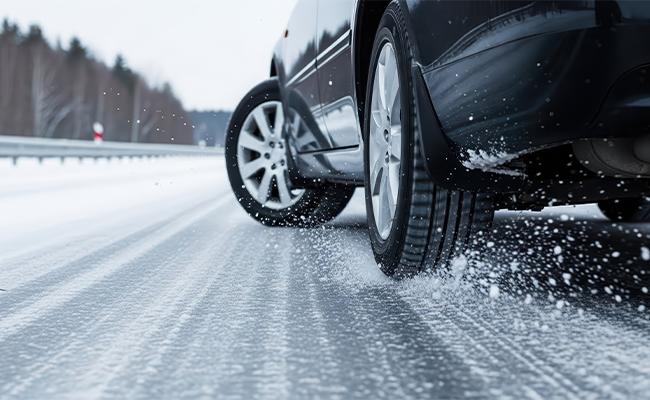
- Seasonal considerations: When the temperature drops below 7°C, standard summer tyres become harder and less grippy. Consider switching to winter or all-season tyres if you live in a rural or hilly area.
Stay safe this winter with our winter driving survival guide.
What to Do When Your Car Starts Skidding
If you do find yourself sliding, the most important thing is your reaction in the first two seconds.
Stay calm
Panic is the enemy of car control. When people panic, they tend to “freeze” or “over-react”—usually by slamming on the brakes or yanking the steering wheel. This almost always makes a skid worse.
Ease off the accelerator
The first step in almost every skid is to remove the source of the problem. Gently ease off the accelerator to allow the weight of the car to shift forward and help the tyres regain their “bite.”
Steer into the skid
This is the phrase everyone hears, but what does it actually mean? Steer into the skid means if the back of your car is sliding to the right, you should turn your steering wheel to the right. This helps realign the front wheels with the direction the back of the car is travelling, allowing the vehicle to straighten up.
Avoid overcorrection
A common mistake is “tank-slapping”—where you steer into the skid but then turn too far the other way as the car grips, causing a second skid in the opposite direction. Be ready to straighten the wheel the moment you feel the car regaining its line.
Special considerations for ABS
Most modern cars are fitted with Anti-lock Braking Systems (ABS). If you have to emergency brake and the car skids, the ABS will “pump” the brakes for you, allowing you to maintain some steering control.
Learn more about how your safety systems work in our guide to ABS.
Skidding in the UK Driving Theory Test
If you’re currently studying for your licence, you’ll know that skidding in driving is a major part of the UK Driving Theory Test. The DVSA wants to ensure every new driver understands:
- The main cause of skidding (driver error).
- Risk conditions (black ice, oily surfaces after rain).
- Corrective techniques (no braking, steer into the skid).
Understanding these principles isn’t just about passing a test; it’s about developing the “mechanical sympathy” and road awareness needed to stay safe for a lifetime of driving.
Skidding in a car is a clear signal that the demands you’re placing on your vehicle have exceeded the available grip. By managing your speed, keeping your inputs smooth, and ensuring your tyres are in tip-top shape, you can avoid the vast majority of skids.
Recap for the road:
- Check your tyres regularly.
- Drive for the conditions, not the speed limit.
- If you slide: stay calm, off the pedals, and steer into it.
Is your car ready for the wet and icy months ahead? Don’t leave your safety to chance. Book a comprehensive safety check with our expert team today, or pop in for a free tyre tread depth and pressure check. We’ll make sure your “shoes” are ready for whatever the British weather throws at them!