
Aquaplaning is one of the most dangerous driving conditions motorists can face, particularly on wet UK roads. Also known as hydroplaning, it occurs when your tyres lose contact with the road due to a layer of standing water, leaving you with little or no control over steering, braking, or acceleration.
In this guide, we explain what aquaplaning is, what can cause it, the warning signs to watch for, and, most importantly, what to do when aquaplaning happens. We’ll also look at how tyres, speed, and driving habits affect your risk – and how to avoid aquaplaning altogether.
What Is Aquaplaning?
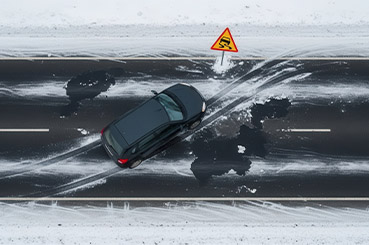
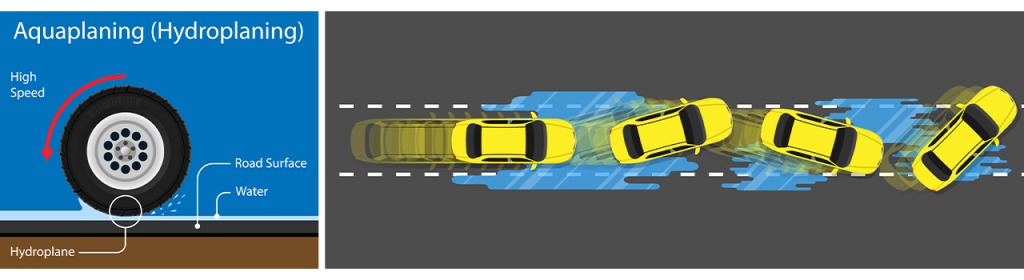
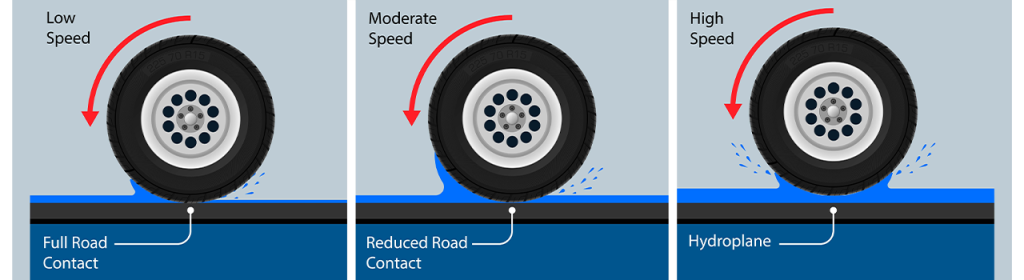
Aquaplaning happens when water builds up between your vehicle’s tyres and the road surface faster than the tyres can disperse it. When this happens, the tyres lift off the road and ride on top of the water, causing a sudden loss of grip.
The term hydroplaning means the same thing and is commonly used worldwide. You may also hear the phrase dynamic hydroplaning, which describes aquaplaning caused by speed and water depth rather than oil or surface contamination.
When aquaplaning occurs, your car may not respond properly to steering, braking, or acceleration – even though the engine is still running normally.
What Can Cause Aquaplaning?
Understanding what can cause aquaplaning is key to preventing it. Common causes include:
- Standing water on the road after heavy rain
- Driving at high speeds in wet conditions
- Worn or unsuitable tyres
- Incorrect tyre pressure
- Shallow tread depth
- Light vehicles, which are more easily lifted by water
Many drivers ask, “Can you hydroplane at any speed?”. While aquaplaning is more likely at higher speeds, you can hydroplane at surprisingly low speeds if there is enough water on the road and your tyres are worn or under-inflated.
Signs Your Car Is Aquaplaning
Recognising the early warning signs can help you react safely and regain control quickly.
1. Steering Feels Light or Unresponsive
- If your steering suddenly feels vague or disconnected, your tyres may no longer be gripping the road.
2. Engine Revs Increase Suddenly
- When the wheels lose traction, engine revs can rise unexpectedly even though you haven’t pressed the accelerator.
3. Vehicle Begins to Drift
- The car may feel like it’s floating, sliding, or drifting sideways without steering input.
If you experience any of these symptoms, your car may already be aquaplaning.
What to Do If Your Car Starts Aquaplaning
Knowing what to do when aquaplaning happens can significantly reduce the risk of an accident. The most important thing is to stay calm.
Ease Off the Accelerator Gently
Slow down gradually by lifting your foot off the accelerator. This helps the tyres regain contact with the road.
Avoid Braking Suddenly
Sudden or heavy braking can cause further loss of control. Brake gently only once traction begins to return.
Keep the Steering Straight Until Grip Returns
Avoid sharp steering movements. Hold the steering wheel steady and keep the car pointing straight until control is restored.
These actions give your tyres the best chance of cutting through the water and re-establishing grip.
How to Avoid Aquaplaning
Prevention is far safer than reacting to it. Here’s how to reduce your risk:
- Drive smoothly without sudden acceleration or sharp turns
- Slow down in wet or rainy conditions
- Increase your following distance
- Avoid driving through standing water where possible
Cruise Control and Hydroplaning
- Using cruise control and hydroplaning can be a dangerous combination. Cruise control may cause wheels to spin if traction is lost, making it harder to regain control.
- For this reason, it’s best to turn cruise control off when driving on wet roads.
How Tyres and Speed Affect Aquaplaning Risk
Your tyres are your only contact with the road, making them critical in preventing aquaplaning.
Worn Tyres Struggle to Disperse Water
Tyres with low tread depth cannot channel water away effectively, increasing the likelihood of hydroplaning. Regular tyre checks are essential.
Higher Speeds Increase Water Build-Up
The faster you travel, the more water builds up beneath the tyres, increasing the risk of hydroplaning.
Correct Tyre Pressure Improves Stability
Incorrect tyre pressure reduces contact with the road. Properly inflated tyres maintain stability and grip in wet conditions.
Investing in quality aquaplaning tyres and keeping them correctly maintained can dramatically reduce your risk.
Stay Safe in Wet Weather
Aquaplaning can happen suddenly and without warning, but understanding what is aquaplaning, what can cause aquaplaning, and how to avoid aquaplaning puts you in a far stronger position on the road.
By driving at sensible speeds, maintaining your tyres, avoiding cruise control in the wet, and knowing exactly what to do, you can stay safer during wet weather driving.
If you’re unsure about your tyres or vehicle safety, professional checks can help ensure your car is ready for the road – whatever the weather brings.