
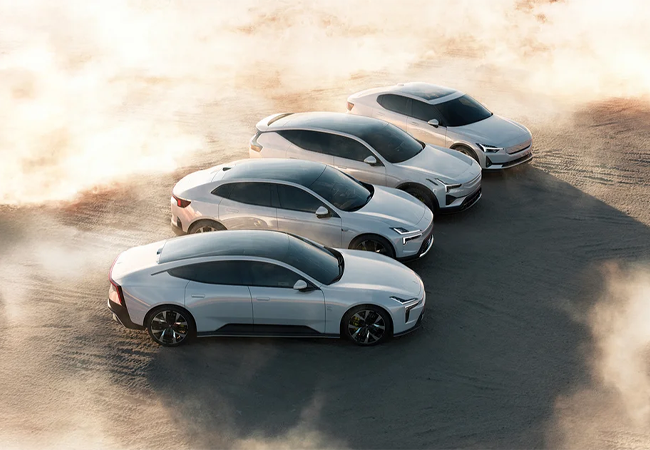
Polestar is officially entering a major new phase. Following its strongest retail sales year to date, the premium Scandinavian EV brand has revealed a massive model offensive: plans to launch four new electric cars within just three years.
This ambitious roadmap shows just how rapidly Polestar is evolving from a niche performance brand into a heavyweight competitor in the premium EV market. To back up this vehicle onslaught, the company is targeting low double-digit retail volume growth alongside a 30% expansion of its global retail network. It is a bold, confident strategy, even amidst ongoing economic uncertainty and geopolitical pressures facing the wider automotive industry.
Here is a breakdown of the three game-changing models heading to roads near you.
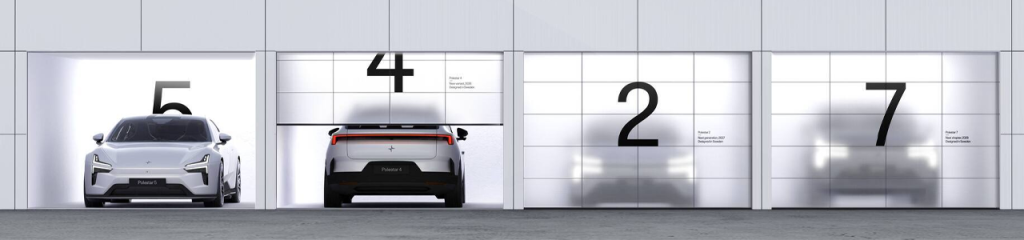
Polestar 4: Expanding into the Practical Estate Market
A New Variant Targeted at a Wider Audience
The Polestar 4 has already cemented itself as the company’s best-selling model. However, Polestar is about to broaden its appeal even further by introducing a highly anticipated new variant later this year, with deliveries expected to start in the fourth quarter.
CEO Michael Lohscheller highlighted Sweden’s rich heritage of practical estate cars and world-class SUVs when teasing the new model. Polestar intends to combine the spaciousness and utility of a traditional estate with the elevated driving position of an SUV—all while retaining the sharp aerodynamic styling and dynamic performance the brand is known for.
As production ramps up globally, this new variant is expected to capture a massive slice of the market, where buyers are hungry for practical premium EVs that don’t compromise on driving dynamics.
The Next-Gen Polestar 2: Reinventing the Icon
Re-engineering the Car That Built the Brand
- Target Launch: Early 2027
- Global Sales to Date: Over 200,000 units
- Focus Areas: Battery efficiency, charging speeds, and next-gen software
The Polestar 2 remains the bedrock of the company’s identity, having officially crossed the massive milestone of 200,000 units sold worldwide. Rather than letting its pioneer model age gracefully, Polestar is aggressively developing a completely new, next-generation successor scheduled for early 2027.
EV technology has leaped forward since the original Polestar 2 debuted. The next-generation model will capitalise on these advancements, featuring:
- An entirely updated electrical architecture
- Significantly improved battery efficiency and faster charging speeds
- Deeper, more seamless digital and software integration
The Polestar 2 will continue to serve as the gateway for customers entering the brand’s ecosystem, ensuring its spot as a cornerstone of future volume growth.
Polestar 7: Conquering Europe’s Largest EV Segment
Going Head-to-Head in the Compact SUV Market
Looking slightly further down the road, the Polestar 7 will arrive in 2028. This compact premium SUV will dive straight into the most lucrative sector in the UK and Europe: compact SUVs, which currently command roughly one-third of all battery-electric vehicle sales across the continent.
Polestar aims to disrupt this hyper-competitive segment by offering a performance-focused, family-friendly SUV at a highly competitive price point, all while maintaining strict European production standards. By mastering the balance of elevated seating positions, everyday boot space, and striking Scandinavian design, the Polestar 7 will open the brand up to its largest potential customer base yet.
The Verdict: A Masterclass in Disciplined Ambition
The premium EV space is more crowded than ever, but Polestar is carving out a unique lane. What makes this strategy work is that it isn’t just about building cars—it’s about fixing the buying experience.
By expanding its physical “Polestar Spaces” by 30% and focusing heavily on streamlined, digital retail sales rather than relying on low-margin corporate fleets, Polestar is protecting its long-term profitability and brand prestige.
With an electrified portfolio that spans executive grand tourers, practical sleek estates, and compact family SUVs, the manufacturer isn’t just trying to survive the EV transition—it is positioning itself to win it.