
Few cars have captured the imagination quite like the Citroën 2CV. First introduced in 1948, this much-loved French classic made motoring accessible to a wider audience. Its clever design, simple engineering and unmistakable character helped it become one of the most recognisable cars in automotive history.
Now, Citroën is looking to bring that spirit into the electric age. Unveiled at the 2026 Paris Motor Show, the Citroën 2 CV Concept offers a fresh interpretation of the original, combining retro-inspired styling with modern technology and everyday practicality.
Rather than simply recreating a vintage favourite, the concept explores what a small, affordable electric car could look like today. A future production model is planned to join the Citroën range by 2028, potentially bringing a familiar name to a new generation of drivers.
What Is the Citroën 2 CV Concept?
The original 2CV was designed around a straightforward idea: make motoring affordable, useful and accessible. It wasn’t built to impress with luxury or performance. Instead, it offered dependable transport for everyday life, from navigating town streets to travelling across the countryside.
The new concept follows a similar philosophy, but with modern electric mobility in mind.
Citroën wants to create a compact car that feels practical and appealing without becoming unnecessarily complicated. The focus is on essential features, clever packaging and a cheerful personality.
The result is a concept that sits between the tiny Citroën Ami and the larger Citroën C3 in the brand’s line-up. It aims to offer greater freedom than a small urban mobility vehicle while retaining the simplicity of a compact car.
Citroën also intends to build the future model in Europe, with a target starting price of around €15,000. This is an indicative European price, rather than a confirmed UK price, but it highlights the ambition to make electric motoring more accessible.
A Compact Electric Car Designed for Everyday Life
One of the most interesting aspects of the Citroën 2 CV Concept is its size. Measuring just 3.76 metres long, it is even shorter than the original 2CV.
That compact footprint should make it well suited to busy streets, tight parking spaces and everyday urban journeys. Yet the design aims to offer enough room and versatility for more than just the school run or commute.
Citroën describes the concept as a car for both town and countryside. Its compact dimensions, straightforward layout and practical approach are intended to make it adaptable to different driving environments.
Weight is another important consideration. The concept targets a weight of around one tonne, helping to reduce the amount of energy needed to move the car.
A lighter electric vehicle can potentially use a smaller battery, helping to manage costs and improve efficiency. It could also contribute to lower running costs, although the production car’s battery capacity, range and charging performance have yet to be confirmed.
For buyers who mainly make short journeys, this approach could prove particularly appealing. Many drivers don’t need a large battery or an oversized vehicle for their daily routine. A small, efficient electric car could meet those needs without the additional cost and bulk.
Familiar Citroën 2CV Styling With a Modern Twist
The concept’s appearance provides an immediate connection to its famous predecessor. However, Citroën has avoided simply copying the original’s rounded bodywork.
Instead, it combines recognisable features with sharper lines and more contemporary proportions.
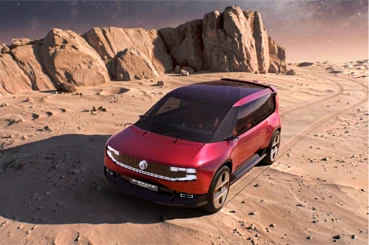
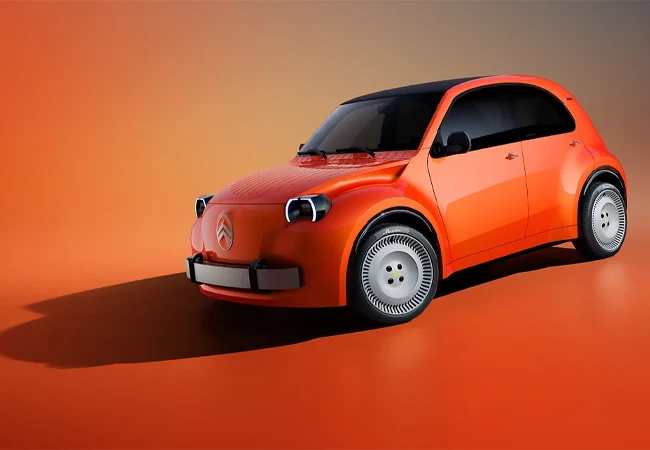
At the front, separate round headlamps recall the original 2CV. Modern LED lighting gives them a distinctive appearance, while the sculpted bonnet and exposed windscreen wipers add character.
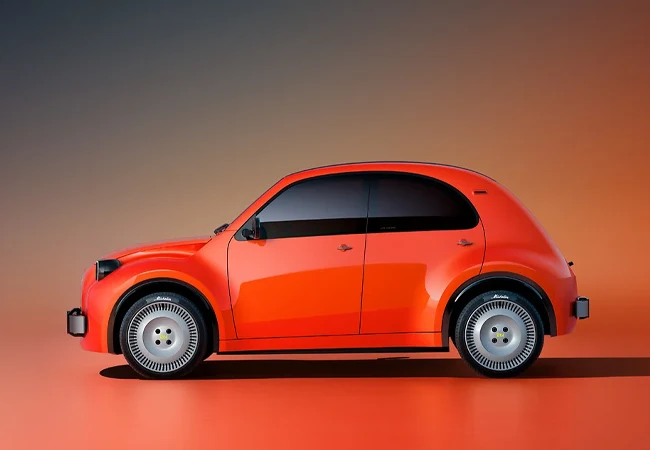
The side profile features a relatively upright windscreen, a flowing roofline and rounded wheel arches. These details preserve the friendly proportions associated with the classic car while giving the concept a more modern stance.
The 18-inch steel wheels also reference the original, with light grey finishes and yellow detailing adding a contemporary touch.
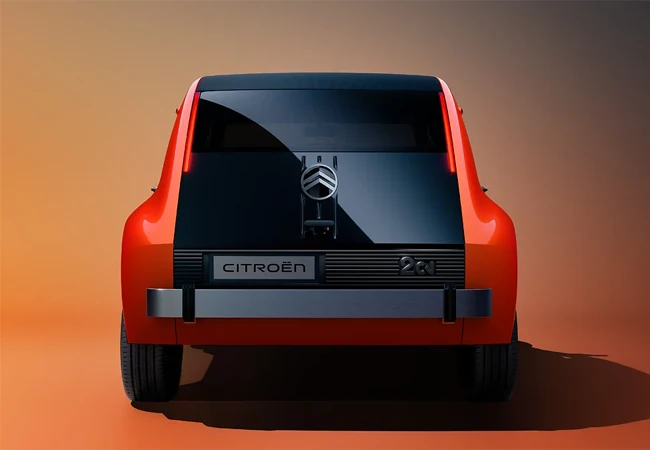
At the rear, the black tailgate extends towards the bumper, echoing an early 2CV design feature. LED rear lights and a short overhang complete the look.
The concept’s Infra Red exterior colour makes an especially bold statement. Its warm orange base, enhanced by yellow and red tones, gives the car an energetic personality.
These details help the 2 CV Concept stand apart from many modern electric cars. Its design is deliberately approachable, proving that an affordable vehicle doesn’t have to look dull or anonymous.
A Clever Interior Focused on Comfort and Practicality
Inside, Citroën has taken the original 2CV’s straightforward thinking and applied it to a modern cabin.
Rather than filling the interior with screens and complicated controls, the concept focuses on space, comfort and intuitive features.
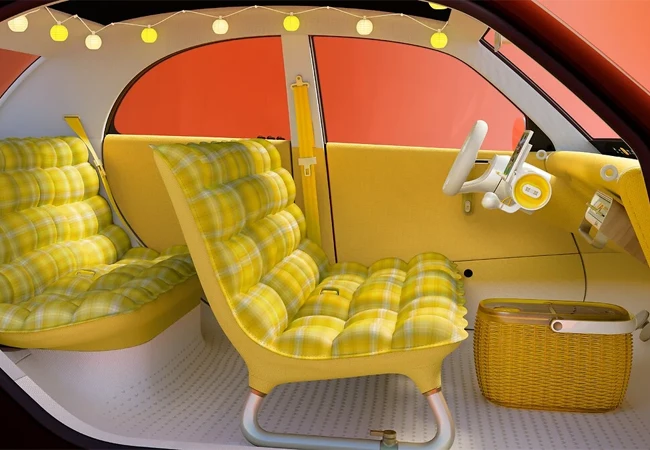
There is no conventional dashboard. Instead, a central cylindrical structure supports the steering wheel and key controls, while a compact display places essential driving information within the driver’s field of vision.
An eight-inch square touchscreen provides additional functionality, with graphics inspired by comic books. This brings a playful element to the technology without dominating the cabin.
Citroën has also explored some more unusual ideas. The removable storage basket replaces a traditional centre console, offering a flexible place to keep everyday belongings.
The detachable ‘Radioën’ is another distinctive feature. It functions as both a radio and a portable speaker, allowing occupants to take their music outside the car.
Comfort remains central to the design. Wide seats featuring Citroën Advanced Comfort technology aim to create a welcoming environment, while a pull-out front seat offers an additional place to relax during a break.
A fabric sunroof helps bring natural light into the cabin, making the interior feel open and airy.
Even the smaller details reflect the concept’s practical philosophy. Soft strap door handles and recessed door panels help maintain a clean layout, while dedicated door storage compartments pay homage to the original car’s ingenious use of space.
Small Details That Celebrate the Original 2CV
The concept includes plenty of references for enthusiasts, but these touches feel more playful than nostalgic.
The windscreen carries the numbers 48, 90 and 26, marking the original car’s launch in 1948, the end of production in 1990 and the concept’s unveiling in 2026.
Heart-shaped stickers reference the affection the 2CV inspired among owners. The brake and accelerator pedals also feature tortoise and rabbit motifs, representing slower and faster driving.
Elsewhere, the tartan seat fabric recalls the classic model, reworked with bright yellow tones. Beige accents evoke the appearance of Bakelite, while textured surfaces take inspiration from woven cane and basketry.
Some materials introduce a more modern approach to sustainability and production. For example, the concept features a basket combining wood and bio-based plastic, produced using 3D printing.
These features demonstrate how heritage can influence a new car without dictating every design decision. The aim is to create something recognisable, useful and distinctly modern.
Can the Citroën 2 CV Concept Make Electric Cars More Affordable?
Affordability is one of the biggest questions surrounding the concept.
Electric cars can still be expensive for drivers who want a small, straightforward vehicle. The 2 CV Concept responds to this challenge by focusing on compact dimensions, controlled weight and a deliberately simple specification.
Its target price of around €15,000 suggests Citroën wants to reach buyers who might otherwise consider a used car or a conventional petrol-powered city car.
However, important details remain unknown. Citroën has not yet confirmed the production model’s battery size, driving range, charging times or UK pricing. The final specification will determine how competitive it proves to be in the real world.
Repairability is also part of the concept’s thinking. Separate bumpers and straightforward bodywork are designed to make certain components easier to replace. This could help reduce repair complexity, although actual ownership costs will depend on the production car and its parts pricing.
The concept also features technology developed with Michelin, including a digital representation of the tyre designed to help the vehicle adapt to its environment and monitor tyre condition.
Whether these ideas reach production unchanged remains to be seen. Nevertheless, the wider philosophy is clear: useful innovation doesn’t always mean adding more equipment. Sometimes, it means making a car simpler to build, maintain and use.
When Could the New Citroën 2CV Arrive?
Citroën has outlined plans for a future model inspired by the 2 CV Concept to join its range by 2028.
If the production car follows the concept’s direction, it could occupy an interesting position in the growing electric car market. Its compact size and accessible-price ambitions would distinguish it from the increasingly large and expensive vehicles available today.
For UK buyers, the final details will be particularly important. Pricing, driving range, charging capability and availability will determine whether it becomes a realistic alternative to existing small electric cars.
The concept itself is not yet a production-ready vehicle, so some features and design details may change before launch. For now, it offers a glimpse of Citroën’s thinking about the future of affordable electric mobility.
For more on the original model and its potential electric future, read our guide: Citroën 2CV: History and Electric Future Explored.
Citroën 2 CV Fourgonnette Concept: A Classic Van Reimagined
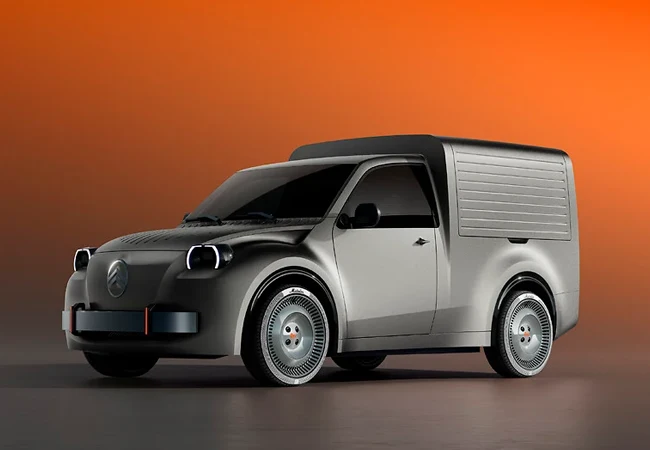
Citroën also presented the 2 CV Fourgonnette Concept at the Paris Motor Show. Inspired by the much-loved original van, the concept combined nostalgic styling with a modern vision of practical, accessible electric mobility. It celebrated a vehicle that became a familiar sight for generations of tradespeople, shopkeepers and delivery drivers.
Celebrating More Than a Century of Professional Heritage
Commercial vehicles have played an important role in Citroën’s history for more than a century. The original 2 CV Fourgonnette helped businesses transport goods, serve customers and manage everyday deliveries. This new concept revisited that working heritage with a fresh perspective, focusing on clever design, simplicity and ease of use. It showed how the spirit of an iconic van could inspire a more approachable electric vehicle for modern professionals.
Classic Character, Future-Focused Thinking
Designed as the commercial counterpart to the new 2 CV Concept, the Fourgonnette balanced its retro influence with contemporary ideas. Citroën treated it as a creative design study rather than a preview of an imminent production vehicle. Nevertheless, it offered an engaging glimpse of how the brand could draw on its commercial heritage while rethinking electric mobility for the next generation of businesses.
Final Thoughts: A New Chapter for a Motoring Icon
The Citroën 2 CV Concept and 2 CV Fourgonnette Concept is about more than bringing back a famous badge. It revisits the principles that made the original so successful: affordability, practicality, clever design and a sense of fun.
Its compact proportions, distinctive styling and imaginative interior suggest that an everyday electric car can have plenty of personality. The emphasis on keeping weight and complexity under control also offers an alternative to the trend for ever-larger vehicles.
Of course, the concept’s success will ultimately depend on the production car. A competitive UK price, useful real-world range and sensible running costs will be essential if Citroën wants to make its vision a reality.
If it delivers on those ambitions, the next 2CV could appeal to drivers who value simplicity as much as technology. It may not recreate the past, but it could bring the original’s spirit to a new generation of motorists.