
There is a distinct buzz of renewed interest surrounding one of the world’s most beloved classic vehicles. This excitement is being driven by two major milestones in 2026. First, automotive enthusiasts are celebrating the 50th anniversary of the legendary Citroën 2CV Spot limited edition. Second, and perhaps even more thrilling, Citroën has officially announced a brand new model. This 2CV-inspired electric vehicle is actively in development.
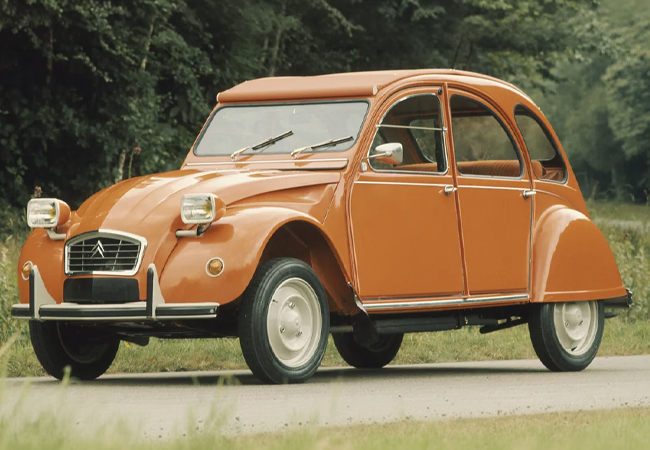
The Citroën 2CV remains one of the most instantly recognisable cars in motoring history. It was never designed to be a luxury showpiece. However, its simple, practical, and deeply characterful design helped it transcend its humble origins. It quickly became a true cultural icon.
Now, the 2CV name is returning in a fully electric format. This prospect has sparked an immense wave of excitement among modern drivers and heritage enthusiasts alike. So let’s dive into the rich history of the original “Tin Snail” and what’s to come in the future.
The History of the Citroën 2CV
Early Origins and Development
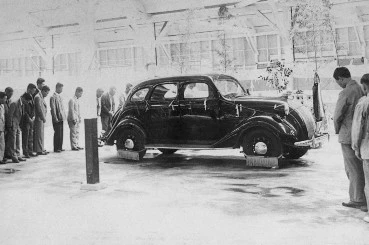
Indeed, the journey of this remarkable car began well before it ever reached a public roadway. Specifically, in the mid-1930s, early concept and development work started under the guidance of Citroën Vice-President Pierre-Boulanger.
Furthermore, the core idea was to create a highly practical people’s car. Therefore, it was specifically tailored for rural French motorists who needed to transport goods, livestock, and family members across unpaved terrain.
However, development was temporarily paused during the Second World War. Thus, this prevented prototypes from falling into the wrong hands. Fortunately, work resumed immediately after peace was restored.
The Public Launch and Success
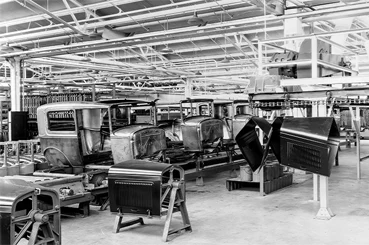
If you are curious about the official timeline, when was the Citroën 2CV released? Specifically, the vehicle was first presented to the public at the Paris Motor Show in 1948. Initially, the motoring press was sceptical of its unusual, spartan design. Nevertheless, the public fell in love with it. Consequently, by 1949, production began in meaningful volume. As a result, waiting lists quickly grew to several years.
Furthermore, throughout the 1950s and 1960s, the 2CV became increasingly popular across Europe. Importantly, this success was thanks to its matchless simplicity, affordability, and rugged practicality. Ultimately, it was a vehicle that democratised motoring for millions. To understand exactly when the Citroën 2CV was made, look at its extensive lifespan. Indeed, the production line ran continuously for over four decades, evolving gracefully with the times.
Evolution and Special Editions
Later, in the 1970s, models like the 2CV 4 and 2CV 6 broadened the range. For instance, they introduced more powerful engines, revised electrical systems, and updated exterior features to cope with modern traffic.
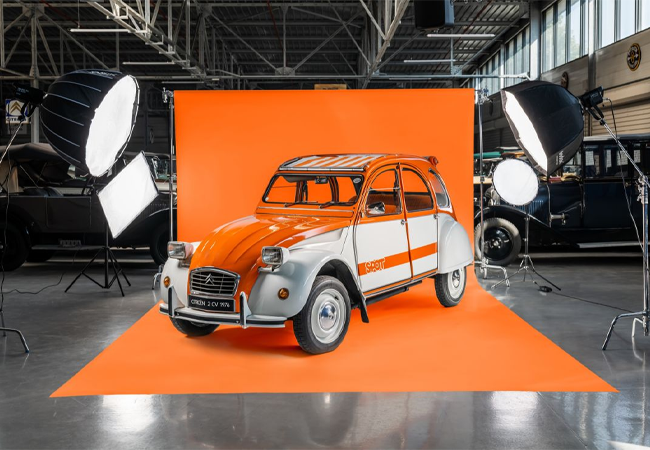
In addition, this decade also birthed a new trend for the brand. Specifically, in 1976, the 2CV Spot launched as Citroën’s very first limited-edition model. Therefore, it proved that the utilitarian car could also be highly fashionable.
Meanwhile, the brand transitioned into the 1980s. Notably, special editions such as the beautifully painted Charleston and the bright Dolly helped keep consumer interest alive.
The End of Production
However, all good things must eventually come to an end. People often ask, “what year did they stop making a Citroën 2CV?” To answer this, the final vehicle rolled off the production line in Mangualde, Portugal, in 1990. In turn, this answers a frequent question for modern buyers: does Citroën still make the 2CV? Clearly, they do not produce the classic version anymore. Therefore, buyers must look to the specialist classic market.
When tallying up its historic success, exactly how many Citroën 2CVs were made? Overall, around 3.87 million 2CV saloons were built during its production run. Furthermore, that number climbs significantly higher, reaching more than 5.1 million vehicles. Specifically, this total includes rugged commercial vans and related mechanical variants like the Dyane, Ami, and Mehari.
Citroën 2CV Design: Simple, Clever and Instantly Recognisable
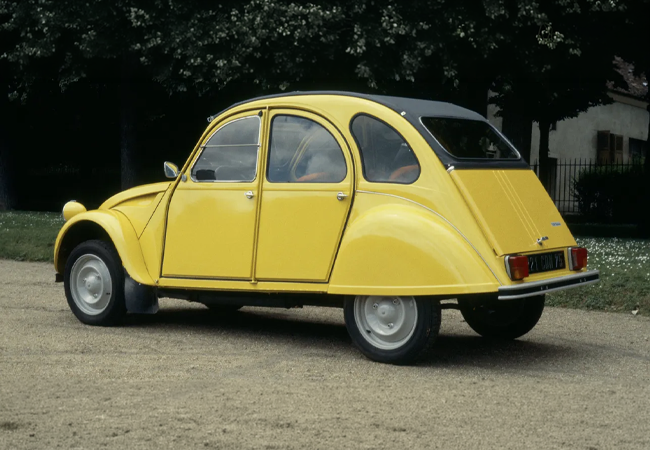
To begin with, the distinctive shape of the 2CV was dictated entirely by engineering purpose, not by cosmetic showiness. For instance, its tall, rounded body was crafted to allow passengers to sit comfortably while wearing hats. Furthermore, its prominent wings made wheel changes incredibly straightforward. In addition, the narrow tyres were chosen to slice cleanly through mud. Meanwhile, the full-length fabric roof could be rolled back to allow the transport of exceptionally tall items. As a result, over time, the distinctive corrugated bonnet became one of its most defining visual traits.
When looking at its physical footprint, how long is a Citroën 2CV? Notably, the car was exceptionally compact, measuring roughly 3.8 metres long depending on the specific model year and bumper configuration. This small size made it lightweight and incredibly easy to live with in tight European villages. Another common question among restorers is: are Citroën 2CV bonnets plastic? In fact, the original factory bonnets were typically made of lightweight sheet metal rather than plastic. Therefore, they featured structural ridges to add strength without adding unnecessary weight.
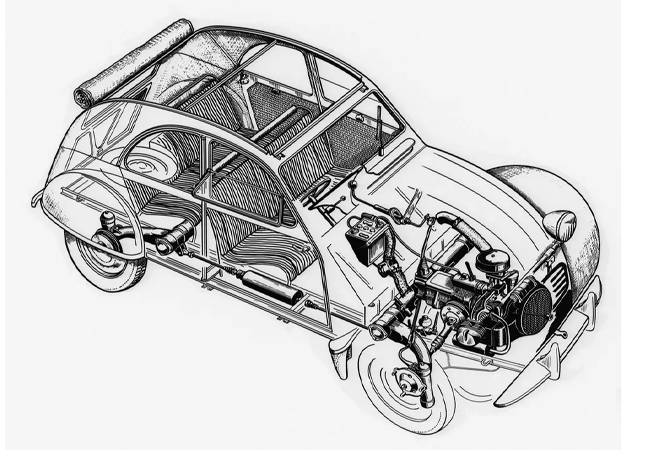
So, what technology did the Citroën 2CV have?
So, what technology did the Citroën 2CV have? Crucially, the engineering was brilliantly simple yet ahead of its time. For example, it featured a front-wheel-drive layout and an air-cooled flat-twin engine that eliminated the heavy radiator.
In addition, it used a highly innovative interconnected suspension system. This long-travel suspension allowed the car to glide smoothly over broken farm tracks.
Remarkably, it was famously designed for carrying fragile goods. For instance, a farmer could drive across a ploughed field with a basket of eggs on the seat without breaking any.
Ultimately, today, these classic Citroën 2CV cars are celebrated globally for that exact blend of mechanical minimalism and pure design durability.
Citroën 2CV Performance: Modest Power, Big Character
Of course, no one ever bought a 2CV to win a short sprint. Instead, the performance was intentionally modest, yet it delivered an abundance of driving character. To begin with, early post-war variants relied on a tiny 375cc air-cooled engine producing a mere 9 brake horsepower. However, as roads improved, later versions gained larger, more robust engines, including the highly popular 435cc and 602cc units.
You might wonder: how many gears does a Citroën 2CV have? Notably, the vehicle typically utilised a unique four-speed manual gearbox. Furthermore, if you are wondering how fast the Citroën 2CV could go, the top speed varied dramatically. Indeed, it depended entirely on the era and the engine under the bonnet.
To see how the different eras compare at a glance, here is a quick breakdown of the car’s performance progression:
| Era and Engine | Top Speed | Defining Feature |
| 1950s (375cc) | Roughly 40 mph | Simple pulling starter cable |
| 1976 Spot (435cc) | Over 62 mph | Striking Orange Ténéré styling |
| 1980s 2CV 6 (602cc) | Roughly 70 mph | Bulkhead-mounted gear stick |
In addition, for those unfamiliar with classic French vehicles, learning how to start a Citroën 2CV is an experience in itself. Specifically, depending on the era, the starting method involved turning a key or pulling a dashboard-mounted starter cable. Meanwhile, in freezing weather, drivers sometimes used a traditional starting handle. Furthermore, once running, drivers had to master the famous dashboard-mounted gear selector. Crucially, this lever pushed and pulled through the bulkhead in a highly unconventional, rewarding manner.
What Made the Citroën 2CV Unique?
Undeniably, the true magic of the vehicle lay in its emotional and practical connection with the public. First and foremost, total affordability was central to the original concept.
It offered simple, dependable transport for everyday people who had previously been priced out of car ownership.
Furthermore, it was incredibly easy to maintain using basic hand tools. As a result, it remained highly economical to run even as fuel prices fluctuated over the decades.
Indeed, the car prioritised a clear set of values that ran entirely counter to mainstream automotive trends:
- Practicality over prestige: It ignored flashy chrome and aggressive styling in favour of sheer utility.
- Comfort over speed: The soft, rolling ride prioritised passenger comfort over cornering velocity.
- Simplicity over complexity: By removing unnecessary components, there was less to go wrong.
- Personality over polish: It wore its quirky traits proudly, turning mechanical limitations into pure charm.
Ultimately, this unwavering focus on everyday usability gave the car an unmistakable personality. Thus, it quickly became a symbol of freedom, non-conformity, and adventure, capturing the hearts of students, artists, and families alike. Importantly, special editions, such as the brightly coloured 2CV Spot, only added to this collectability. Therefore, they ensured the car would be cherished long after production ended.
The Citroën 2CV Spot: A 50-Year Celebration
Notably, the year 2026 marks exactly half a century since Citroën rewrote its own marketing playbook. Specifically, launched on 10 April 1976, the 2CV Spot was introduced as Citroën’s very first limited-edition vehicle. In fact, this innovative concept was designed to stimulate sales during a quiet period.
Mechanically, the Spot was based on the standard 2CV 4, utilising the efficient 435cc engine. However, what made it spectacular was its styling, penned by the famous designer Serge Gevin. For instance, it featured an eye-catching, two-tone Orange Ténéré and Blanc Meije colour scheme that exuded a cheerful, summery beach vibe.
Furthermore, the vehicle came equipped with a striking orange and white striped canvas roof that looked like a seaside canopy. In addition, this was complemented by vibrant orange interior details and comfortable jersey fabric seats. As a result, the public response was immediate and overwhelming, with the initial production allocation selling out completely within a matter of days.
Meanwhile, car clubs across Europe are celebrating its 50th anniversary in 2026. They are highlighting how this injection of colour and style cemented its status as a piece of cultural heritage.
The Future of the 2CV: Citroën’s Electric Revival
While celebrating history is vital, the story of the legendary Citroën 2CV is about to enter an electrifying new chapter. In fact, Citroën has officially confirmed plans for an all-new model deeply inspired by the philosophy of the original 2CV Citroën.
Specifically, this upcoming vehicle will be a fully electric Citroën 2CV successor. However, in an industry where electric vehicles often become heavy, complex, and expensive, Citroën is intentionally bucking the trend. Instead, the French manufacturer has firmly positioned this new Citroën 2CV around the core tenets of accessible mobility. Importantly, these values include absolute simplicity, lightweight thinking, robust versatility, and high desirability.
“Reinventing the 2 CV of tomorrow is a huge challenge and responsibility. The original 2 CV was never created to become an icon. It became one because it gave people freedom. The new 2 CV will carry that same spirit forward — not through nostalgia, but by reinventing its simplicity and accessibility for today’s world. Electric. Essential. Affordable. Human. Just like the original once democratized mobility, the new 2 CV will re-enchant electric mobility for a new generation through a highly desirable model. The return of the 2 CV is not simply the return of a legendary name. It is the return of a bold and optimistic idea of progress. A profoundly Citroën idea.“
~Xavier Chardon – Citroën CEO.
In addition, Citroën has stated that full engineering details and design mock-ups will be revealed soon. Specifically, these production schedules will be officially unveiled at the Paris Motor Show in October 2026. Ultimately, this future model will link modern battery technology back to the traits that made the original car great. Notably, these include lightweight construction, exceptional passenger comfort, everyday practicality, and affordable motoring freedom. As a result, it represents a bold, optimistic idea of progress that feels entirely true to the brand’s heritage.
Why the Citroën 2CV Story Still Matters
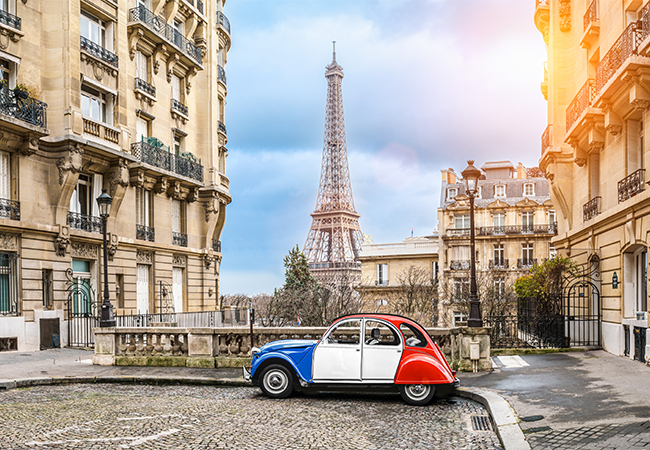
Ultimately, the Citroën 2CV remains one of the most memorable and significant creations in automotive history. Crucially, its enduring appeal did not stem from high horsepower or cutting-edge luxury. Instead, it came from doing the simple things brilliantly. Therefore, by delivering outstanding comfort, unmatched mechanical simplicity, and genuine affordability, it altered the automotive landscape forever.
Now, a groundbreaking electric model inspired by the original is preparing to make its debut later this year. Because of this, the magnificent 2CV narrative is set to continue well into the future. So, keep a close eye on the latest Citroën news and updates from Stoneacre. Meanwhile, we are edging closer to the official October reveal. Ultimately, the spirit of the “Tin Snail” is well and truly alive, ready to conquer the electric age.