
Black-and-white stripes, flashing amber beacons and pedestrians waiting at the kerb. The zebra crossing is a familiar sight on British roads.
Most drivers pass one regularly without a second thought. Yet this simple design has a fascinating history, shaped by decades of road-safety research.
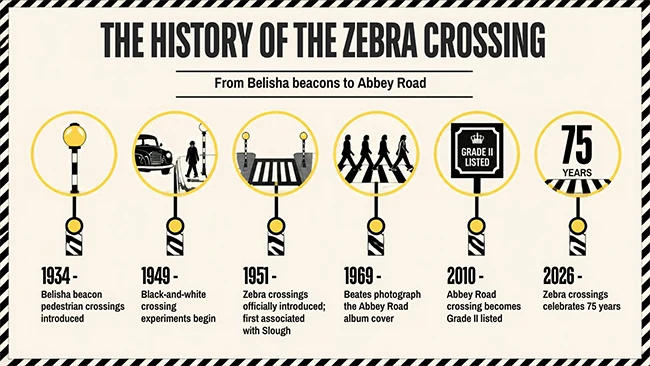
On 31 October 2026, the zebra crossing celebrates its 75th anniversary. First officially introduced in Britain in 1951, it has become an instantly recognisable feature of our streets.
But how did the zebra crossing begin, and how did it become an international icon?
What Came Before the Zebra Crossing?
The story starts in the 1930s, when rising motor traffic created new challenges for pedestrian safety.
In 1934, Transport Minister Leslie Hore-Belisha introduced a new pedestrian crossing design. These crossings used metal studs to mark the crossing point, alongside distinctive poles topped with amber beacons.
Named after Hore-Belisha, these Belisha beacons made crossings easier for approaching drivers to identify. However, the original road markings were less conspicuous than today’s bold white stripes.
As traffic increased, authorities looked for ways to make crossings more visible. That search laid the foundations for the zebra crossing we know today.
How Was the Zebra Crossing Developed?
The familiar striped design emerged through research and experimentation rather than the work of one inventor.
From March 1949, experimental crossings began combining black-and-white stripes with flashing beacons. The aim was to create a clearer visual warning for drivers.
The government’s Road Research Laboratory played an important role in testing crossing designs. Traffic engineer George Charlesworth is widely credited with developing the recognisable zebra markings.
However, the final design built on earlier pedestrian crossings, government trials and changes to regulations. Hore-Belisha’s contribution came first, while later research helped establish the distinctive pattern.
So, who invented the zebra crossing? Charlesworth is commonly credited with its development, but its history reflects a wider effort to improve road safety.
The First Zebra Crossing: Slough, 1951
On 31 October 1951, the zebra crossing was officially introduced in Britain.
The world’s first zebra crossing is associated with Slough High Street in Berkshire. According to Slough Museum, it stood outside Boots. The area has since been pedestrianised, so the original crossing no longer survives.
Slough nevertheless holds an important place in British motoring history. The crossing marked a milestone in making pedestrian crossing points more noticeable to drivers.
Its simple combination of contrasting stripes and Belisha beacons proved enduring. Seventy-five years later, the design remains instantly recognisable.
Why Is It Called a Zebra Crossing?
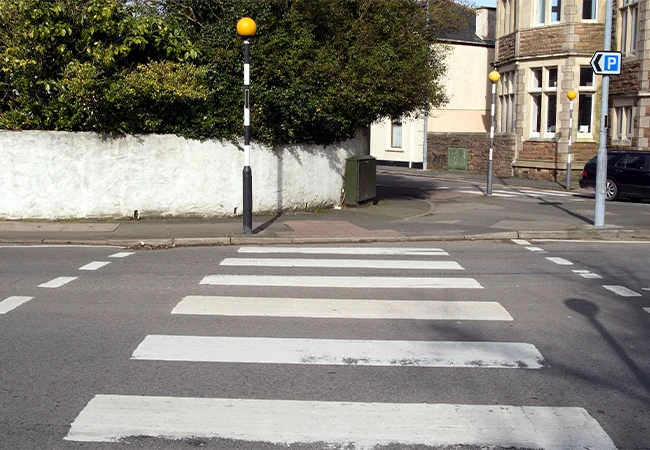
The name makes sense as soon as you see the markings. Alternating black-and-white stripes resemble a zebra’s coat, creating a memorable nickname for the crossing.
However, the exact origin of the term is less certain.
One familiar story credits future Prime Minister James Callaghan with comparing an experimental crossing to a zebra during a visit to the Road Research Laboratory. This anecdote is widely repeated, but it shouldn’t be treated as established fact.
Whoever first made the comparison, the name stuck. It gave the crossing an identity that was easy to remember and distinguish from other road markings.
From Road Marking to Pop-Culture Icon
The zebra crossing’s fame reached far beyond road safety thanks to one of the most recognisable album covers in music history.
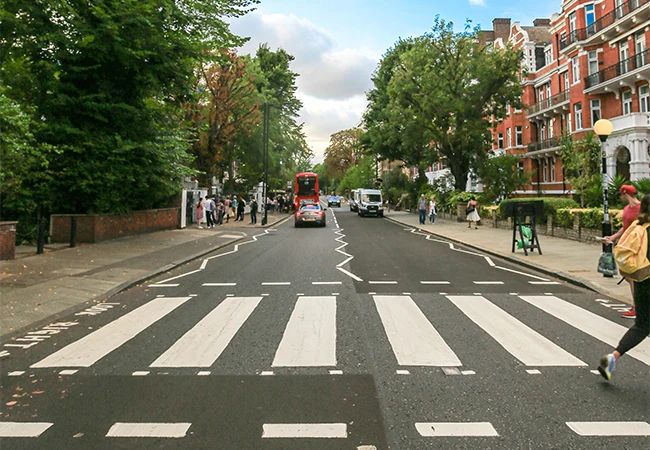
In 1969, the Beatles released Abbey Road, featuring the four band members walking across a zebra crossing near Abbey Road Studios in London.
The photograph transformed an everyday street feature into an international landmark. Visitors still travel there to recreate the image, making the crossing a destination in its own right.
Its cultural significance received formal recognition in 2010, when the Abbey Road crossing became Grade II listed. Historic England’s listing recognises its historical interest and international fame.
Few pieces of road infrastructure have achieved comparable cultural status. The Abbey Road crossing shows how an ordinary part of Britain’s streetscape can become a global symbol.
The Zebra Crossing Today
Modern roads feature several pedestrian crossing designs, including pelican, puffin, toucan and parallel crossings. Each serves different needs, but the zebra crossing remains a familiar part of Britain’s road network.
Technology has advanced since the 1950s, including improvements to beacon lighting. However, the basic design remains remarkably consistent, relying on contrasting stripes and Belisha beacons to make crossing points more visible.
The rules have also evolved. Under the current Highway Code, drivers and riders must give way to pedestrians on a zebra crossing. They should also give way to pedestrians waiting to cross.
The 2022 Highway Code changes reinforced the importance of protecting vulnerable road users. For drivers, that means staying alert near crossings, looking out for people approaching the kerb and allowing enough time to stop safely.
Even familiar road features deserve attention. A crossing works best when drivers and pedestrians remain aware of one another.
For more motoring guidance, read our article on understanding the different types of pedestrian crossings.
A Lasting Legacy of a British Road Icon
The zebra crossing began as part of a wider effort to make roads safer for pedestrians. Through research and experimentation, its distinctive design emerged and became a lasting feature of British streets.
Its appearance on the Abbey Road album cover later gave it international recognition, turning a practical road marking into a cultural landmark.
As the zebra crossing celebrates its 75th anniversary on 31 October 2026, its enduring appeal is clear. What started as a road-safety innovation has become an everyday sight that people around the world can recognise.
Sometimes, even the simplest ideas leave the biggest mark.