
Peugeot revisited one of its most distinctive modern cars with the RCZ Vision, an electric coupé combining dramatic styling with advanced technology.
Unveiled as a concept, it showcased the brand’s performance ambitions with 500bhp, up to 373 miles of range and a claimed 10-minute rapid charge. It also introduced a fresh design philosophy and an unconventional approach to driver controls.
The concept arrived as the Paris Motor Show opened on 12 October 2026. It offered a glimpse of how Peugeot intended to preserve character and driving enjoyment in an increasingly electric future.
Rather than simply updating the original coupé, Peugeot used the Vision to explore a more radical direction for its future models.
A New Chapter for the Peugeot RCZ
Produced between 2009 and 2015, the original Peugeot RCZ earned a following through its distinctive styling and sporting character. Its sculpted body and double-bubble roof helped it stand apart from more conventional coupés.
The Vision revisited that formula through Feline Future, a design philosophy built around freedom, courage, elegance, inner force and instinct. These principles encouraged designers to combine expressive shapes with precise detailing and a strong emotional appeal.
The concept was therefore more than a nostalgic tribute. It explored how Peugeot’s heritage could influence a new generation of electric cars while creating a distinct identity for future models.
Sculpted Styling and Distinctive Details
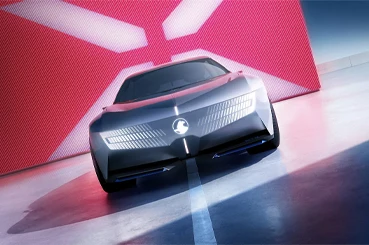
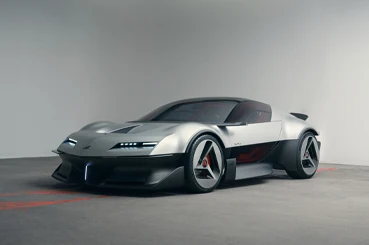
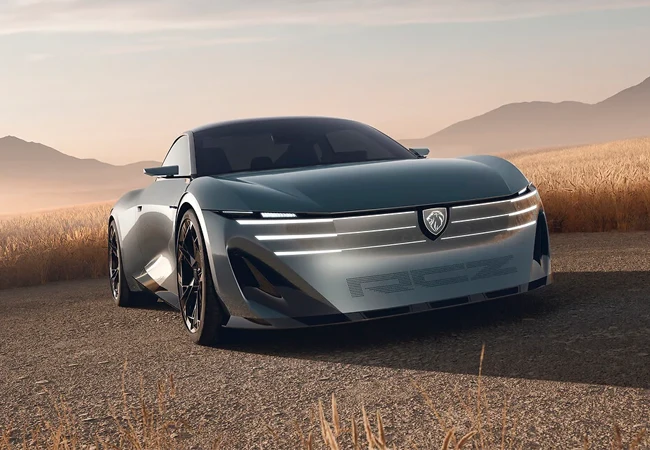
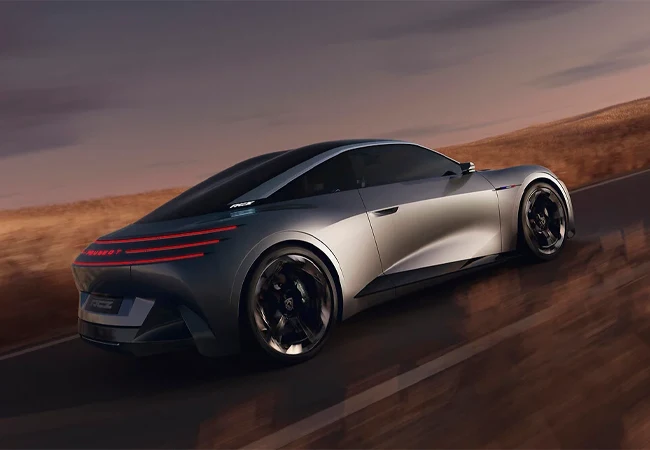
The RCZ Vision adopted a low, muscular stance, with broad front and rear shoulders contrasting against deeply sculpted flanks. Its slim, glass-like cabin sat above the wider body, creating a dramatic silhouette with a poised, feline character.
The roof remained a defining feature. Peugeot extended the original double-bubble idea into a sweeping glass effect running towards the rear, while slimmer arches appeared to float above the cabin. The reinterpretation also aimed to improve the space available to rear passengers.
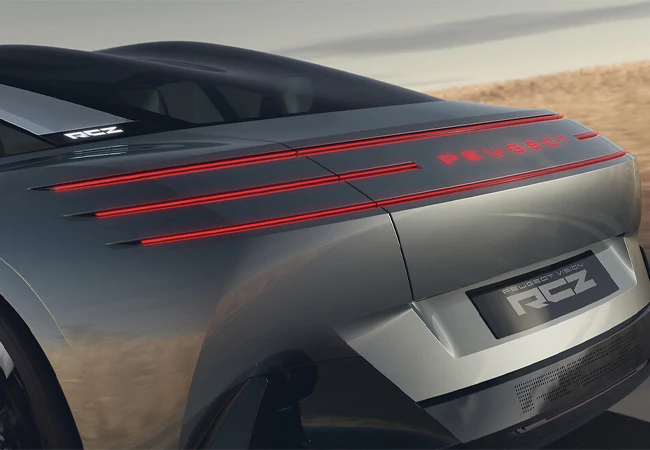
Lighting gave the concept a recognisable Peugeot identity. Three ultra-slim horizontal light elements formed the front and rear signatures, while compact LED headlamps created a focused expression at the nose. An illuminated emblem and intricate RCZ detailing added visual interest without disrupting the overall shape.
At the back, an active spoiler remained concealed when stationary and deployed in motion to support aerodynamic efficiency. The concept’s lightweight theme also extended to its forged-alloy wheels, measuring 21 inches at the front and 22 inches at the rear. Their carefully shaped spokes aimed to minimise material use, while recycled-aluminium-effect paint replaced solid aluminium in the roof-arch detailing.
Every element supported the same ambition: to make the RCZ Vision visually striking without sacrificing aerodynamic efficiency.
500bhp and Up to 373 Miles of Electric Range
Beneath its dramatic exterior, the RCZ Vision showcased Peugeot’s approach to high-performance electric mobility.
The concept used the STLA One platform and a solid-state battery developed with Factorial Energy. A 1,000-volt electrical architecture supported the powertrain and its rapid-charging ambitions.
Peugeot quoted 500bhp and a range of up to 600 kilometres, equivalent to around 373 miles. It also targeted energy consumption of 11.5kWh per 100km, or approximately 18.5kWh per 100 miles.
That consumption figure was a projected WLTP combined-cycle value awaiting confirmation, rather than a verified production-car result.
The battery measured just 110mm thick, helping Peugeot pursue a low profile. Solid-state technology also promised high energy density, potentially allowing more energy storage within a compact package.
Charging performance was another headline claim. Peugeot stated that the battery could charge from 10% to 80% in just 10 minutes.
These figures remained concept targets, but they illustrated the manufacturer’s ambition to combine strong performance with improved efficiency and shorter charging stops.
Hypersquare Rethought the Driver’s Controls
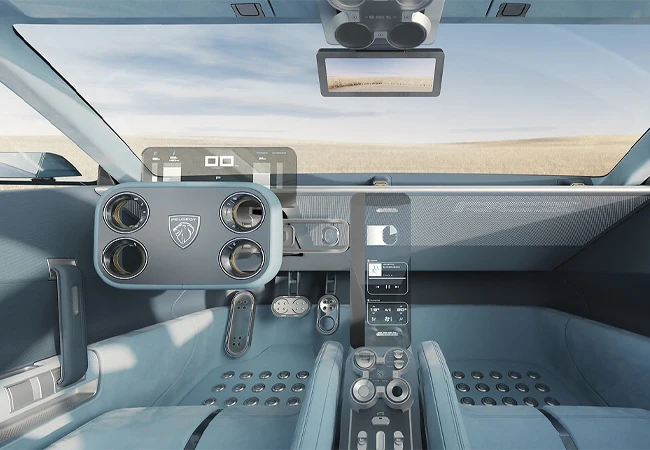
Inside, the RCZ Vision explored an alternative to the conventional steering wheel. Its Hypersquare control featured four circular sections that allowed drivers to operate key functions at their fingertips.
The system worked with steer-by-wire technology, replacing the traditional mechanical connection between the steering control and wheels with electronic commands.
Steering response adjusted according to speed. At low speeds, smaller movements helped make parking and tight turns easier. At higher speeds, the system became less sensitive to small inputs, supporting smoother progress. Peugeot also aimed to filter unwanted vibrations caused by uneven road surfaces.
The concept featured the same production version of Hypersquare planned for the next-generation Peugeot E-208, previewing technology intended for future road cars.
It also introduced brake-by-wire, which replaced the hydraulic connection between the brake pedal and braking system with electronic control. This allowed more precise modulation and closer integration with regenerative braking.
The RCZ Vision further showcased Level 2++ automated-driving capability, including an on-demand hands-free function. The technology aimed to make journeys more convenient while leaving drivers responsible for supervising the car.
A Digital Cabin Without the Screen Clutter
Peugeot took a restrained approach to digital displays. The next-generation i-Cockpit combined transparent Micro LED technology with a separate central screen, keeping essential information close to the driver’s natural line of sight.
Positioned above Hypersquare, the transparent display showed driving information without dominating the dashboard. A vertically oriented central screen handled navigation and infotainment.
Drivers could customise the information presented, while the central display could be switched off completely. Its transparent construction helped it fade from view when not required, reducing visual clutter.
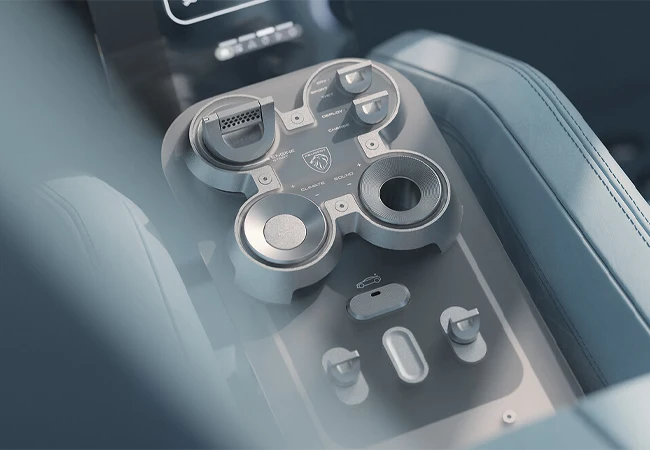
Physical controls remained important. The floating centre console brought together functions such as climate settings and driving modes through machined-aluminium controls set into a frosted-glass surface.
The four-seat cabin reflected the car’s grand touring ambitions. Supportive seats and folding rear seatbacks balanced passenger comfort with additional luggage capacity when needed.
Alcantara and PELINOVA recycled leather created a light, tactile interior. Made using leather offcuts from the leather-goods industry, PELINOVA offered another use for material that might otherwise go to waste.
A clock designed with French watchmaker SERICA added a final detail, blending traditional watchmaking influences with the contemporary cabin.
What the RCZ Vision Revealed About Peugeot’s Future
The RCZ Vision brought together new styling, digital controls and electric powertrain technology in a single concept. Its Feline Future philosophy offered clues about Peugeot’s evolving design language, while its solid-state battery and 1,000V architecture highlighted potential advances in efficiency and charging.
The STLA One platform also supported a modular approach to vehicle development, with component reuse and recycling considered within the wider design strategy.
Not every feature or performance figure was guaranteed to reach production unchanged. Nevertheless, the concept demonstrated how Peugeot intended to approach electric mobility without treating efficiency as its only priority.
The original RCZ built its reputation on distinctive looks and sporting appeal. The Vision carried that spirit into the electric age, adding ambitious charging targets and technology designed to make driving more intuitive.
Ultimately, the concept delivered a clear message at the Paris Motor Show: Peugeot’s electric future was intended to retain design flair, driver involvement and emotional appeal.