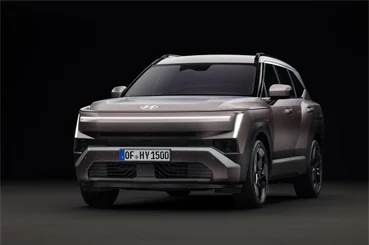

Hyundai chose the Paris Motor Show to introduce the all-new BAYON, giving its compact SUV a more assertive look and a stronger focus on passenger comfort. The Paris Motor Show started on 12 October 2026, placing the new model among the event’s major automotive reveals.
The BAYON had been designed for drivers who wanted SUV styling without the bulk of a larger family car. This latest version built on that idea. It paired compact exterior dimensions with a more upright stance, sharper detailing and a cabin packed with technology. Hyundai’s message was straightforward: a small SUV did not have to feel basic.
A bolder look for a compact SUV
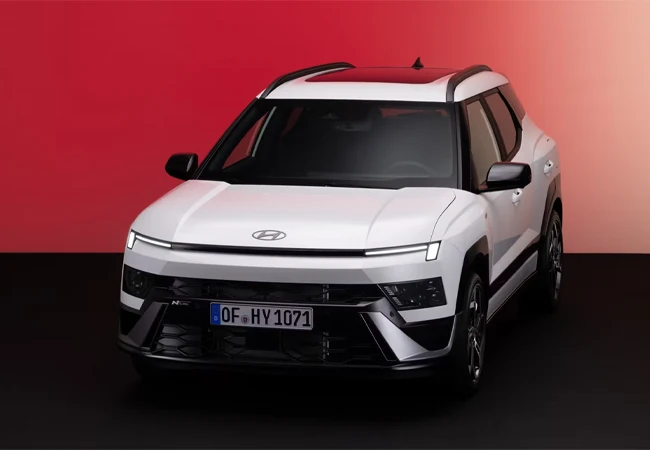
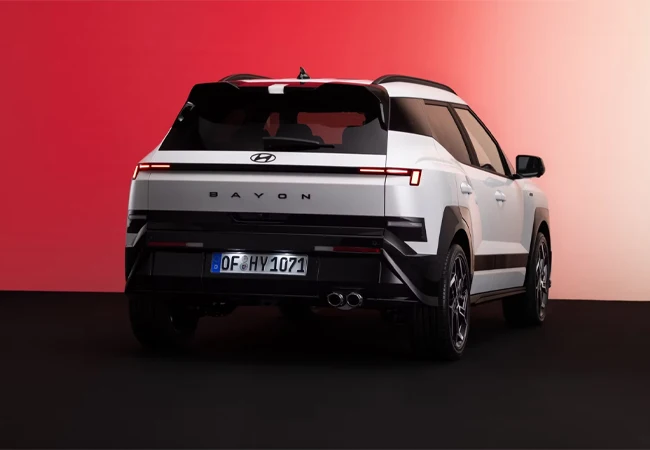
The redesigned BAYON adopted a more angular appearance, with defined body creases, pronounced wheel arches and a sculpted bonnet. A full-width horizontal lighting signature gave the front end a distinctive identity. Rugged lower trim and skid plates reinforced its SUV character.
At the rear, matching lighting graphics and an angular skid plate helped the car appear wider and more planted. Short overhangs and compact proportions remained important, however. They helped the BAYON stay suited to busy streets and tight parking spaces.
Customers could choose alloy wheels measuring up to 18 inches, alongside an optional contrasting black roof. Hyundai also highlighted three matte paint finishes: Vibrant Blue Matte, Ice Blue Matte and Fierce Red Matte. These options gave the compact SUV a more individual look than a conventional palette of solid and metallic colours.
The N Line added a sportier edge
Drivers wanting a more expressive appearance could look towards the BAYON N Line. This version introduced distinctive styling details while retaining the car’s everyday practicality.
Features included technical mesh detailing, lower-bumper winglets, 18-inch N Line alloy wheels and glossy black cladding. At the rear, a diffuser and twin exhaust outlets created a more performance-inspired finish. Inside, N Line cloth and textile suede seats carried the sporting theme into the cabin.
The result was a more assertive-looking version for buyers who preferred a sportier design. It retained the BAYON’s emphasis on everyday usability, rather than focusing solely on performance.
More digital features and easier connectivity
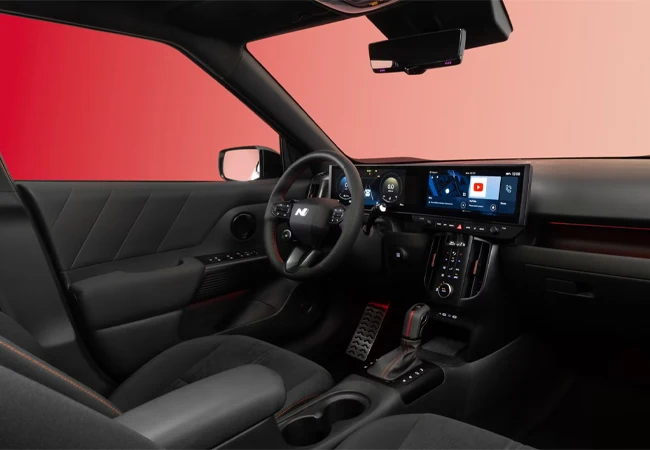
The cabin received a technology upgrade intended to make daily driving simpler. Depending on specification, the BAYON featured two 12.3-inch screens: one for the driver’s instruments and another for infotainment. Their curved, panoramic arrangement created a more integrated dashboard.
Wireless Apple CarPlay and Android Auto allowed compatible smartphones to connect without a cable. Hyundai Digital Key 2 also enabled drivers to unlock and start the car using a compatible smartphone or smartwatch. For music fans, an available Bose Premium Sound System delivered audio through eight speakers.
These features offered practical benefits beyond a modern-looking dashboard. Wireless phone integration reduced cable clutter, while the digital key made vehicle access more convenient. Equipment availability depended on the version and market.
Comfort received attention in both rows
Hyundai placed particular emphasis on passenger comfort, an area where smaller SUVs could sometimes feel compromised. Available heated and ventilated front seats offered comfort throughout the year. Driver lumbar support and height adjustment for both front seats also helped occupants find a suitable driving position.
Rear passengers received extra consideration. The updated layout offered increased legroom and reclining rear seatbacks. A centre armrest with integrated cupholders added convenience on longer journeys. Depending on specification, rear seats could also be heated, while dedicated air ducts helped circulate air towards the back.
An available opening panoramic sunroof brought more daylight into the cabin. Dual-zone automatic climate control, soft-touch surfaces and ambient lighting further enhanced the interior atmosphere.
Together, these details helped the BAYON reach beyond the basic expectations often associated with the compact SUV class. The emphasis was on making journeys more pleasant for everyone, not just the driver.
Driver assistance aimed to make journeys less demanding
The BAYON offered Hyundai SmartSense driver assistance technology to support drivers in different situations. Depending on specification, features included Highway Driving Assist 2, Forward Collision-Avoidance Assist 2, Lane Following Assist 2 and Smart Cruise Control.
Blind-Spot Collision-Avoidance Assist and Rear Cross-Traffic Collision-Avoidance Assist were also available. These systems were designed to help drivers monitor areas that could be difficult to see, particularly when changing lanes or reversing from a parking space.
A Blind-Spot View Monitor and Surround View Monitor provided additional visual information. Parking Collision-Avoidance Assist-Reverse also offered support during manoeuvres.
These technologies were designed to assist drivers, rather than replace their attention. Their inclusion nevertheless showed how advanced assistance features had become more accessible in smaller vehicles. Exact equipment levels varied between versions and markets.
Space for everyday routines
Despite its compact footprint, the BAYON was designed to handle commuting, shopping trips and family duties. Hyundai said the longer wheelbase supported generous rear legroom. Headroom and shoulder room were also prioritised to improve space for occupants.
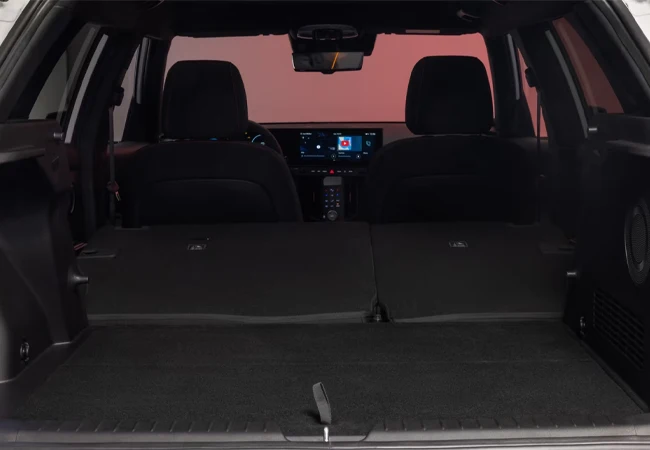
Internal-combustion versions were projected to offer 440 litres of luggage capacity. Extra storage beneath the boot floor provided room for smaller items, while a stowable luggage-compartment cover helped owners manage the load area.
The combination of a practical boot and relatively compact exterior dimensions gave the BAYON a useful advantage for urban drivers. It offered SUV styling and everyday versatility without requiring owners to move up to a larger vehicle.
A hybrid version was planned for 2027
Hyundai said a hybrid powertrain would join the BAYON range in 2027, following the initial internal-combustion versions. The planned system was expected to combine a 1.6-litre GDI petrol engine with an electric motor and a six-speed dual-clutch transmission. Hyundai quoted a combined output of 138 PS for this set-up.
The hybrid was also due to introduce adaptive regenerative braking. This system would adjust energy recovery according to driving conditions. Steering-wheel paddle shifters would allow drivers to select their preferred level of regeneration.
The additional powertrain was expected to broaden the BAYON’s appeal as more buyers considered electrified options. Final specifications and availability would depend on the market.
For European markets, Hyundai planned to produce the BAYON at its manufacturing plant in Türkiye. Regional production supported the model’s European focus, alongside its blend of design, connectivity and comfort upgrades.
A more complete everyday SUV
The all-new BAYON was presented as more than a styling refresh. Its stronger exterior identity, sportier N Line option, connected features and enhanced rear-seat amenities supported a broader appeal.
The planned hybrid model was set to add another choice for buyers considering electrified driving. Meanwhile, the practical luggage space and compact dimensions remained central to the car’s everyday role.
Its success would ultimately depend on factors such as pricing, real-world usability and the equipment offered in each market. Even so, the Paris debut showed Hyundai aiming to make the BAYON more spacious, connected and distinctive without losing sight of what mattered most in a compact SUV.