
Suzuki Motor Corporation, a stalwart in the automotive industry, has continually exemplified innovation and reliability since its inception in 1909. Led by Managing Director Takanori Suzuki, the company has established itself as a global leader in manufacturing automobiles, motorcycles, marine outboard engines, and all-terrain vehicles (ATVs).

Suzuki is a name that inspires confidence and a sense of adventure on the road. But this Japanese giant’s story goes beyond sleek car designs and powerful engines. Let’s delve into the fascinating history of Suzuki and explore what makes them a leader in the automotive world.
Who owns Suzuki?
While headlines might mention Toyota as an owner, Suzuki remains a fiercely independent company. Though Toyota holds a significant share (4.94%) in Suzuki, it’s crucial to understand this is a strategic partnership, not a takeover.
Both companies operate independently, with the cross-ownership structure fostering collaboration without compromising their unique identities. Interestingly, Suzuki also owns a small stake (0.2%) in Toyota, solidifying this spirit of mutual respect and shared vision for the future of mobility.
Is Suzuki a Japanese company?
The Suzuki story begins not with roaring engines but with the rhythmic clatter of looms. Founded in 1909 by Michio Suzuki in Hamamatsu, the company initially thrived as the Suzuki Loom Works, supplying weaving looms for Japan’s booming silk industry. For three decades, they played a vital role in this sector.
However, with a keen eye for innovation and a desire to diversify, Michio Suzuki decided to venture into a new territory – automobiles. This pivotal decision in 1937 marked the beginning of Suzuki’s incredible journey as a renowned automaker.
While Suzuki is quintessentially Japanese, it maintains its autonomy while benefiting from a minority ownership by Toyota, fostering collaboration without compromising independence.
What was the first Suzuki car?
The year was 1955, and Suzuki unveiled a game-changer: the Suzulight. This wasn’t just their first car; it was a testament to their innovative spirit and a glimpse into the future of Suzuki.
The Suzulight broke away from the conventional and embraced a revolutionary design philosophy. This small, lightweight, and fuel-efficient car was a marvel of engineering, perfectly suited for navigating the bustling streets of post-war Japan.
Suzulight’s success not only solidified Suzuki’s position in the automotive industry but also laid the foundation for its reputation as a specialist in creating exceptional compact cars.

How many cars has Suzuki sold?
By August 2023, Suzuki had sold an impressive 80 million cars worldwide, reflecting its focus on quality, innovation and driver needs.
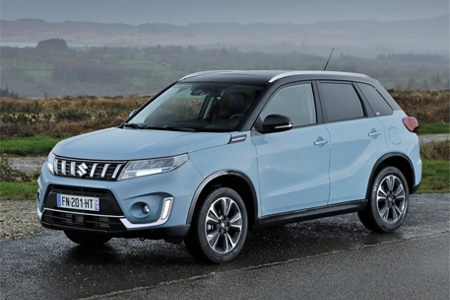
Popular models such as the Swift, Vitara and Jimny have helped drive this success, offering sporty handling, versatility and rugged capability.

Where are Suzuki cars made?
Suzuki’s success isn’t limited to a single location. They’ve established themselves as a global manufacturing powerhouse with a presence in 23 countries. This strategic approach allows them to cater to diverse markets and adapt to regional preferences.
Suzuki produces different models across various factories to maximise efficiency and meet local needs. Magyar Suzuki in Hungary, for example, manufactures the Ignis and Swift, highlighting Suzuki’s expertise in compact cars.
What does Suzuki make besides cars?
Suzuki is best known for its cars and motorcycles, but the Japanese manufacturer has a much wider range of products. Its businesses include motorcycles and scooters, marine outboard engines and motorised wheelchairs, alongside its automotive range.
Suzuki has also developed innovative mobility concepts such as MOQBA, a four-legged mobility vehicle designed to negotiate steps and different levels. MOQBA remains a concept rather than a conventional production model.
Beyond vehicles, Suzuki-branded harmonicas are produced by Suzuki Musical Instrument Manufacturing Co., Ltd., a separate Japanese musical-instrument manufacturer that has been making harmonicas since the 1950s.
So, while Suzuki may be most familiar for its cars in the UK, its wider activities cover cars, motorcycles, scooters, marine engines, mobility products and musical instruments.
Are Suzuki cars reliable?
Reliability is a priority for many drivers, and Suzuki has built a strong reputation for durable, enjoyable vehicles.
In the 2023 WhatCar? Reliability Survey, Suzuki ranked first, with owners reporting few faults and affordable repairs. The Vitara scored 99.3%, while the Swift achieved 98.1%, reinforcing Suzuki’s reputation for reliability.
This durability extends beyond cars to Suzuki motorcycles, outboard engines and ATVs, designed to perform reliably in demanding conditions.
Suzuki Motor Corporation stands as a testament to the enduring values of innovation, reliability, and customer satisfaction. From humble textile beginnings to a global automotive leader, Suzuki continues to push boundaries and set new standards. Its commitment to quality and customers remains at the heart of its future.