
Renault looks back to one of the most distinctive performance cars in its history for its latest concept.
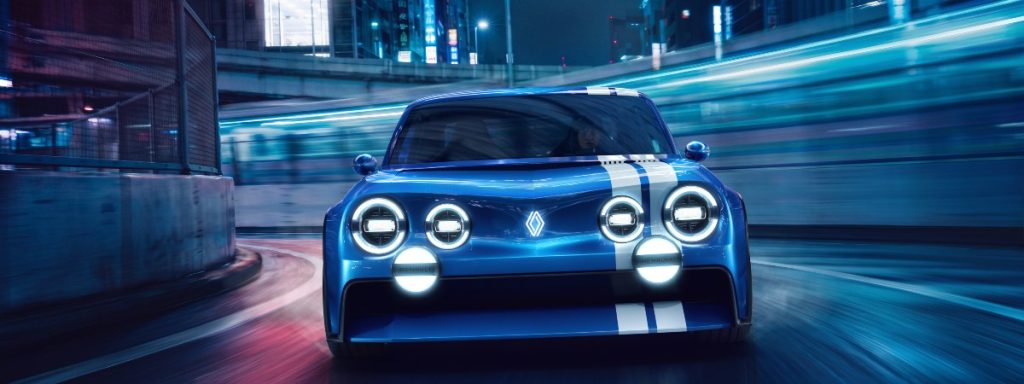
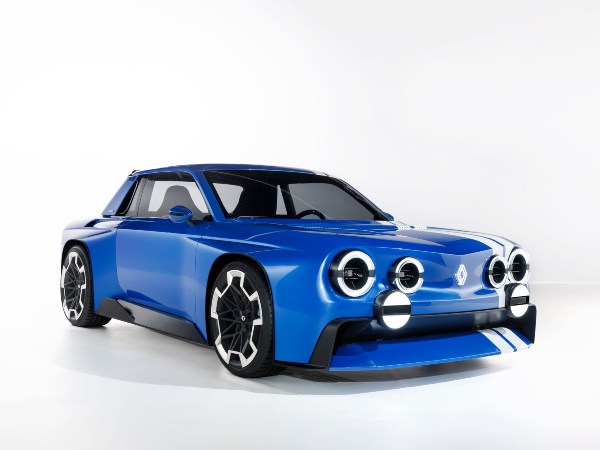
The Renault 8 Gordini Concept reimagines the famous 1960s Renault 8 Gordini as a compact, two-seat electric coupé.
Rather than simply recreating the original, Renault combines recognisable Gordini design cues with much wider proportions, modern rally influences and a 270bhp electric powertrain.
Bringing forth a ‘café racer’ design, bringing the Gordini spirit to life, it truly is a unique model and concept.
And while its appearance might leave some enthusiasts hoping for a new Gordini production model, this particular car is purely a design exercise. Renault has confirmed that the Renault 8 Gordini Concept is a unique example and will not be sold.
So, what has Renault carried over from the original, and what has changed more than 60 years later?
What inspired the Renault 8 Gordini Concept?
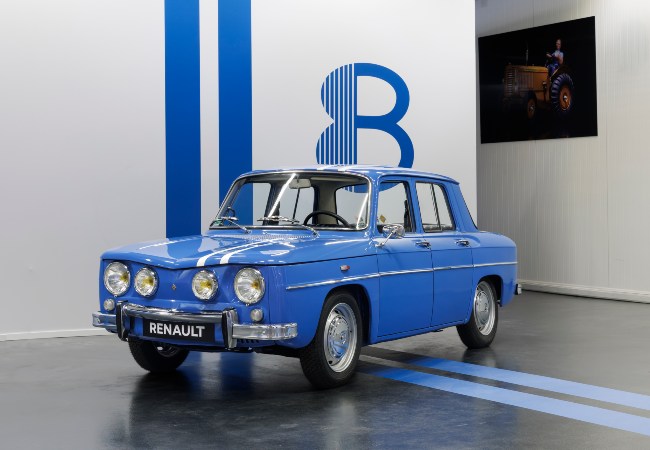
The inspiration dates back to 1964, when the original Renault 8 Gordini was launched.
Its 95bhp engine was mounted at the rear and drove the rear wheels, giving the compact saloon a sporting character that helped make it a significant name in French motorsport. Renault also credits the model with helping to make performance more accessible well before the rise of the hot hatchback.
Perhaps even more recognisable than its mechanical layout was its appearance. Blue paintwork combined with a pair of white stripes became closely associated with Gordini, and both return on the new concept.
However, Renault hasn’t attempted to recreate the old car panel for panel. Instead, the design team takes those recognisable ingredients and asked what a Renault 8 Gordini might look like if it were conceived today.
Classic details meet modern rally-inspired proportions
The difference between old and new is immediately obvious.
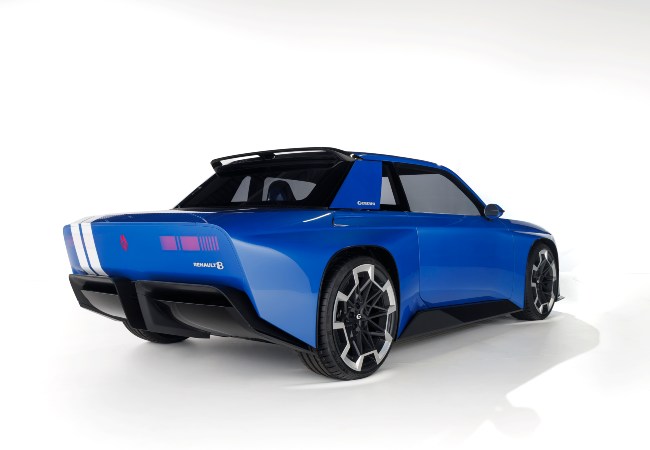
Where the original was a four-door saloon, the Renault 8 Gordini Concept is a two-door, two-seat coupé measuring 4.12 metres long, 1.88 metres wide and just 1.27 metres tall. Renault has given it a broad, low stance intended to evoke contemporary rally cars.
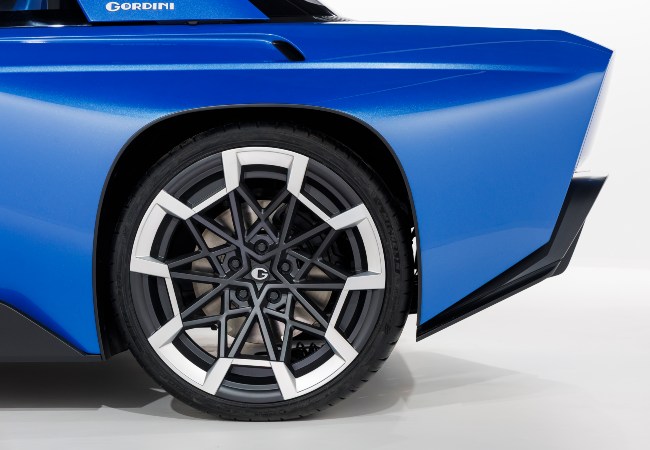
That impression is strengthened by 19-inch front wheels and 20-inch rear wheels, pronounced wheel arches and a heavily sculpted rear end.
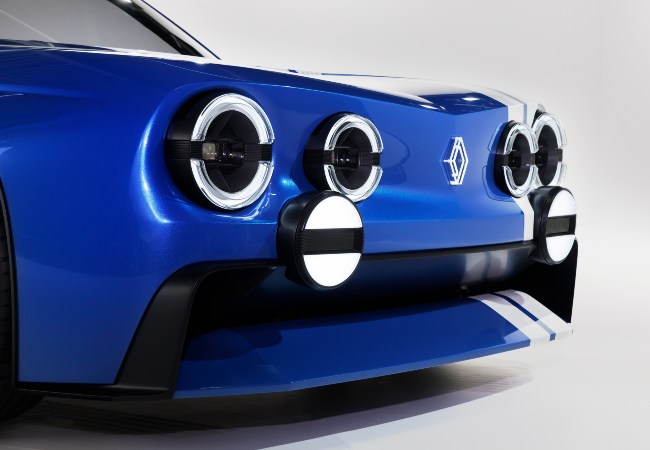
At the front, a sharp V-shaped treatment is combined with six circular headlights.
There is no conventional grille, while the additional lights fitted to rally versions of the historic Renault 8 have effectively been incorporated into the concept’s modern lighting signature.
Look more closely and plenty of less obvious references to the original start to appear.
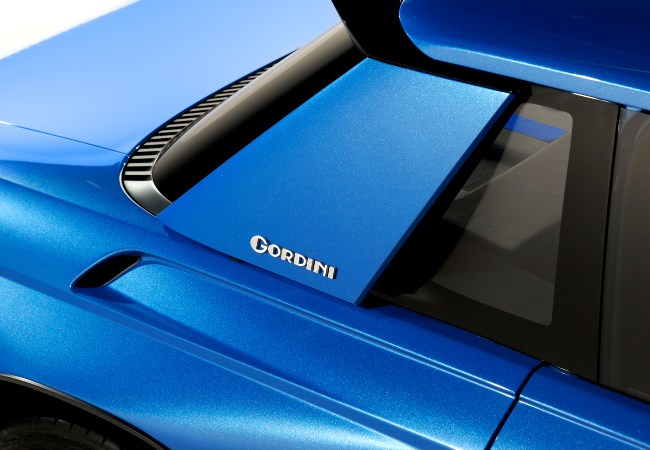
The squared-off wheel arches reinterpret the shape used on the 1960s car, while shell-shaped door mirrors and ventilation details provide further nods to its predecessor. Renault has even redesigned the Gordini lettering and created a new ‘8’ emblem formed from eight individual segments.
Its blue paint is another deliberate connection. Inspired by the original Bleu de France colour, the concept uses a three-layer finish designed to add greater depth and emphasise the shape of the body under changing light.
What is Gordini?
Gordini is a name closely associated with Renault’s performance and motorsport history. It comes from racing engineer Amédée Gordini, who worked with Renault to create higher-performance versions of its road cars during the 1960s.
The Renault 8 Gordini, launched in 1964, became one of the best-known examples, combining increased performance with distinctive blue paintwork and twin white stripes. The new Renault 8 Gordini Concept draws directly on that heritage, reinterpreting those familiar design cues and the original car’s sporting character for an electric concept.
Even the famous Gordini stripes have been reinvented
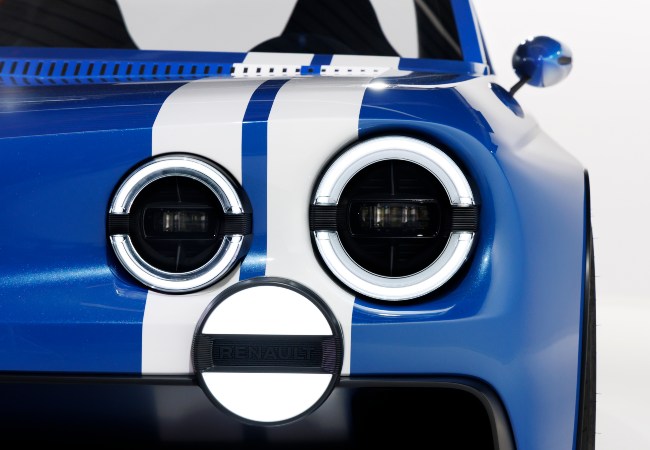
Those two white stripes aren’t simply graphics added to the finished bodywork.
Renault makes them a more fundamental part of the concept’s design, aligning features including the grille beneath the windscreen and elements within the rear lights with the stripes.
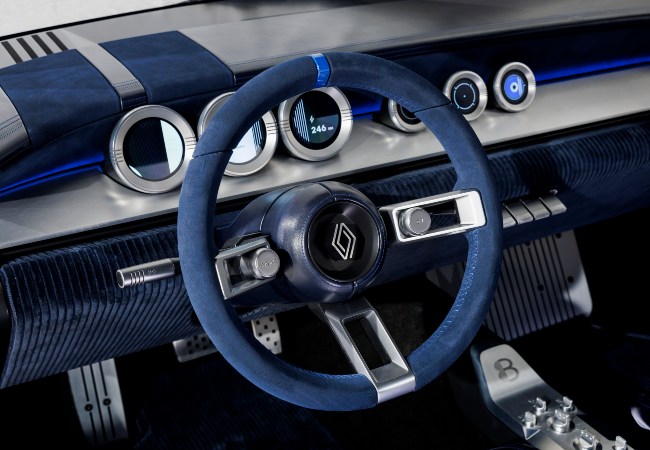
They even continue into the cabin, travelling across the top of the dashboard before changing from white to blue.
It’s a small detail, but one that neatly demonstrates the approach taken with the whole car: familiar Gordini features have been incorporated into the new design rather than simply copied.
Rear-wheel drive remains – but petrol makes way for electric power
The layout also contains one particularly important link to the original.
The historic Renault 8 Gordini combined its rear-mounted petrol engine with rear-wheel drive. The Renault 8 Gordini Concept retains the rear-wheel-drive configuration, but power now comes from a 270bhp electric motor.
Renault hasn’t turned the car into a conventional production EV preview. There are no published driving range or charging figures to pore over, and that’s really beside the point.
Instead, the electric powertrain forms part of an attempt to imagine the spirit of the Gordini in a modern setting. The dramatically widened stance, different wheel sizes and competition-inspired proportions arguably tell us more about the concept’s purpose than a battery specification would.
What does Renault mean by ‘café racer’ design?
There’s another slightly unexpected influence behind the concept: café racer motorcycles.
Traditionally, café racers are modified motorcycles stripped of unnecessary elements, with greater emphasis placed on their shape, materials and mechanical character.
Renault has applied a similar philosophy here.
The old Renault 8’s chrome side moulding, for example, hasn’t simply been reproduced as trim. Instead, its shape has become a line formed directly into the bodywork.
The number of visible panel joins has also been reduced to create cleaner surfaces. Even the bonnet follows the philosophy: it can be removed as a single piece, similar to the arrangement found on some racing cars.
The result is retro-inspired without being deliberately old-fashioned.
The Renault 8 Gordini influence continues inside
The cabin follows much the same philosophy.
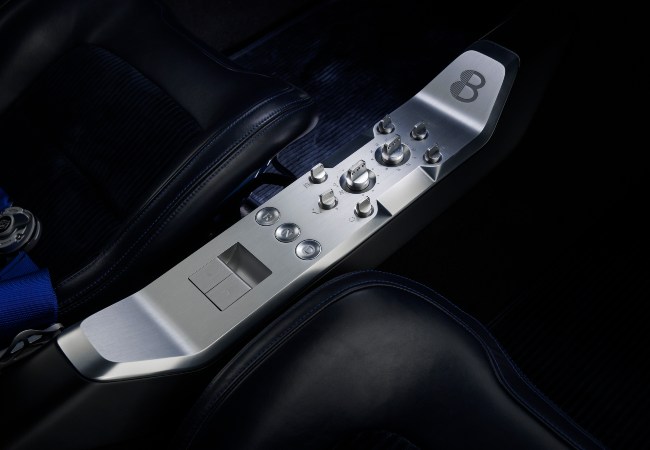
A horizontal brushed aluminium dashboard references the metal dashboard of the original Renault 8, while a row of circular digital displays echoes traditional round instruments.
Aluminium is used extensively for both controls and larger surfaces, contrasting with Alcantara-trimmed areas. Renault has intentionally kept the cabin visually simple, with relatively few components and little to distract from the driving environment.
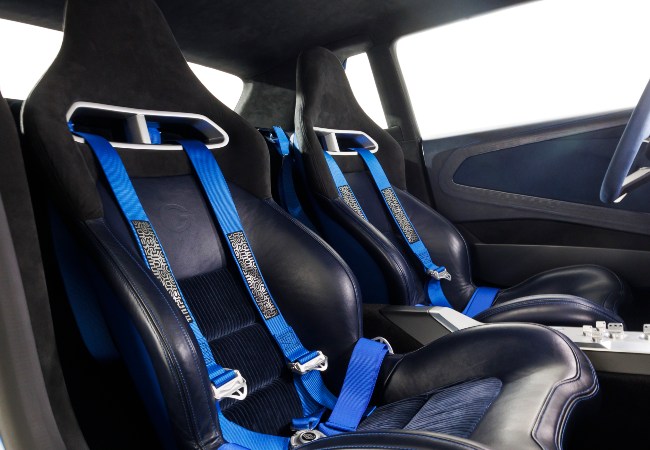
The seats provide another particularly obvious link to the past.
Modern bucket seats replace the simple seats of the original, but their centres are finished in blue corduroy, recalling the material and appearance of the historic car. Motorsport-inspired stitching across the interior adds another subtle reference.
Interestingly, although carbon fibre is used on the exterior, Renault has avoided carrying it into the passenger compartment. The interior instead relies on aluminium, fabric and carefully shaped individual components to create its character.
More than 300 designs led to the finished concept
The Renault 8 Gordini Concept wasn’t created from a single designer’s initial sketch.
Renault began the project with an internal design competition, with its designers submitting more than 300 sketches. Ideas ranged from relatively traditional retro interpretations to much more futuristic proposals.
Two designs were eventually selected and developed into scale models before elements from both were brought together for the finished concept.
The entire project was completed within the manufacturers own design operation. That differs from some of the manufacturer’s other heritage-inspired projects, such as the R17 electric restomod created with designer Ora Ïto.
Will Renault build the 8 Gordini Concept?
Unfortunately for anyone already wondering where they can order one, no production version has been announced.
Renault describes the car as a unique design exercise intended to explore how one of its historic models could be interpreted today. It follows other one-off heritage projects including the Renault 5 Diamant and R17 electric restomod x Ora Ïto.
That doesn’t make the Renault 8 Gordini Concept any less interesting.
Instead of simply recreating a car from the 1960s, Renault has retained some of the elements that made the original distinctive – rear-wheel drive, blue paintwork, white stripes and compact performance-car character – while allowing everything around them to change.
The Renault 8 Gordini Concept was unveiled on 24 September 2026 and is set to appear on the marques stand at the Paris Motor Show from 12 to 18 October 2026. It will later form part of a heritage collection Renault is working on, alongside historic vehicles, archives and other one-off creations.