
Modern transport is dominated by cars – there’s no escaping them. Step onto any street, and you might spot a 2004 Vauxhall Corsa, a 17-plate Fiat 500, and a top-of-the-range JAECOO 7 all in a single moment. But have you ever stopped to think about how all these vehicles actually got started?
Before global manufacturing empires, sleek modern showrooms, and cutting-edge electric powertrains came to dominate our roads, today’s motoring giants were modest workshops trying to solve a fresh engineering puzzle. Some started with steam power, others with converted lightweight trucks, and a few with rebadged family saloons.
Here is a captivating look at the very first motor vehicles launched by 30 of the world’s most famous car manufacturers, detailing how these iconic brands took their initial steps into motoring history.
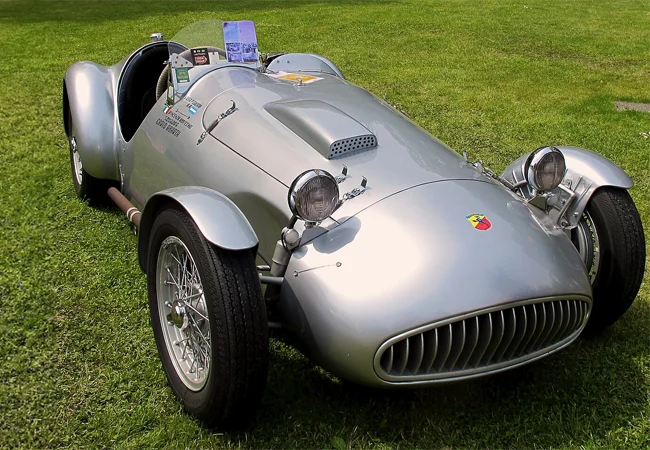
Abarth: 204 A Roadster
Carlo Abarth founded his famous marque in 1949, wasting no time in creating a machine built purely for speed. The Abarth 204 A Roadster was a sleek, lightweight sports car built upon a modified Fiat chassis.
Powered by a modest 1.1-litre engine producing roughly 37 kW (50 bhp), it punched far above its weight on European racing circuits thanks to its aerodynamic aluminium body.
Alpine: Alpine A106
Jean Rédélé, a French garage owner and rally driver, launched Alpine in 1955 with the striking A106. Based on mechanical parts from the humble Renault 4CV, the A106 featured a pioneering lightweight fibreglass body shell. This clever, weight-saving structure gave the car impressive agility, laying the precise engineering foundations for Alpine’s legendary rally successes in later decades.
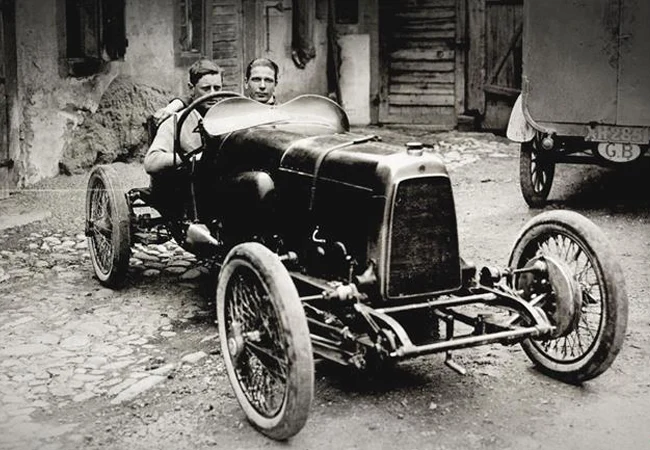
Aston Martin: 1908 Isotta Fraschini
Before Aston Martin crafted bespoke British sports cars, its founders, Lionel Martin and Robert Bamford, experimented with existing machinery. In 1914, Martin fitted a Coventry-Simplex four-cylinder engine into the chassis of a 1908 Isotta Fraschini.
Nicknamed ‘Coal Scuttle’, this experimental hybrid vehicle became the very first car to bear the Aston Martin name, setting off a century of motoring passion.
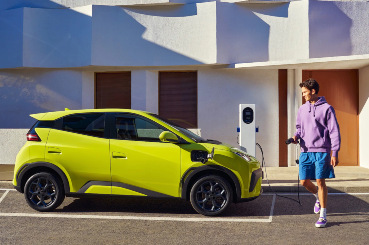
BYD: BYD F3
Long before becoming a global powerhouse in electric mobility, Chinese manufacturer BYD entered the auto market in 2005 with the F3. Powered by a 1.5-litre petrol engine, this budget-friendly compact saloon featured design cues reminiscent of contemporary Japanese saloons. It quickly became a massive commercial success, providing BYD with the revenues needed to fund its massive electric vehicle revolution.
Changan: Changjiang Type 46 Jeep
Changan’s journey into four-wheeled transport began in 1958 with the rugged Changjiang Type 46 Jeep. Developed primarily for military and utility use, this compact four-wheel-drive vehicle was China’s very first domestically produced Jeep.
Powered by a small 2.2-litre engine, it proved remarkably reliable in tough terrain and kicked off Changan’s long automotive evolution.
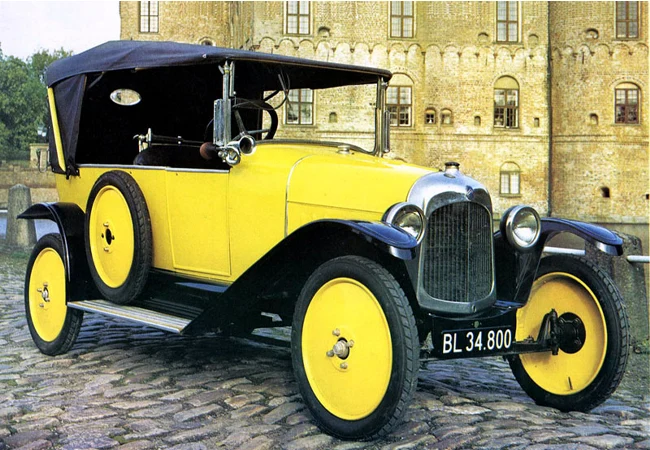
Citroën: Type A
Industrialist André Citroën launched the Type A in 1919, making history as Europe’s first mass-produced automobile.
Driven by a 1.3-litre four-cylinder engine yielding a top speed of nearly 40 mph (65 km/h), the Type A was remarkable for coming fully equipped straight from the factory, including electric lighting and an electric starter motor
CUPRA: SEAT Ibiza Cupra & Cupra Ateca
The CUPRA name first appeared in 1996 on the hot-hatch SEAT Ibiza Cupra, celebrating rally championship victories. However, when CUPRA spun off as an independent standalone performance brand decades later, its very first official standalone model was the high-performance CUPRA Ateca SUV, launched in 2018 with a formidable 221 kW (300 bhp) engine.
Dacia: Dacia 1100
Romanian automaker Dacia began manufacturing in 1968 with the Dacia 1100. Built under licence from Renault, this rear-engine family saloon was essentially a rebadged Renault 8. Capable of reaching top speeds around 80 mph (130 km/h), the 1100 provided affordable, essential motoring across Eastern Europe for many years.
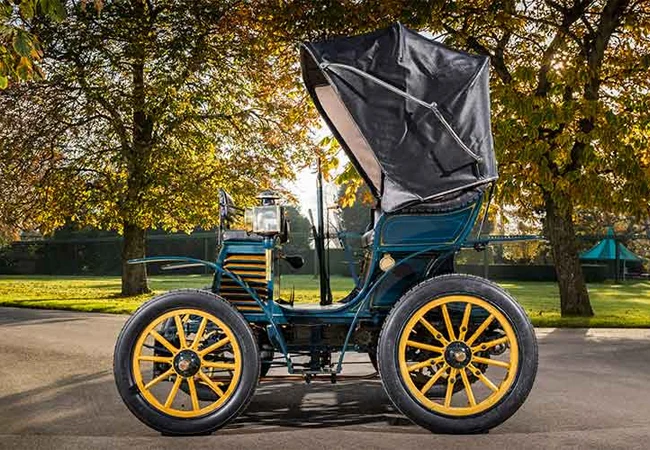
FIAT: Fiat 3 ½ HP
Fabbrica Italiana Automobili Torino (FIAT) debuted its very first automobile in 1899 with the Fiat 3 ½ HP.
Featuring a rear-mounted 679 cc twin-cylinder engine that produced just 2.6 kW (3.5 bhp), this vis-à-vis carriage seated passengers facing each other. Only 26 units were produced, marking the humble origins of an Italian automotive giant.
Ford: Model A
While the Model T made Henry Ford famous, the company’s first vehicle was actually the 1903 Model A. Driven by a two-cylinder engine producing 6 kW (8 bhp), this open two-seater runabout had a top speed of 30 mph (48 km/h). Buyers could add option packages like a removable rear tonneau for family journeys.
Geely: HQ / Haoqing
Geely entered car production in 1998 with the HQ (Haoqing), an affordable hatchback based on the platform of the Tianjin Xiali (itself a licensed Daihatsu Charade). Powered by a small 1.0-litre engine, the low-cost HQ allowed Geely to gain a firm foothold in China’s rapidly expanding domestic passenger car market.
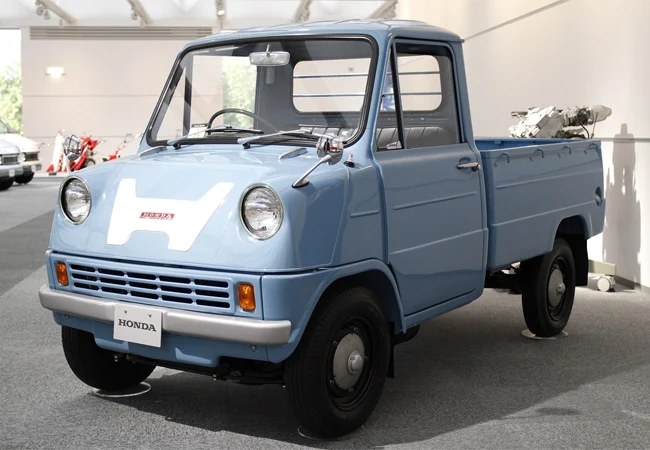
Honda: T360 Mini-Truck
Famous today for smooth saloons and high-revving sports cars, Honda’s first full four-wheeled production vehicle was actually a micro utility truck.
Introduced in 1963, the T360 mini-truck featured a mid-mounted 354 cc double-overhead-cam engine that revved up to an astonishing 8,500 rpm, delivering a modest 22 kW (30 bhp).
Hyundai: Cortina
Hyundai Motor Company was established in 1967 and began its journey not with a self-designed vehicle, but by assembling cars for Ford. In 1968, Hyundai completed its first assembled car: the Hyundai Cortina. Built under a technology transfer agreement with Ford of Britain, this popular saloon gave Hyundai invaluable assembly expertise.
JAECOO: JAECOO 7
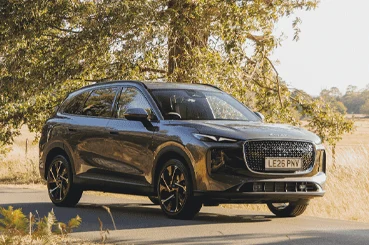
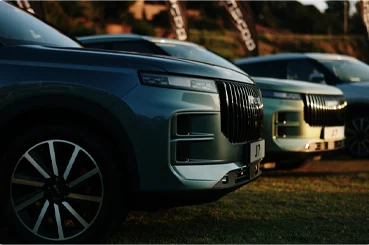
A recent arrival in the global SUV space, JAECOO made its grand entrance in 2023 with the sleek JAECOO 7. Designed as an adventurous off-road styled SUV, it combines modern luxury with smart all-terrain drive modes, offering both traditional 1.6-litre turbocharged petrol engines and plug-in hybrid options for modern drivers.
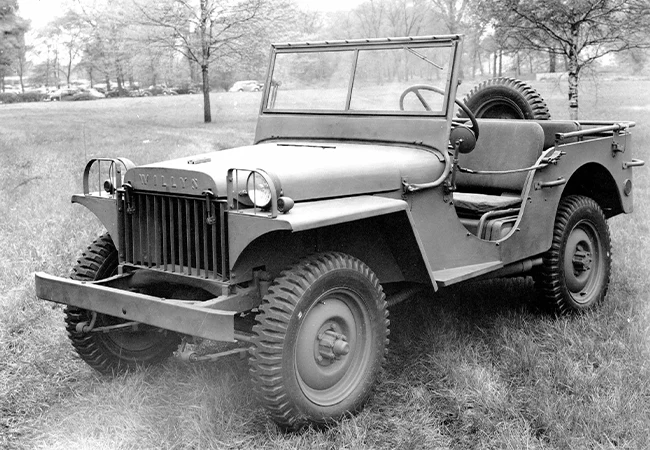
Jeep: Willys Quad
The legendary Jeep brand can trace its roots directly to the 1940 Willys Quad, a prototype built to meet rigorous US Military specifications for a lightweight, four-wheel-drive reconnaissance vehicle.
Featuring the famously reliable ‘Go Devil’ engine, the Quad laid the blueprint for the civilian Jeeps that captured world attention post-war.
KGM (SSangYong): Musso
KGM, long known as SsangYong, established its reputation for robust, all-weather luxury vehicles with the 1993 Musso SUV. Featuring smooth styling designed in Britain and dependable Mercedes-Benz licensed engines, the Musso offered great towing capabilities and spacious family transport at an approachable price.
Kia: Brisa
Starting out as a manufacturer of bicycle parts and steel tubing, Kia produced its very first passenger automobile in 1974: the Kia Brisa. Based closely on the Mazda Familia, the compact Brisa was powered by a frugal 1.0-litre engine and became a runaway sales hit in South Korea.
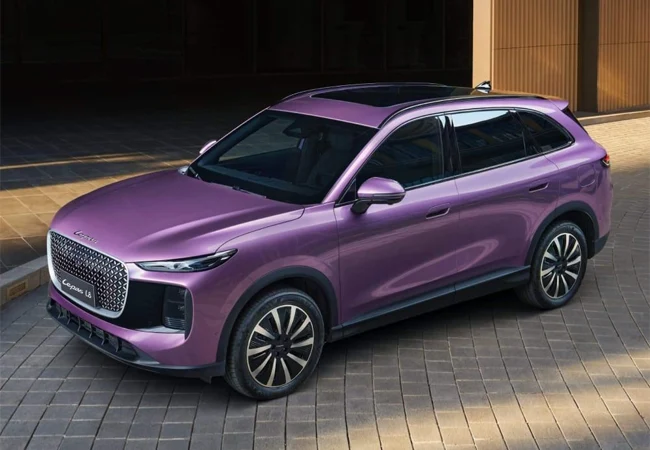
LEPAS: L8
Emerging as an ambitious new premium electric mobility brand, LEPAS unveiled the L8 as its flagship debut model.
Focused on high-end luxury, intelligence, and ultra-long electrified range, the L8 represents a modern blend of sophisticated interior technology and sharp futuristic styling.
Lexus: LS 400
Toyota spent six years and over a billion dollars developing its luxury division, Lexus. It was a massive gamble. Finally debuting in 1989, the sensational Lexus LS 400 arrived to redefine the market. Under the bonnet sat a silky-smooth 4.0-litre V8 engine outputting 190 kW (256 bhp). With its whisper-quiet cabin and exceptional build quality, the saloon thoroughly shocked established European rivals.
Mazda: R360
Mazda entered the passenger vehicle market in 1960 with the adorable R360 microcar. Weighing just 380 kg, this tiny two-door coupe was powered by a rear-mounted air-cooled 356 cc V-twin engine. Its clever weight-saving construction made it extremely fuel efficient and affordable for post-war Japanese commuters.
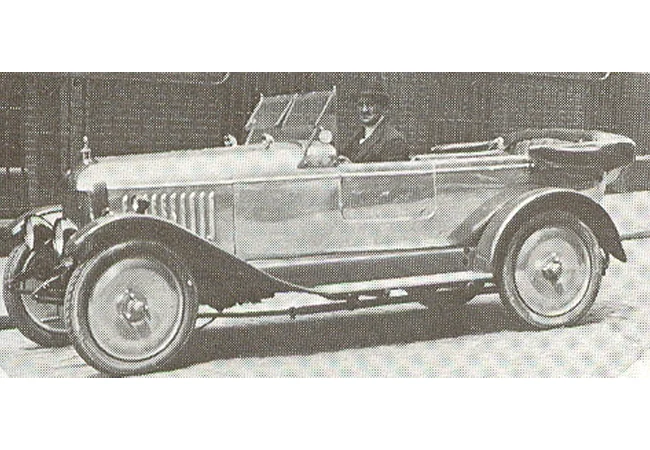
MG: MG 14/28
Cecil Kimber created the very first MG vehicle in 1924. As manager of Morris Garages, he launched the iconic MG 14/28.
He took a standard Morris Cowley chassis, fitted a sportier two-seater body, and added tuned suspension. The result was an accessible, stylish sports car. It birthed a legendary brand.
Nissan: DAT
Nissan’s heritage traces back to the Kaishinsha Motor Car Works, which built its first car in 1914 called the DAT. The name was an acronym formed from the surnames of the company’s three main financial backers: Den, Aoyama, and Takeuchi. Powered by a 15 bhp two-cylinder engine, it paved the way for the later ‘Datsun’ line.
OMODA: OMODA 5
OMODA aimed squarely at young global drivers with its debut. Introduced in 2022, the eye-catching OMODA 5 crossover made an instant statement. It featured a striking borderless front grille alongside dual widescreen interior displays. Buyers could choose between turbocharged petrol or pure electric powertrains. Bold and futuristic, it signalled an exciting new design direction for the brand.
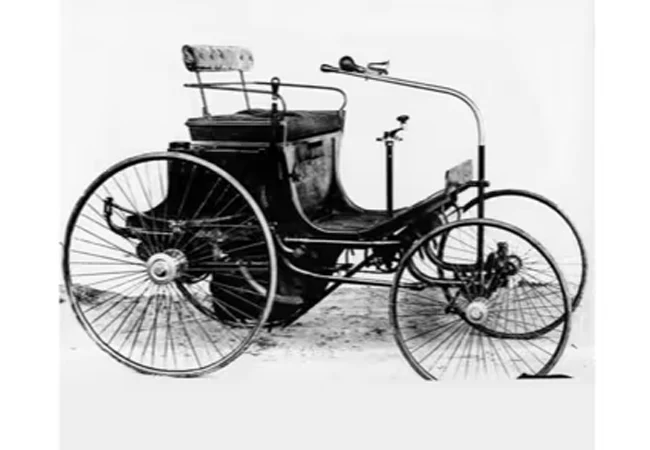
Peugeot: Steam Trike & Type 2
Peugeot’s very first motor vehicle was an 1889 steam-powered three-wheeled car built in collaboration with steam engineer Léon Serpollet. However, recognising the limitations of steam,
Peugeot built their first petrol-powered four-wheeler, the Type 2, in 1890, driven by a Panhard-Daimler engine.
Polestar: Polestar 1
Formerly Volvo’s high-performance racing arm, Polestar launched as an independent electrified vehicle brand with the breathtaking Polestar 1 in 2019. This exclusive 2+2 grand tourer combined a supercharged and turbocharged petrol engine with dual electric motors to output a staggering 447 kW (609 bhp).
Renault: Renault Voiturette
Louis Renault constructed his very first car, the Renault Voiturette (meaning ‘Renault Little Car’), in 1898. Featuring a revolutionary direct-drive transmission with a driveshaft rather than messy chains, the 0.75 bhp single-cylinder runabout proved so impressive that spectators immediately placed orders on Christmas Eve.
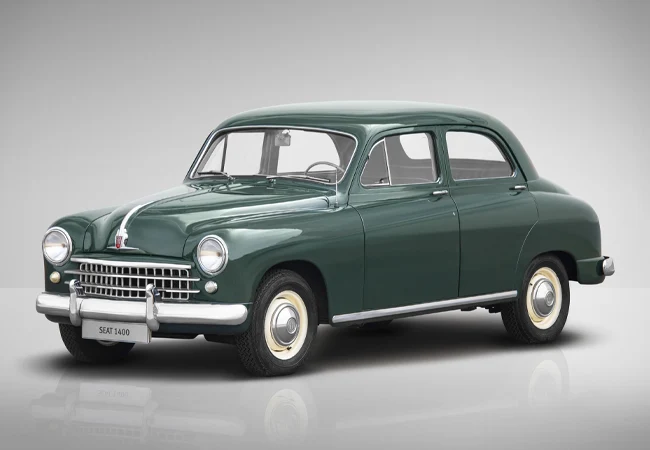
SEAT: SEAT 1400
Spanish manufacturer SEAT launched its production history in 1953 with the SEAT 1400.
Produced under licence from Fiat, this elegant four-door saloon featured a 1.4-litre engine producing 33 kW (44 bhp). It quickly became the preferred choice for official government fleets and Spanish taxi drivers.
Suzuki: Suzulight
Originally a loom manufacturer, Suzuki stepped into automobile production in 1955 with the innovative Suzulight. This pioneering Japanese microcar featured advanced engineering for its time, including front-wheel drive, independent rack-and-pinion steering, and a 360 cc two-cylinder engine.
Toyota: Toyoda Model AA
Before adopting the name Toyota, the automotive division of Toyoda Automatic Loom Works crafted its first production car in 1936: the Toyoda Model AA. Inspired by contemporary American styling, this smooth four-door saloon featured a 3.4-litre six-cylinder engine generating 46 kW (62 bhp).
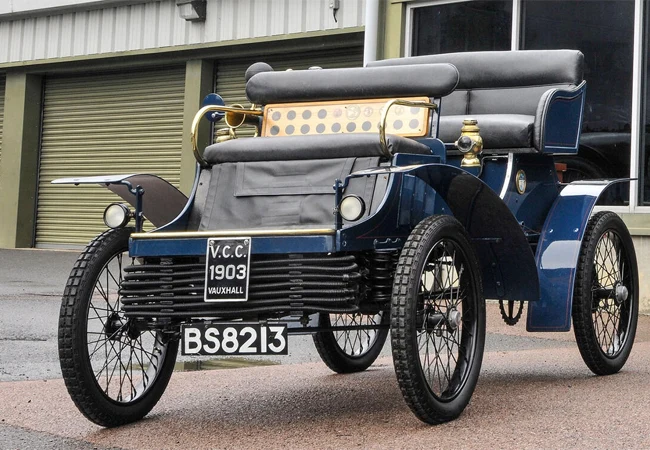
Vauxhall: 6HP
British manufacturer Vauxhall built its very first car in 1903, simply named the 6HP. Driven by a single-cylinder engine mounted horizontally beneath the floorboards, this tiller-steered open carriage had two forward gears and no reverse, reaching speeds of up to 25 mph (40 km/h).
Volvo: ÖV4
Volvo’s iconic journey in safety and durability began on 14 April 1927. On that spring day, the very first ÖV4 rolled off the Gothenburg assembly line. Nicknamed ‘Jakob’, this open touring car packed a modest 1.9-litre four-cylinder engine. Beneath its sheet-metal skin lay a sturdy frame crafted from ash and beech wood—a clever design built specifically to conquer Sweden’s harsh climate.
From steam-driven three-wheelers to whisper-quiet modern EVs, the transformation of these automotive pioneers is nothing short of extraordinary. The next time you spot one of these on the road, you will know exactly where their story started!