
Over the past decade, Hyundai has transformed from a brand known primarily for value and reliability into a serious contender in the performance car world.
At the heart of this shift is Hyundai N, a division engineered to deliver engaging, driver-focused cars that combine everyday usability with genuine track capability.
From the launch of the Hyundai i30 N to the cutting-edge IONIQ 5 N and 6 N, the journey of the Hyundai performance arm is one defined by rapid evolution, motorsport success, and forward-thinking innovation.
This blog explores the Hyundai N models timeline, taking you through where it all began, how the range has developed, and how Hyundai N Line models bring sporty design and character to a wider audience.
The Origins of Hyundai N Models (Pre-2015 Foundations)
Before Hyundai N officially came into existence, the brand had already begun investing heavily in its performance future. Much of this early development centred around the Hyundai Namyang research and development facility in South Korea, where engineers focused on improving driving dynamics, handling, and overall vehicle refinement.
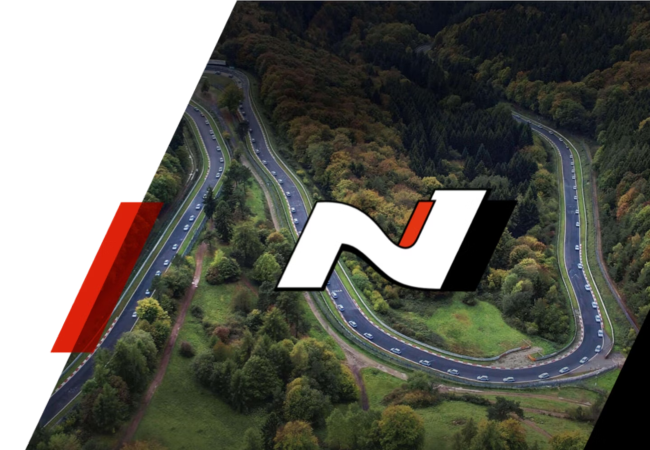
At the same time, Hyundai established a strong presence at Germany’s Nürburgring, one of the most demanding race circuits in the world.
Testing vehicles in such extreme conditions allowed the brand to refine performance characteristics to suit European roads, including those in the UK.
A major turning point came with the arrival of Albert Biermann, formerly head of BMW’s M division.
His expertise in performance engineering helped shape the ambition of Hyundai, setting a clear direction for what would eventually become the N division.
Alongside this, the manufacturer’s growing involvement in the World Rally Championship (WRC) gave the company valuable experience in high-performance engineering, durability, and vehicle dynamics.
These early steps laid the groundwork for the creation of Hyundai N.
2015 – The Birth of Hyundai N
In 2015, Hyundai officially launched its high-performance sub-brand: Hyundai N. This marked the beginning of a new chapter for the manufacturer, signalling its intent to compete with established performance car brands.
The name “N” carries a dual meaning.
It represents both Namyang, the global Research & Development hub for Hyundai, and the Nürburgring, where its cars are rigorously tested and refined. Together, these locations symbolise the balance between innovation and real-world performance.
Hyundai built the N division around three core principles. The first, “Corner Rascal”, focuses on agile and responsive handling, ensuring cars feel engaging through twists and turns.
The second, “Racetrack Capability”, ensures that every N model can perform under demanding conditions. Finally, “Everyday Sports Car” reflects Hyundai’s commitment to practicality, meaning these vehicles are just as comfortable on daily commutes as they are on track days.
2017 – The First True N Car: Hyundai i30 N
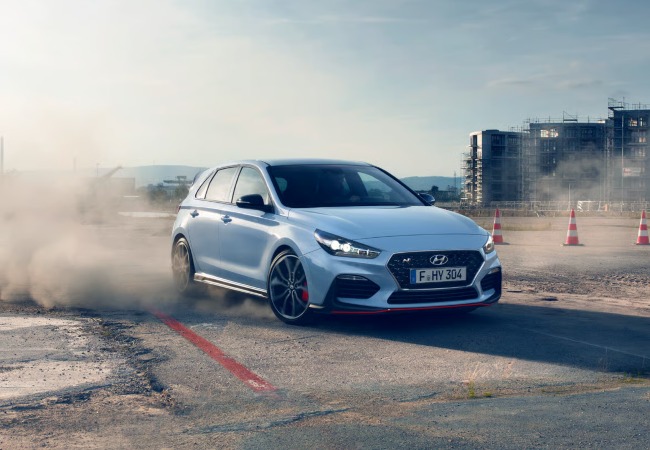
The introduction of the Hyundai i30 N in 2017 was a defining moment, not just for the N division but for the brand as a whole.
As the first true performance model within the Hyundai range available to the public, the i30 N entered a highly competitive market dominated by long-established rivals.
Despite this, it quickly gained recognition for its engaging driving experience, combining sharp handling with a powerful turbocharged engine.
What set the i30 N apart was its ability to deliver performance without compromising everyday usability.
Drivers could tailor the car’s behaviour through selectable driving modes, allowing it to switch seamlessly between comfortable daily driving and more aggressive performance settings.
Critically, the i30 N helped reshape public perception of Hyundai. It demonstrated that the brand could produce a genuinely exciting driver’s car, capable of standing alongside some of the most respected hot hatches on the market.
2017–2020 – Building Momentum and Motorsport Success
Following the success of the i30 N, Hyundai entered a period of rapid growth and increasing recognition within the performance car segment.
Across the UK and Europe, the i30 N continued to gain popularity, supported by strong reviews from both the media and customers. Updates and refinements further improved the car, enhancing both performance and everyday usability. This growing demand signalled that performance ambitions were being taken seriously by Hyundai.
At the same time, major efforts in the World Rally Championship reached a major milestone. In 2019, the Hyundai Shell Mobis World Rally Team secured the WRC Manufacturers’ Championship, marking the brand’s first title in the series.
This achievement played a crucial role in strengthening the performance credentials of Hyundai on a global scale.
Motorsport success also reinforced the connection between the racing Hyundai programme and its road cars.
Lessons learned on the rally stage, particularly in areas such as durability, handling, and power delivery, fed directly into the development of N models.
By 2020, Hyundai had firmly established itself as a credible performance brand.
Continued updates to the i30 N, including the introduction of an advanced dual-clutch transmission, made the car more accessible without losing its driver-focused character.
This period laid the foundations for expanding the N range further.
2020–2021 – Expanding the Range: Hyundai i20 N
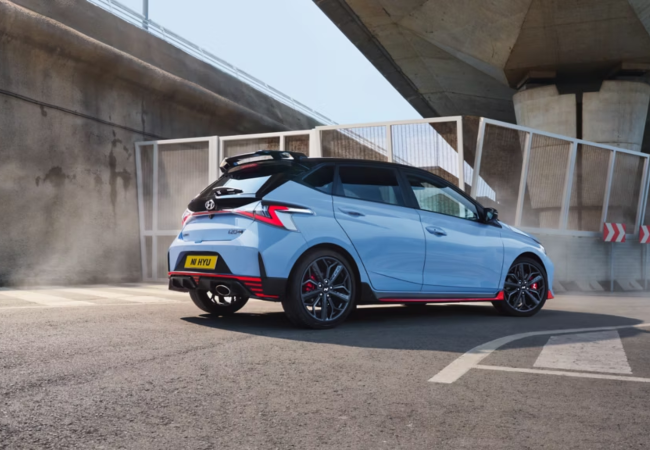
Building on this momentum, Hyundai expanded its performance offering with the introduction of the Hyundai i20 N.
This compact hot hatch drew inspiration from the rally success Hyundai was having, delivering a driving experience that prioritised agility and responsiveness.
Its lighter weight and performance-focused engineering made it particularly appealing to enthusiasts who value driver engagement above all else.
The i20 N also broadened the appeal of the performance range, offering a more accessible entry point into the N brand while maintaining the same core principles that defined the i30 N.
Parallel Evolution – What is Hyundai N Line?
While Hyundai N models were gaining traction among enthusiasts, the brand also introduced the Hyundai N Line trims to appeal to a wider audience.
N Line models are designed to capture the visual and emotional appeal of N vehicles without the full performance focus.
They feature sportier exterior styling, distinctive interior details, and subtle enhancements to driving dynamics.
This approach allows more drivers to experience the sporty character of Hyundai N, even if they do not require the full performance capabilities of a dedicated N model.
Hyundai N Line Models in Today’s Range
The Hyundai N Line range now spans several models, bringing a sportier edge to everyday vehicles.
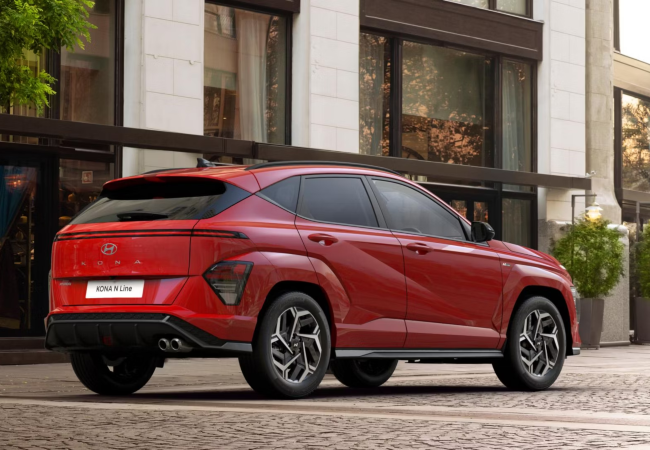
The Hyundai KONA N Line offers a compact SUV with bold styling and a more dynamic presence, making it particularly appealing to urban drivers who want a blend of practicality and sporty design.
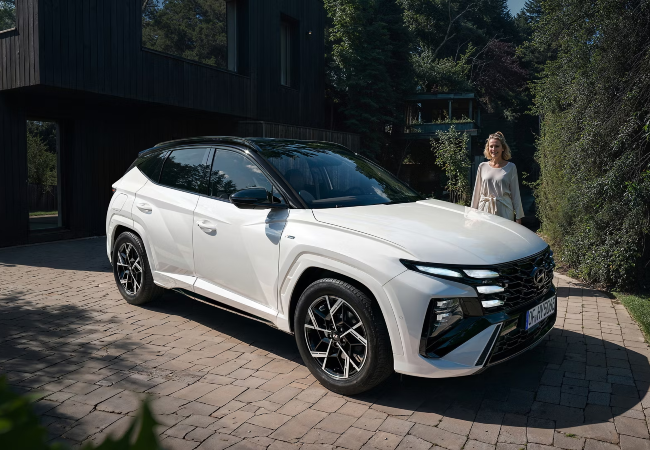
Similarly, the Hyundai TUCSON N Line combines the versatility of a family SUV with distinctive design elements inspired by performance models within the range.
With hybrid and plug-in hybrid options available, it also reflects the growing demand for efficiency without sacrificing style.
Additional N Line variants across the i10, i20 and i30 ranges further demonstrate the manufacturers commitment to making sporty design more accessible.
2023 – A New Era: Hyundai IONIQ 5 N
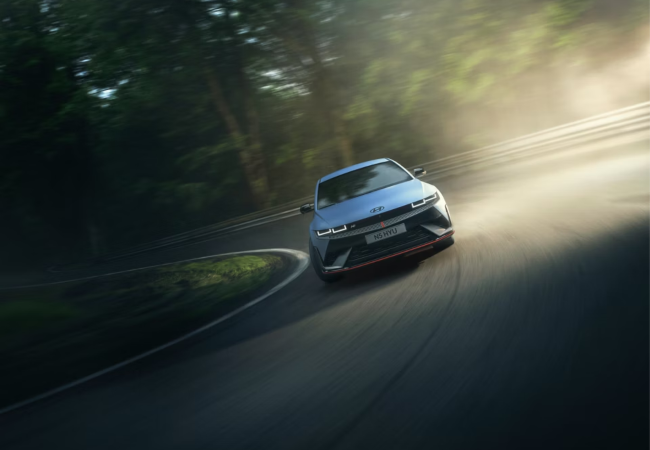
The launch of the Hyundai IONIQ 5 N marked a significant turning point, introducing performance philosophy into the electric era.
As the brand’s first fully electric N model, it showcases how performance and electrification can work together.
The IONIQ 5 N delivers impressive power, up to 650bhp, through a dual-motor all-wheel-drive system, while advanced battery technology ensures consistent performance.
What truly sets it apart is its focus on driver engagement.
Features such as simulated gear shifts and sound help recreate the feel of a traditional performance car, offering a more immersive driving experience than many electric vehicles.
This model demonstrates that the transition to electric does not mean sacrificing excitement.
2024 and Beyond – Hyundai IONIQ 6 N
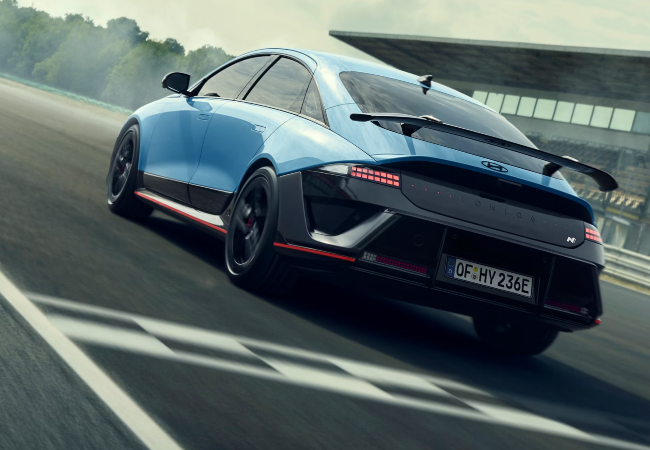
The Hyundai IONIQ 6 N marks the next major step in the evolution of the brands high-performance division, bringing the brand’s N philosophy into a sleek, aerodynamic electric saloon.
Building on the success of the IONIQ 5 N, the IONIQ 6 N has been developed with an even greater focus on high-speed stability, cornering precision, and driver engagement.
Its low-slung design, widened bodywork, active aerodynamic elements, and motorsport-inspired rear wing all contribute to a more aggressive appearance and improved performance at speed.
The car also introduces advanced chassis and suspension upgrades designed to improve both track capability and everyday usability.
Combined with high-performance regenerative braking, adaptive dampers, and sophisticated battery management systems, the IONIQ 6 N demonstrates how Hyundai is pushing electric performance technology forward.
The Future of Hyundai N Models
The future of Hyundai N is closely tied to electrification.
As the automotive industry continues to evolve, Hyundai is investing in new technologies that will shape the next generation of performance cars.
We can expect to see more high-performance electric models, further advancements in driving technology, and potentially new entries into different vehicle segments.
What is clear is that Hyundai is committed to pushing the boundaries of performance, building on the strong foundation established over the past decade.
Explore Hyundai N Models at Stoneacre
Whether you are interested in the full performance capabilities of a Hyundai N model or the sporty styling of an N Line variant, there is something in the range to suit a wide variety of drivers.
Explore the latest Hyundai N Models and Hyundai N Line vehicles at Stoneacre Motor Group, book a test drive, and discover how Hyundai continues to redefine performance for modern drivers.