
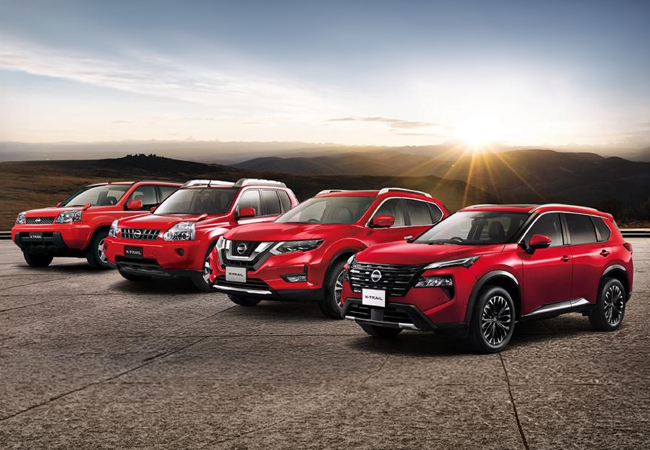
For a quarter of a century, the Nissan X-Trail has stood as one of the most important models in the global SUV market. Introduced in 2001 by Nissan, it has consistently adapted to changing driver expectations while holding firm to its original purpose: practicality, versatility, and genuine all-road capability.
Over the years, the X-Trail has evolved from a tough, boxy off-road alternative into a refined, electrified crossover. Yet despite the changes, its DNA remains intact. It is still a vehicle designed for real life, whether that means school runs, motorway cruising, or venturing off the beaten track.
A Name Built on Purpose
From the outset, the X-Trail’s identity was clear. The “X” symbolised extreme activities, while “Trail” reflected its ability to tackle rough terrain. Nissan positioned it as a new kind of SUV, one that balanced ruggedness with everyday usability.
At launch, the X-Trail was marketed as a “true SUV, combining sportiness with exceptional versatility”. It offered a compelling alternative to traditional 4×4 vehicles. Buyers were drawn to its lower running costs, improved manoeuvrability, and more accessible price point.
Design also played a key role in its early appeal. According to Shinchiro Irie, the vehicle’s “simple, practical, and robust design” resonated strongly with young families and active lifestyle customers. It was a car that felt ready for anything, without being intimidating to drive or own.
First Generation (2001–2007): Practicality Meets Capability
The original X-Trail arrived at a time when SUVs were beginning to shift from pure off-roaders to more lifestyle-focused vehicles. Nissan struck a clever balance.
Built on a car-like platform, it offered a more comfortable and refined driving experience than traditional ladder-frame 4x4s. At the same time, it retained serious capability thanks to its ALL-MODE 4×4 system.
Inside, practicality ruled. Hard-wearing materials, clever storage solutions, and a functional layout made it ideal for families and outdoor enthusiasts alike. It was not flashy, but it was dependable and thoughtfully designed.
This formula proved successful almost immediately, establishing the X-Trail as a strong contender in the growing SUV segment.
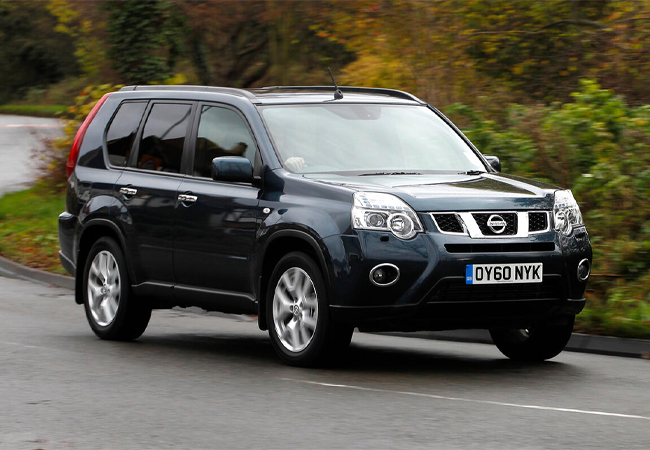
Second Generation (2007–2013): Refinement and Growth
The second generation built upon the strengths of the original while addressing its shortcomings. It became more refined, both in terms of ride quality and interior comfort.
Externally, the design evolved rather than revolutionised. It retained its recognisable shape but introduced smoother lines and a more modern appearance. Underneath, improvements to the chassis and suspension delivered better handling and stability.
Technology also began to play a larger role. Features such as improved traction control systems and enhanced safety equipment made the X-Trail more appealing to a broader audience.
Importantly, it continued to offer the practicality that had defined the first generation. Boot space, cabin versatility, and durability remained central to its appeal.
Third Generation (2013–2020): A Global Transformation
The third generation marked a significant turning point. The X-Trail moved firmly into crossover territory, adopting a more car-like design and driving experience.
This was also when the model expanded its global reach. In the United States, it was introduced as the Nissan Rogue, where it quickly became Nissan’s best-selling vehicle. This success helped cement the X-Trail’s status as a global powerhouse.
The design became more sophisticated, with flowing lines and a premium feel. Inside, the cabin took a leap forward in quality, featuring improved materials and more advanced infotainment systems.
Perhaps most importantly, the third generation broadened its audience. It appealed not just to outdoor enthusiasts but also to urban families seeking comfort, efficiency, and modern technology.
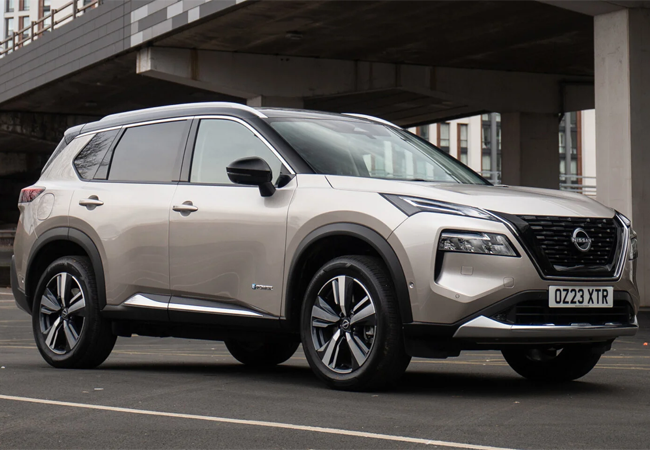
Fourth Generation (2020–Present): Electrification and Innovation
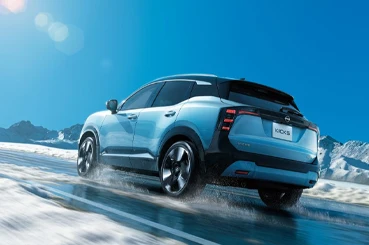
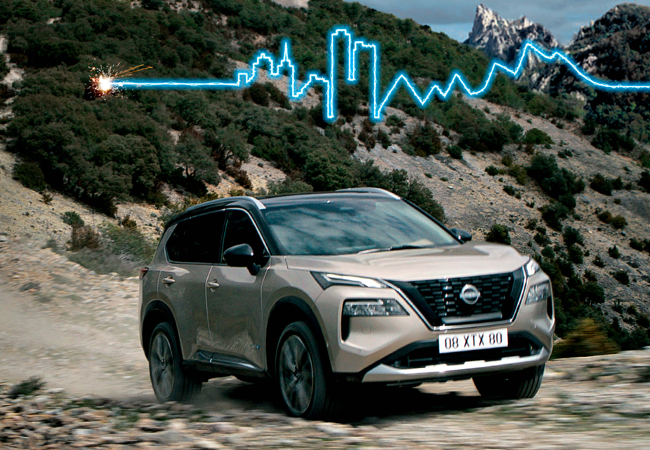
The current generation represents the most advanced X-Trail to date. While it remains true to its roots, it embraces modern automotive trends with confidence.
At the heart of this transformation is Nissan’s e-POWER technology. Unlike conventional hybrids, e-POWER uses a petrol engine to generate electricity, which then powers an electric motor that drives the wheels. The result is a smooth, quiet, and responsive driving experience, similar to a fully electric vehicle but without the need for charging infrastructure.
Complementing this is the e-4ORCE all-wheel-drive system, which delivers precise torque control and improved stability. Whether navigating wet British roads or tackling uneven terrain, the system enhances both safety and confidence.
Design-wise, the latest X-Trail strikes a balance between boldness and sophistication. A strong front grille, sharp LED lighting, and a spacious, high-quality interior ensure it remains competitive in a crowded market.
A Consistent Philosophy
Despite four generations of change, the X-Trail has remained guided by a clear philosophy. As Satoru Tanaka explains, “The X-Trail must be a functional crossover that adapts to every stage of life. Its design never sacrifices functionality, and functionality never compromises design.”
This commitment is evident in every iteration. From its early days as a rugged alternative to traditional SUVs to its current role as a technologically advanced family vehicle, the X-Trail has always prioritised usability.
It is this consistency that has allowed it to remain relevant for 25 years.
Global Impact and UK Success
The X-Trail’s success is not limited to one region. It is now sold in 95 countries worldwide, with total global sales exceeding 8 million units. Few vehicles can claim such widespread appeal.
In the UK, the model has also made a significant impact. Since 2001, more than 167,400 X-Trails have been registered. British drivers have embraced its blend of practicality, comfort, and capability, making it a familiar sight on roads from city centres to rural lanes.
Its versatility is particularly well-suited to UK life. Narrow country roads, unpredictable weather, and the need for a reliable family vehicle all play to the X-Trail’s strengths.
Looking Ahead
As the automotive industry continues to evolve, the X-Trail is well-positioned for the future. Electrification, advanced driver assistance systems, and increasing demand for efficient SUVs all align with its current direction.
Yet its success will likely continue to depend on the same core principles that defined it in 2001. Practicality, durability, and versatility remain just as important today as they were 25 years ago.
The story of the Nissan X-Trail is one of careful evolution rather than radical reinvention. It has adapted to changing times while staying true to its original purpose.
From its rugged beginnings to its modern electrified form, it has consistently delivered what drivers need: a dependable, capable, and versatile SUV.
After 25 years, the X-Trail is not just a survivor in a competitive segment. It is a benchmark. And if its history is anything to go by, it will continue to shape the future of family SUVs for years to come.