
Passion is a distinctive prerequisite in certain corners of the motoring world, and is exuded by car makers and enthusiasts alike.
The Type R name is built out of the very same emotional element, as well as upon the same motorsport-inspired foundations that saw its creator, Honda, come to life in the first place.
With the announcement that production will stop on the last remaining car of its kind – the Civic Type R – it looks as though time has been called on one of the most celebrated performance brands of all time.
Since the early 90s, the Japanese marque has brought the performance car faithful together with a range of (mostly) obtainable models that always gave the impression that these were the cars Honda had always wanted to produce.
Here’s what happens when those in decision-making positions are probably more of a petrolhead than you are…
The Origins of Type R

Before founding one of the biggest automotive names in the world, Soichiro Honda was a racer through and through.
Starting out in events with his brother in the 1930s to being a successful motorcycle rider, Soichiro had motor racing running through his veins.
His ultimate dream was to run a full Formula 1 team, creating a chassis/engine combination to take to the world stage and succeed in the highest echelons of motorsport.
While many are likely aware of Honda’s exploits as a successful power unit supplier in F1, helping the likes of McLaren, Williams and Red Bull to multiple World Championships over the years, Honda did indeed start out as a works team.
Entering into F1 in 1964, Soichiro’s ambitions were quickly realised, his Honda RA272 taking the team’s maiden win in the 1965 Mexico Grand Prix.
A second win came before the Honda F1 outfit called it a day after just four years on the scene, but they would come back even stronger as an engine supplier and enjoy a mountain of success in the process.
In 1988 alone, the triumphant McLaren pairing of Alain Prost and Ayrton Senna won 15 out of 16 races that season with a Honda engine bolted in behind them, marking a true highlight in its motorsport legacy.
And it was this kind of success that started to inspire those creating Honda cars for the road.
Having victoriously placed the Honda name on motorsport’s grandest stage, it was time to translate this knowledge and passion into a form us mere mortals could enjoy.
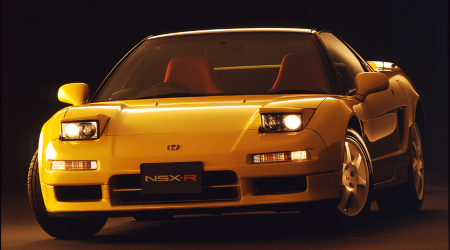
In 1989, Honda rocked the world by introducing the mid-engined supercar killer, the NSX, and felt it was the perfect platform to also introduce the ‘Type R’ name.
With ‘R’ standing explicitly for ‘Racing’, this new performance brand was about to emerge in the most exhilarating way.
Type R is Born
The Honda NSX arrived with lofty ambitions at the 1989 Chicago Motor Show.
A two-seater sports car with a free-revving 3.0-litre V6 placed right in the middle of it, the NSX represented Honda’s revitalised high-octane ambitions.
Less than three years later, the Type R sub brand was introduced to help realise what would become the pinnacle of the NSX, albeit exclusively for the Japanese market.
The NSX Type R was created to showcase what Honda could do when focusing on creating a true driver’s car, one engineered to be uncompromising – and it didn’t hold back.
As a company with roots in motorsport, a crash diet was an obvious first step to get the NSX into gear, and a weight loss of around 120kg over the standard model made for a successful start.
Underneath, Honda gave the NSX Type R firmer springs, bars and dampers on its suspension set up, while the six-speed manual gearbox was tweaked to help keep the driver closer in the hunt for that atmospheric 8,000rpm redline.
Meticulous attention was paid to the NSX Type R’s engine, despite not seeing a massive power hike over the standard car – each unit was hand-assembled from blueprint for an official power output of 276bhp.
However, due to the engine’s manufacturing approach, each car is likely to offer different and notably higher figures in reality.
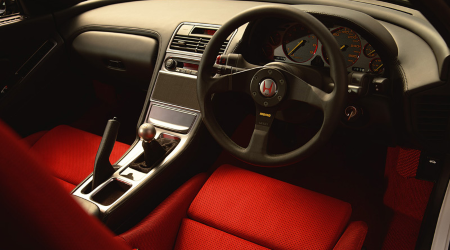
While the regular NSX brought excitement, it was perhaps not the totally capable flagship Honda had hoped for – the Type R made sure to eradicate any negativity.
Honda’s passionate approach to the NSX Type R brought immediate plaudits who acknowledged the manufacturer’s dedication to the cause of driving purity.
The motoring press were quick to point out the Type R’s sharp handling accuracy, while its all-aluminium semi-monocoque chassis was declared a standout feature, and the V6 an utter joy to engage with.
Honda’s engineers will have no doubt been overjoyed to see the NSX Type R gain comparisons to the likes of the current crop of Ferrari, Porsche and Lotus models of the time.
But they were just getting started.
Front-Wheel-Drive Mastery
It took another three years after the NSX Type R for Honda to work its magic once more – it’s fair to say it was worth the wait.
The Honda Integra had landed in 1985, and wasn’t exactly the most exciting car in the world.
In its third generation, however, the Integra started to take a more interesting form and was deemed worthy of the Type R team’s intervention.
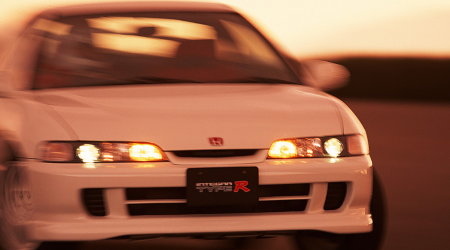
So in 1995, the Integra Type R was born – a car that’s gone down in history as one of the absolute best front-wheel-drive cars.
Like the NSX, the Integra went on a bit of a diet to give it that Type R edge – the removal of sound insulation, adding lightweight wheels, a thinner windscreen and those wondrous red Recaro seats all playing their part.
Chassis rigidity improvements were made with spot welding applied in very specific areas, while the Integra Type R’s suspension benefited from stiffer anti-roll bars and specialised tuning.
One particular component in the form of a helical limited-slip differential certainly helped to give that sweet, satisfying handling prowess.
Under the bonnet, the Japanese version of the Integra Type R saw the VTEC power unit reworked to offer 197bhp and a 8,400rpm redline to give a compelling driving experience.
Honda even decided it was time to share its Type R endeavours beyond Japan, and launched the car in the US, albeit with less power.
The Integra Type R set a new standard of what could be achieved with front-wheel drive, and Honda were quick to capitalise on this success.
A Hot Hatch Legend Emerges
Performance-enhanced hatchbacks were nothing new in the late nineties, but their numbers were perhaps not quite as prevalent as they would become.
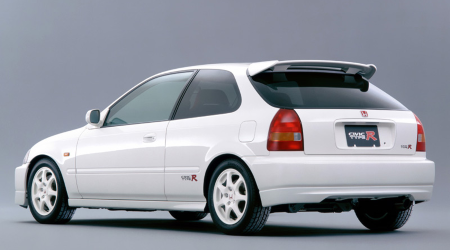
In 1997, the Civic Type R kick-started somewhat of a revolution for hot hatches that would stretch well into the next decade and beyond.
Building on the success of the Integra, the Civic Type R was able to further prove Honda’s ability to master dynamic performance through a front-wheel drivetrain.
Unfortunately for the rest of the world, however, Japan would keep this one to itself (for now).
Dubbed the EK9, the first Civic Type R might seem tame by today’s standards, but with around 185bhp being put down on the road at a stratospheric 8,200rpm, and a finely-tuned lightweight chassis helping it along, this was a hatch to take notice of.
Like the Integra that came before it, the Civic Type R practically ignored the limits of front-wheel drive to become an affordable way to get around fast in a most enjoyable fashion.

In the midst of the Civic laying the foundations of its Type R legacy, Honda decided to treat the European market to something a bit different – the Accord Type R.
What would become a bit of a cult hero, the Accord Type R has not exactly gone down in the pantheon of Type R heroes, but that doesn’t mean the hot saloon isn’t worth a mention.
The Accord Type R is actually important to the UK market, as it was the first Type R to officially reach our shores.
While perhaps not as dynamically capable as the Civic, the Accord Type R still offered a heightened 217bhp via its 2.2-litre VTEC engine, and stood out quite strongly with that rear wing that was almost NSX-like.
Meanwhile, a notable stint in one of the most iconic eras of the British Touring Car Championship (BTCC) certainly did no harm to integrate the Accord Type R into public consciousness.
Engineered Perfection
What’s quite amazing with Honda’s Type R philosophy is just how consistent the approach became.
As time has gone on, and technology has improved in the performance sector, the only difference as Honda moved into the future has been its cars’ enhanced power figures.
The overall recipe has stayed the same.
When it Kicks in…
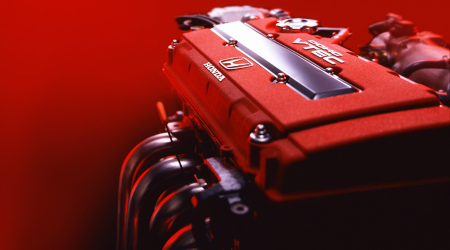
If you engage in certain automotive circles, the VTEC engine will be well-known to you.
Standing for Variable Valve Timing and Lift Electronic Control, VTEC is one the most defining characteristics of a Type R model.
Almost coming across as a Jekyll and Hyde of the engine world, a VTEC unit initially takes on an easy-going approach, one usable for typical driving needs.
However, push that engine above the RPM threshold (usually just over 5,550 revs) and all hell breaks loose.
Some might compare it to how a turbo works, but there’s a little more to it than that – with the VTEC ‘kicking in’, the engine switches to more aggressive cam profiles to deliver a surge in power output, as well as heightened responsiveness.
With Type R cars reaching for those expansive rev limits, the VTEC element is the key to achieving those numbers and making use of the engine’s full capabilities.
Stripped Back
Another core element to the performance capabilities of Honda’s Type R models has been to reduce weight as much as possible.
Using materials such as aluminium, thinner glass, and the occasional hint of carbon fibre have been staples of a Type R diet, as has reduced soundproofing.
Driving a Type R-badged car has always been about the experience behind the wheel, so for a lot of models the approach has been to only give what was needed to maximise that experience.
Finely Tuned
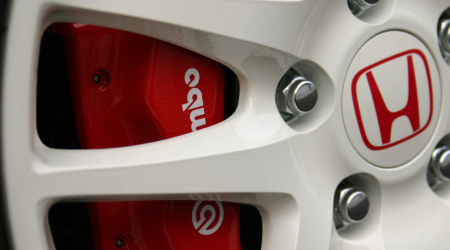
With the exception of the NSX, all Honda’s Type R efforts have been front-wheel drive, the marque’s engineers constantly being challenged to find the limits without blemishing the final product.
As such, one of the overarching achievements of the Type R team has been its ability to make front-wheel drive as engaging as they have done over the years.
Being masters in suspension setup and chassis design have led to an array of iconic performance cars that have rarely disappointed, and continue to stand the test of time for their outright driveability.
Add to this the number or aerodynamic enhancements laid upon these models – from front splitters to those glorious rear wings – and you have a highly functional car that also looks the part.
A Lasting Legacy
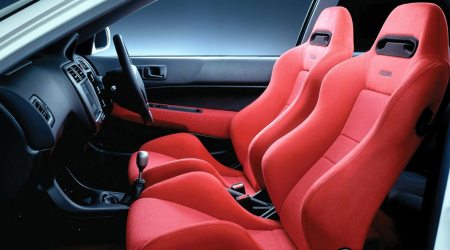
Championship White paintwork; those red Recaros; VTEC; and that iconic badge.
These are much-loved elements thanks to the success of the Type R brand, aspects that elicit an immediate and fairly euphoric response from die-hard fans.
Whether you’ve owned one in person or you just found joy driving them on Gran Turismo, Type R cars mean so much to so many thanks to their place in the automotive world.
Though producing some of the most iconic performance models of their time, Honda were basing them on everyday cars, giving enthusiasts an accessible entry point into such a world.
Certain Type R embodiments command huge numbers in collector circles – the second-gen NSX Type R (NSX-R) is a $1 million car these days, while the JDM import market continues to healthily exist.
It is the Civic, however, that truly carries the flag for Type R’s legacy after a 28-year life of defying expectations of what a front-wheel-drive performance car can achieve, especially with many of its peers moving to all-wheel drive.
SInce its debut in 1997, the Civic has amassed a total of six generations of Type R iterations, each one building upon what came before.
The outgoing FL5 Civic has managed to pack 315bhp from its 2.0-litre turbocharged VTEC unit and still be the best-handling car of its kind, allowing the Type R name to end on an absolute high.
An Uncertain Future
With the Civic Type R bowing out of production in 2026, the Type R name remains in the balance.
It remains to be seen if Honda takes cues from other manufacturers who have turned their performance sub-brands into hot electric efforts.
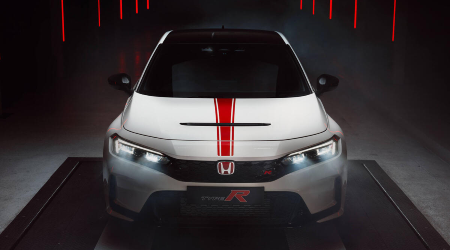
Regardless, it’s fair to say that days are numbered for cars like the Civic Type R – but thankfully, Honda will at least go out in style with the Ultimate Edition.
While not expanding the Civic’s performance figures, Ultimate Edition cars will all come in the much-celebrated Championship White with accompanying red decals and a plethora of additional Type R flourishes, as well as touches of carbon fibre.
Only 40 will be made, with just 10 making their way to the UK – once they’ve all sold, only time will tell if the Type R name is to survive in one guise or another.
Since 1992, we’ve been given our fair share of Type R exploits to revere, and the world is arguably better for it. But times change, and so must Honda.
The Japanese brand has always been pushed forward by an underlined passion for dynamic automotive solutions, and we have to be confident that the same passion will be just as evident as we enter this next era, whatever that might look like.