
Whether you’re browsing for cars or debating the merits of your mate’s new diesel estate, the word “torque” is never far away.
But what exactly does it mean, and why should you care? In this guide, we’ll break down everything you need to know about torque in a car.
So, what is torque and how to measure it? Buckle up and let’s find out.

What is Torque?
Torque is a rotational force; it’s what makes things twist or turn.
In a car, it’s the twisting force the engine produces to turn the wheels.
A simple way to think about it: when using a spanner on a bolt, the harder you push, the more torque you’re applying. Your engine works on the same principle.
It’s also worth knowing that torque and power (measured in horsepower or kilowatts) aren’t the same thing.
Power is how quickly work is done; torque is the force that makes it possible.
In a nutshell: Torque = rotational force. More torque means the engine can push harder against the resistance when you are pulling a caravan or climbing a hill.
How to Calculate Torque in Cars
The formula for torque is straightforward:
Torque (Nm) = Force (N) × Distance (m)
Force is measured in Newtons (N) and distance in metres (m), giving a result in Newton-metres (Nm). So a mechanic applying 50 N of force to a 0.3 m spanner produces 15 Nm of torque.
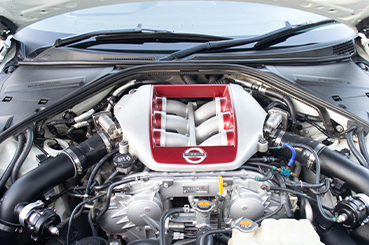
In an engine, the crankshaft is like a turning rod. The pistons push against it from a set distance from its middle. The further the pistons travel and the harder they push, the more turning force the engine produces.
How is Torque Measured?
Knowing how to measure torque in cars is just as important as understanding what it is. In the automotive world, torque is most commonly measured in Newton-metres (Nm) in the UK and Europe, or in pound-feet (lb-ft) in the United States.
The conversion is simple: 1 lb-ft = 1.356 Nm.
The main tool for measuring torque is a dynamometer, or “dyno.” The car’s driven wheels sit on rollers, and as the engine runs at different speeds.
The dyno measures the force needed to keep those rollers turning, calculating both torque and power as it goes.
The results appear as a graph showing engine speed (RPM) against torque and power.
This tells you not just the peak figures, but exactly where in the rev range they’re reached, giving you a good sense of how the car will feel on the road.
Why is Torque in Cars Important?
Torque matters more for everyday driving than headline power figures. Here’s why:
- Pulling away and accelerating: Strong low-down torque means the car feels effortless from a standstill, without needing to be revved hard.
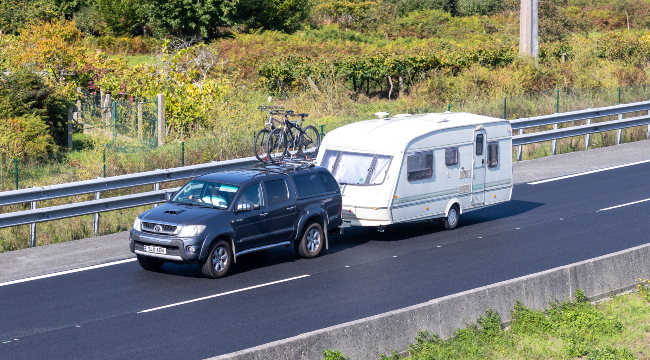
- Towing and heavy loads: High torque lets an engine sustain pulling force over long distances without straining.
- Overtaking: Mid-range torque determines how quickly the car responds when you need to accelerate from 50–70 mph.
- Off-road: Low-RPM torque lets 4x4s crawl over obstacles without thrashing the engine.
It’s also why diesels have long been popular for UK company cars, their strong low-down torque makes them feel effortless for motorway driving and towing.
What is a Torque Converter?
If your car has an automatic gearbox, it almost certainly uses a torque converter, a fluid coupling device that replaces the clutch found in a manual car.
It works by using hydraulic fluid to transfer power from the engine to the gearbox via three components: a pump (engine side), a turbine (gearbox side), and a stator in between. When the engine spins, fluid is pushed against the turbine, which drives the gearbox.
What makes it clever is that it can multiply torque at low speeds. When pulling away, the stator redirects fluid to amplify the torque being transmitted, giving automatics their characteristically smooth, strong pull-away feel.
Most modern torque converters also include a lock-up clutch that mechanically connects the pump and turbine at higher speeds, improving efficiency and reducing heat.
Examples of Torque Car Ranges
Torque ranges vary widely across vehicle types. Here’s a general guide to give you an idea of typical figures:
| Vehicle Type | Typical Torque Range | Example Models |
| Small City Cars | 90–160 Nm | Fiat 500, Toyota Aygo X, VW Polo |
| Family Hatchbacks | 150–280 Nm | Ford Focus, VW Golf, Vauxhall Astra |
| Estate & SUVs (Petrol) | 250–400 Nm | BMW 3 Series Touring, Volvo XC60, Skoda Octavia vRS |
| Diesel Saloons & SUVs | 350–650 Nm | Mercedes C220d, BMW 530d, Land Rover Defender D300 |
| Sports & Performance Cars | 400–800 Nm | Porsche 911, BMW M5, Audi RS6 Avant |
| Supercars | 700–1,000+ Nm | McLaren 720S, Lamborghini Huracán, Ferrari F8 |
| Electric Cars | 300–1,200+ Nm | Tesla Model 3, Polestar 2, Kia EV6 |
| HGVs & Trucks | 2,000–5,000+ Nm | Volvo FH, Scania R Series, DAF XF |
Does Torque Affect Fuel Efficiency?
An engine that produces strong torque at low RPM can be more fuel-efficient, as it doesn’t need to be revved as hard to do the same work.
It’s a big reason diesels became so popular for UK company cars. Their low-end torque lets drivers cruise in higher gears at lower RPMs.
Modern turbocharged petrol engines follow the same logic. A 1.5-litre turbo, for example, can match the torque of an older 2.0-litre engine whilst using less fuel.
That said, a high torque figure doesn’t guarantee economy. Heavy SUVs and performance cars can produce huge torque numbers yet still be thirsty.
What matters is not just how much torque an engine produces, but at what RPM and how efficiently the rest of the car uses it.
Are Electric Cars High or Low Torque?
Electric cars are, without exception, high-torque. Unlike petrol or diesel engines, an electric motor delivers its maximum torque instantly from 0 RPM, meaning no revving, no turbo lag, no waiting.
This is why EVs feel so quick off the line. A Polestar 2 Long Range Dual Motor produces around 740 Nm and sprints from 0–62 mph in 4.3secs, figures that once required a V8 sports car.
For everyday driving, that instant torque also makes EVs effortlessly relaxing in town. No gear changes, no revving, just smooth, immediate response every time you pull away.
What Torque Should I Look For When Buying a Car?
When you’re shopping for a car, the right torque figure really depends on how you plan to use it. Here are a few pointers to help you make sense of what’s on offer:
- City driving and short commutes: 100 – 150 Nm is perfectly adequate for stop-start traffic.
- Motorway miles and family touring: Aim for 250–400 Nm for effortless overtaking and cruising.
- Towing a caravan or trailer: 400 Nm or more, ideally from a diesel or plug-in hybrid. Always check the official towing capacity too.
- Performance and driving enjoyment: High torque for a muscular feel, or high-revving torque for a sportier, more engaging character.
- Going electric: Instant torque comes as standard. Even modest EVs feel impressively responsive.
Now You Know Your Torque in Cars
Torque might sound like a dry technical term, but once you understand what it means and how it affects your driving experience, it becomes one of the most useful numbers to pay attention to when evaluating any car.
Whether you’re after the muscular pull of a large diesel SUV, the frantic rev-happy nature of a high-revving sports car, or the seamless instant surge of an electric vehicle, torque is at the heart of it all.
Learn more about pulling heavy loads with our Guide to Towing Capacity, as well as specific information when towing caravans or horse boxes.