
If you’ve ever flicked through a car brochure, browsed a second-hand car site, or watched a review of the latest hot hatch, you’ve likely seen the term BHP tossed around like confetti. It’s one of those motoring terms that everyone uses, but very few people can actually define beyond “the thing that makes the car go fast.”
Whether you’re looking to check brake horsepower for a potential new purchase or you’re just curious about what’s happening under the bonnet of your current ride, understanding brake horsepower is key to knowing how your vehicle performs. In this guide, we’re going to break down the jargon and give you the lowdown on everything related to your car brake horsepower.
What is Brake Horsepower (BHP)?
At its simplest, brake horsepower (bhp) is a measurement of an engine’s power. While the term “horsepower” is the general umbrella for the work an engine can do, BHP is a more specific, real-world measurement.
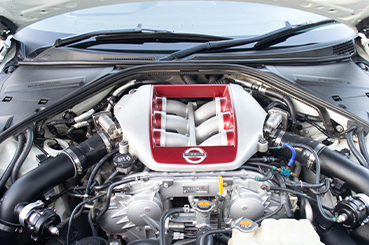
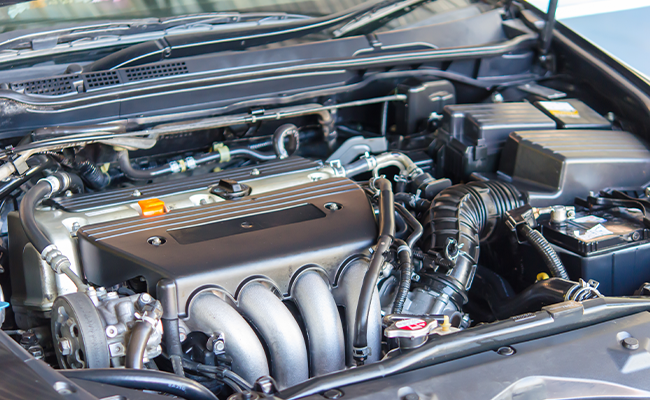
To understand what is BHP in cars, we have to look at the engine’s output. Every engine produces power, but not all of that power actually reaches the road. Some of it is “lost” to the internal friction of the engine and the energy required to run essential components like the alternator, water pump, and gearbox.
BHP measures the power that is actually available at the engine’s output shaft (the flywheel) before it travels through the rest of the drivetrain to the wheels. It is effectively the “net” power—the muscle your car actually has available to move you down the road after the engine has “paid its taxes” to its own internal parts
What does Brake Horsepower Mean?
When we talk about the brake horsepower meaning, we are looking at a historical and technical definition. The term “horsepower” was famously coined by the Scottish engineer James Watt in the 18th century. He needed a way to compare the power of steam engines to something people understood: horses. He calculated that a pony could pull 22,000 foot-pounds of work in a minute, then upped it to 33,000 for a horse.
The “brake” part of brake horsepower refers to the method used to measure that power. In the early days of automotive testing, a literal “brake” (often a De Prony brake) was applied to the engine’s flywheel to provide resistance. By measuring how much force was needed to slow the engine down, engineers could calculate its true power output.
So, when you see a BHP car advert, it’s telling you the tested, verified power of that engine under load.
Why is BHP important?
BHP is the primary figure used to describe a car’s performance capabilities. If you are a driver in the UK, knowing the BHP of your vehicle is vital for several reasons:
- Acceleration and Overtaking: Generally, the higher the BHP, the faster your car will get from 0 to 60 mph. More importantly for safety, higher BHP allows for better “mid-range” acceleration, making it easier to overtake slow-moving vehicles on a B-road or merge onto a busy motorway.
- Towing and Load Capacity: If you have a heavy SUV or a van, higher BHP is essential. It provides the grunt needed to maintain speed when carrying a full load of passengers or pulling a caravan up a steep hill.
- Driving Experience: For enthusiasts, BHP dictates the “feel” of the car. A high BHP-to-weight ratio makes a car feel light, nimble, and responsive.
- Insurance and Tax: In many cases, the car brake horsepower can influence your insurance group. Generally, more powerful cars are seen as higher risk and may cost more to insure.
How is BHP measured?
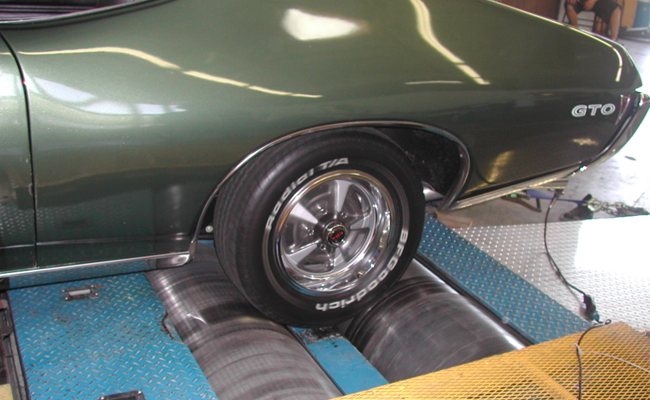
BHP is measured using an engine dynamometer. The engine is tested outside the vehicle, and resistance is applied to calculate how much power it produces.
Because this test excludes drivetrain losses, BHP is different from:
- Wheel horsepower (WHP) – power delivered to the wheels
- Crank horsepower – another term often used interchangeably with BHP
This is why two cars with the same BHP can feel slightly different on the road
What’s the difference between HP and BHP?
This is a common point of confusion, especially when reading American car blogs versus UK ones. While the terms are often used interchangeably, there is a slight technical nuance:
- Horsepower (HP): Often refers to “Mechanical Horsepower.” In some contexts, particularly in the US, HP might refer to the theoretical total power of an engine without any accessories (like the alternator or water pump) attached.
- Brake Horsepower (BHP): This is the “real-world” UK standard. It is the power measured after the losses caused by the engine’s own internal components.
In short, BHP is always a slightly lower figure than HP because it accounts for those “parasitic” power losses. If a car is advertised with 200 HP in the US, it might only be rated at 197 BHP in the UK.
What’s the difference between KW and BHP?
Some manufacturers use kilowatts (kW) instead of BHP, especially in official documentation.
Here’s the key conversion:
- 1 kW = approximately 1.34 BHP
So if you’re doing a kW to BHP or kilowatts to brake horsepower conversion:
- 100 kW ≈ 134 BHP
This conversion is handy when comparing cars from different markets or checking official specs.
What is a good amount of Brake Horsepower?
What constitutes a ‘good’ amount of BHP varies depending on the car type and intended use. A figure that feels sluggish in a heavy SUV might feel like a rocket ship in a small hatchback.
When you check your car BHP, here is a general guide to what those numbers mean in the real world:
- Supercars & Luxury SUVs (400+ BHP): These vehicles boast several hundred BHP. In luxury cars, this power is used to move a very heavy vehicle silently and effortlessly. In supercars, it’s all about raw speed.
- Small City Cars (up to 120 BHP): Think of the Fiat 500. These cars are light, so 70-100 BHP is plenty for nipping through traffic and easy parking.
- Family-size Cars (120-200 BHP): This is the “sweet spot” for most UK drivers. Cars like the Ford Focus or Nissan Qashqai usually fall into this bracket. It provides a comfortable balance of fuel economy and enough power to handle motorway slip roads with ease.
- Performance & Executive Cars (200-350 BHP): Here we enter “hot hatch” and luxury saloon territory. These cars feel significantly faster and offer a more engaging drive.

How BHP affects Fuel Efficiency
It’s a classic rule of thumb: more power equals more fuel. Because a higher BHP engine is capable of doing more work, it generally requires more air and more fuel to create those bigger “bangs” in the cylinders.
However, BHP explained in the modern world is a bit more complex. Thanks to turbocharging and hybrid technology, many modern cars have high BHP but remain very efficient. A small engine with a turbocharger can produce 150 BHP while still returning 50+ MPG.
Conversely, having an engine with too little BHP for the size of the car can actually decrease fuel efficiency. If the engine has to work at 100% capacity just to keep up with traffic, it will burn through fuel much faster than a larger, more powerful engine that is only working at 20% capacity.

How do I find out my car’s BHP?
Wondering “what BHP is my car?” or “what brake horsepower is my car?” You don’t need to take it to a mechanic to find out. There are several easy ways to do a BPH check:
- Online Checkers: The easiest way to check brake horsepower is to use an online tool. By entering your registration number, you can get a full breakdown of your car’s specs. A highly recommended resource is Car Check, which provides detailed technical data.
- The V5C Logbook: Your vehicle registration document usually lists the power output. Note that it is often listed in kW, so keep your calculator handy!
- The Owner’s Manual: Look at the “Technical Data” section in the back of your manual for the official car brake horsepower rating.
Final Thoughts
BHP is more than just a number for bragging rights down the pub. It’s a vital statistic that tells you how your car will handle the school run, the motorway commute, and the annual family holiday. By understanding brake horsepower, you can make a much more informed decision the next time you’re in the market for a new set of wheels.