
How Does an Electric Car Work?
.jpg)
.jpg)
Understanding EVs
Entering into the world of electric vehicles (EVs) for the first time might initially result in a few questions.
It’s no secret that cars and vans powered solely by electricity have plenty of discernible differences from their combustion-engined equivalents.
For a start, EVs work in a very different way from a mechanical standpoint - engines burning fuel are replaced with batteries powering electric motors, while their respective transmissions are also quite contrasted.
The most prominent difference is the heavily reduced amount of moving parts an EV makes use of compared to that of an internal combustion engine (ICE).
Forget about pistons, spark plugs, or crankshafts - an EV does away with all such components for a more streamlined setup - you won’t even find oil in an electric vehicle.
For those who are looking into EVs with a view to own and drive one, it can be prudent to explore the details of how such vehicles work, as a solid level of understanding can lead to a more effective use of EVs.
So let’s dig into how an EV works…
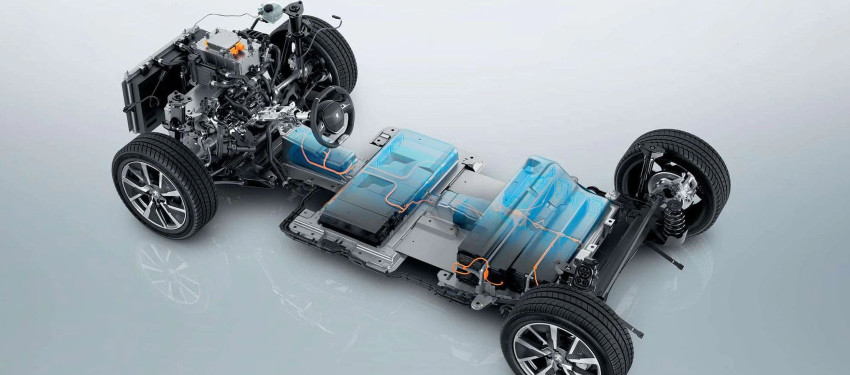
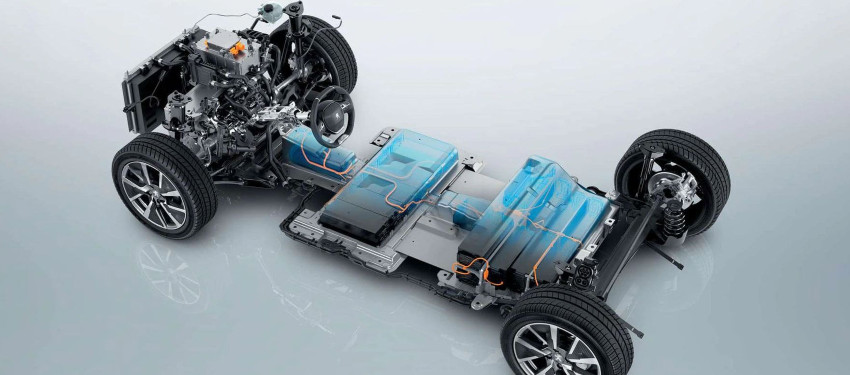
What are the basic components of an EV?
Electric Motor
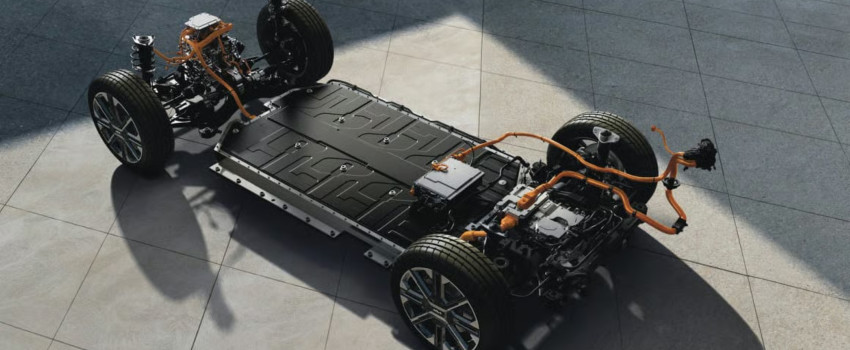
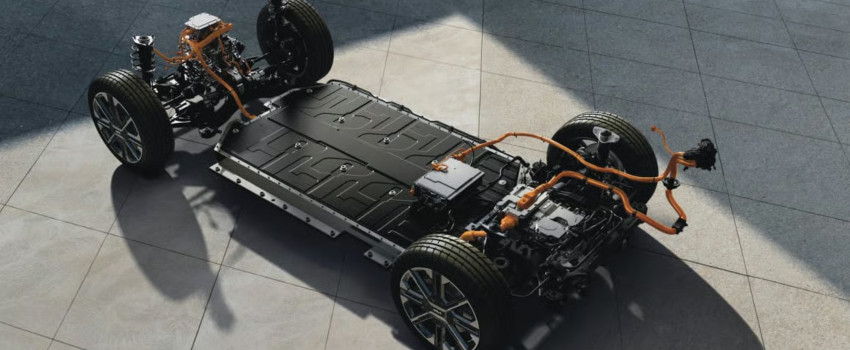
The electric motor is an EV’s direct replacement for the combustion engine, and you’ll find at least one of them within the construct of the vehicle, namely on the axle.
It’s the job of the electric motor to provide the power that moves the wheels of the vehicle, as well as the cabin’s creature comforts.
To do this, the electric motor is converting electrical energy from the vehicle’s battery, with this electricity flowing through a section of the motor’s electromagnets to create a magnetic field.
Further magnets react to this, causing an attraction and repulsion movement to ultimately create a rotating magnetic field, spinning the electric motor’s rotor to produce the rotational force (or torque) needed to drive the vehicle’s wheels.
Batteries
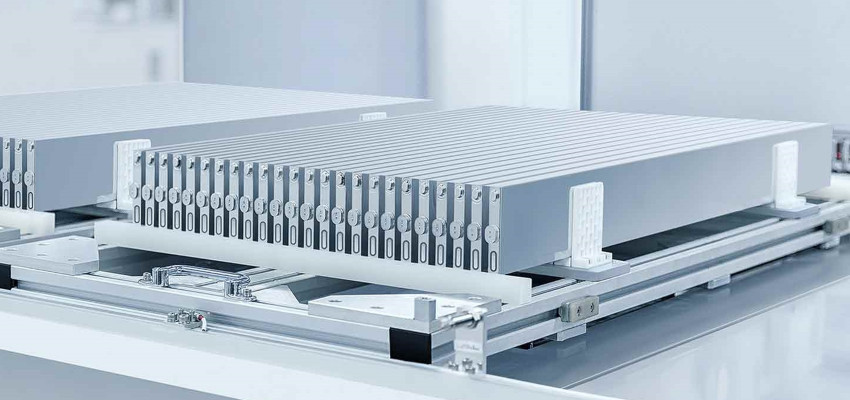
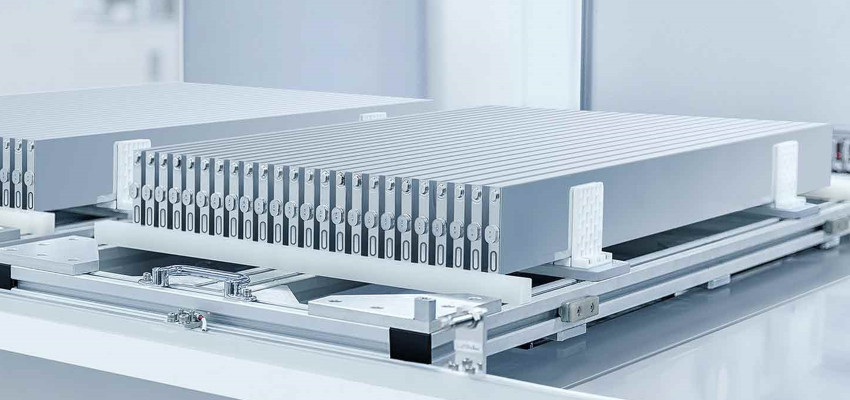
The batteries that feature in an electric vehicle are closely related in some ways to the lithium-ion units you’d find in your smartphone, but are on a much larger scale and are created with a bit more sophistication.
When driving, thousands of lithium-ion cells within the battery move between electrodes (the anode and the cathode) to create an electrical current.
This current then flows to the electric motor to do its part in creating the motion of the vehicle.
During the charging process, however, external electricity (from your charger) is forcing lithium ions back into the anode, storing this energy until needed.
Meanwhile, a battery management system (BMS) monitors and controls the charging procedure in order to prevent overcharging.
Inverter
Somewhat of an unsung hero is the inverter, a component which does a very important job, and is perhaps not spoken about as much as other elements of the vehicle.
For context, the battery of an EV stores and provides Direct Current (DC) - however, the electric motor that gets the car moving requires Alternating Current (AC) to do so.
This is where the inverter comes in - by utilising something called insulated-gate bipolar transistors (IGBTs), the inverter crucially switches the DC current from the battery into AC, and does so very quickly.
The inverter can also manage power delivery for the car or van based on several factors, including accelerator pedal position, vehicle speed, additional demands of the vehicle’s occupants, and vehicle conditions.
.jpg)
.jpg)
Drivetrain
An EV’s drivetrain is another aspect that highlights simplicity compared to that of an ICE vehicle.
While electric motors themselves form an integral part of an EV’s drivetrain, the transmission is another core element, with its single-speed setup providing a very different experience compared to that of a conventional car or van.
Drive shafts still help connect the axles, however, to provide drive to the wheels, but beyond that, there’s not much else going on.
When it comes to the placement of electric motors, a front- or rear-wheel drive vehicle will have a single motor sitting on the front or rear axle respectively. Meanwhile, you’ll find one motor on each axle for EVs that provide all-wheel drive (AWS).
.jpg)
.jpg)
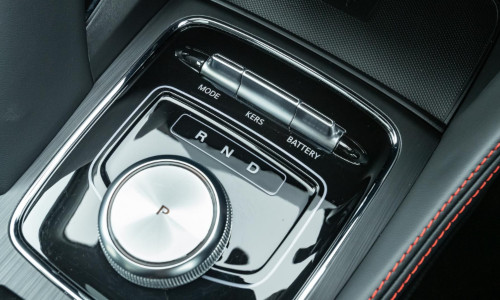
Do electric cars have gears?
As we’ve just touched upon when exploring an EV's drivetrain, electric cars and vans take advantage of a simplified transmission that runs on just a single gear.
Where conventional ICE vehicles need a range of gears to produce the appropriate levels of power and torque to reach certain speeds, an EV can provide this immediately, and so doesn’t require more than the single-gear setup.
So yes, electric vehicles do have a gearbox, but probably not as you know it.
Having a transmission like the one EVs utilise brings benefits such as a smooth driving experience without jolts or noises from gears changing, increased efficiency, and fewer moving parts to reduce the risk of mechanical issues.