
For petrolheads, there are moments in automotive history that send a jolt of electricity through the community. The unveiling of the Toyota 2000GT did it in the late 60s. The launch of the Lexus LFA did it again in the 2010s. And now, Toyota Gazoo Racing has lit the fuse once more with the world premiere of not one, but two jaw-dropping performance machines: the GR GT and GR GT3.
Displayed publicly for the very first time, these under-development prototypes represent the purest expression of Toyota’s motorsport philosophy — building ever-better cars through relentless track testing, driver feedback, innovation, and the pursuit of perfection.
For anyone who loves engineering excellence, motorsport pedigree, and pure driving excitement, the GR GT and GR GT3 aren’t just new models. They’re a statement. They are Toyota saying loud and clear: We are here to dominate the performance world once again.

A Development Programme Led by Drivers, Not Committees
One thing instantly sets these cars apart from almost everything else on the road: they were designed from their earliest concept stages under the guidance of real drivers. Not just any drivers — Toyota Motor Corporation Chairman Akio Toyoda himself, also known by his racing alias Morizo, was at the centre of development.
Toyoda worked side-by-side with top professional racers Hiroaki Ishiura, Tatsuya Kataoka and Naoya Gamou, along with gentleman driver Daisuke Toyoda and Toyota’s elite in-house test drivers. They didn’t just offer feedback — they shaped the cars from day one. When Toyota says “driver-first development,” this is exactly what they mean.
This one-team approach ensured that engineering decisions weren’t made in corridors or conference rooms. They were made at full throttle, on test circuits, in simulators, and on demanding real-world roads. Every refinement, every adjustment, every line and curve of these cars comes from the experience of people who live and breathe performance driving.
The GR GT: A Road-Legal Race Car With No Compromises
If the GR GT had been unveiled with a number plate missing, most onlookers would probably assume it was a full-blown competition car. In reality, Toyota has achieved something rare — creating a machine that carries the raw edge of a race car but is still engineered for road use.

The beating heart of the GR GT is a brand-new 4.0-litre V8 twin-turbo engine. This is the first time Toyota has ever fitted such a powertrain into a production model, and they’ve paired it with a single electric motor to create a hybrid system with astonishing targets. Toyota set development goals at over 641 bhp and more than 627 ft lb of torque. These aren’t just big numbers; they indicate a machine capable of ferocious acceleration and enormous flexibility.
But raw power is only one part of the story. Toyota wanted the GR GT to deliver an intimate sense of unity between driver and machine. That meant rethinking packaging from the ground up to achieve the lowest centre of gravity physically possible. Everything heavy — the V8, the rear-mounted transaxle, the hybrid components, even the driver’s seat — has been positioned with surgical precision to create flawless balance and sharpened handling characteristics.
The engineering team went as far as aligning the driver’s centre of gravity with the car’s own, ensuring a level of instinctive control that most drivers will never have experienced before.
This focus on purity and precision continues with the GR GT’s body and chassis. In a major technical milestone for Toyota, the GR GT is built around the company’s first-ever all-aluminium body frame. Combined with carbon fibre reinforced plastic panels and cutting-edge joining techniques, the result is a structure that is incredibly light yet exceptionally rigid. It’s a perfect foundation for the kind of high-speed stability, cornering precision, and mechanical grip that performance enthusiasts crave.
Rethinking Aerodynamics From the Ground Up
Toyota traditionally finalises styling before aerodynamic optimisation begins. But for the GR GT, the company completely flipped the process. Aerodynamics came first. Designers were required to sculpt the body around an aero-ideal form rather than starting from aesthetics.
This new philosophy was driven by engineers with experience from the world of FIA World Endurance Championship racing. Their goal was simple but demanding: create a design that allows the GR GT to exceed 199 mph with complete stability and efficient cooling.
The outcome is a car that looks and moves like the wind itself shaped it. Every vent, curve, and body line has a purpose. This is functional beauty at its finest — form following pure performance.
Inside the GR GT, the cockpit is a masterclass in motorsport ergonomics. Instead of chasing luxury first, Toyota prioritised visibility, intuitive control placement, and driver focus. Everything the driver needs is within natural reach. Driving-related switches are clustered near the steering wheel. Gauges, including shift indicators, were positioned only after repeated testing by professional drivers pushing the car to its limits. The result is an interior designed for confidence and clarity at any speed, whether you’re attacking a racetrack or cruising to the shops.
A Powertrain That Takes Motorsport Tech to the Road
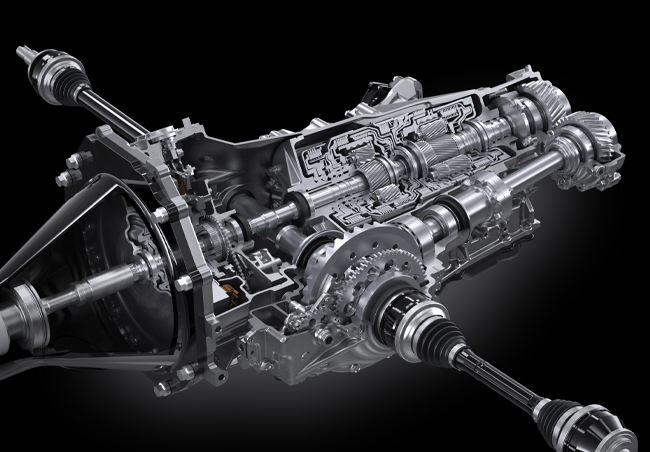
The GR GT’s engine deserves its own chapter. With an 87.5 x 83.1 bore and stroke, dry-sump lubrication, a hot-V turbo layout, and a compact overall design, this V8 was created to sit as low and as far back as possible. A CFRP torque tube carries power rearward to a transaxle housing a new eight-speed automatic transmission, mechanical LSD, and a motor-generator positioned ahead of the gearbox.
The hybrid motor compensates for torque lag during gear changes and hard acceleration, delivering an incredibly linear, responsive power curve. Toyota’s engineers are targeting world-class shift speeds while ensuring that even in automatic mode, the driver can command gear changes at will.
This intricate packaging allowed Toyota to achieve a tight wheelbase and that near-perfect 45:55 weight distribution that performance enthusiasts dream of.
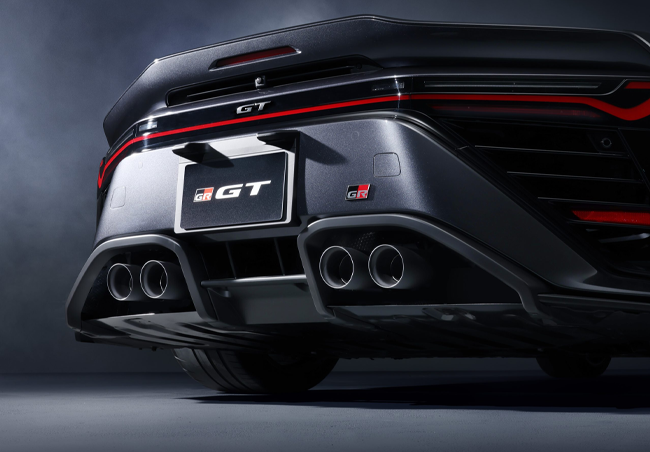
Of course, the sound hasn’t been neglected. Toyota invested heavily in tuning the exhaust note to deliver a thrilling, characterful V8 roar that evolves as the engine heats up, accelerates, or decelerates. For petrolheads, that auditory drama is a vital part of the experience — and Toyota clearly agrees.
Race-Proven Chassis, Tyres, and Brakes
A car built to this standard needs the chassis to match. The GR GT features low-mounted double-wishbone suspension front and rear, constructed from forged aluminium for razor-sharp response. Michelin developed bespoke Pilot Sport Cup 2 tyres specifically for this car, ensuring unmatched grip across both track and real-world road conditions.
Brembo carbon brake discs provide colossal stopping power while maintaining consistent performance even under extreme track heat. And the GR GT’s Vehicle Stability Control system offers multi-stage adjustability influenced directly by Toyota’s Nürburgring 24-hour endurance race programme. Drivers can dial in the level of control difficulty they want based on weather, confidence, and experience.
This is technology born on the racetrack, refined for the road.
The GR GT3: A Race Car Built for Winners
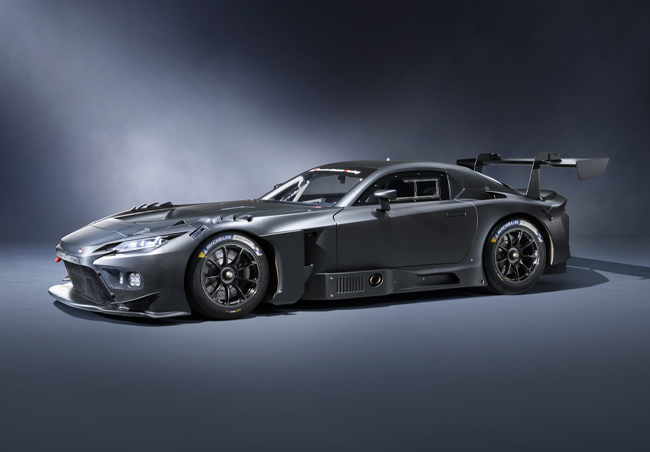
While the GR GT is a road-legal race car, the GR GT3 is a full-blown GT3-spec machine built to conquer FIA competition. The two models share the same core philosophies — low centre of gravity, low weight, high rigidity, and world-class aerodynamics — but the GR GT3 takes everything to the next level.
It’s designed to be the car chosen by those who want to win. Yet Toyota has also ensured that it’s approachable and enjoyable for gentleman drivers, not just professionals. Toyota Gazoo Racing is preparing a full customer support programme for teams and individuals who choose to campaign the GR GT3, reflecting Toyota’s commitment to helping drivers enjoy motorsport at every level.
Testing, Refining, and the Road to 2027
Both the GR GT and GR GT3 were developed using a blend of cutting-edge simulation and brutal real-world testing. Simulators allowed Toyota to fine-tune fundamental characteristics early, but everything was validated on actual circuits including Fuji Speedway and the infamous Nürburgring. Toyota also subjected the GR GT to public road testing to ensure everyday drivability and reliability.
True to Gazoo Racing philosophy, these cars were driven to failure, repaired, refined, and pushed again — over and over — until they met the expectations of every driver involved.
Toyota expects to launch the GR GT and GR GT3 around 2027, and if the prototypes are anything to go by, the performance world has plenty to be excited about.
Toyota’s Next Great Performance Chapter Has Begun
The Toyota GR GT and GR GT3 aren’t just new flagships. They’re milestones. They bridge the gap between race cars and road cars in a way Toyota hasn’t attempted since the LFA, carrying forward the brand’s heritage while infusing it with new technology, new materials, and a new generation of engineering talent.
For petrolheads, these cars represent the kind of bold, ambitious performance vision we crave.
Toyota Gazoo Racing isn’t just building cars.
They’re building legends — one prototype, one lap, and one roaring V8 at a time.