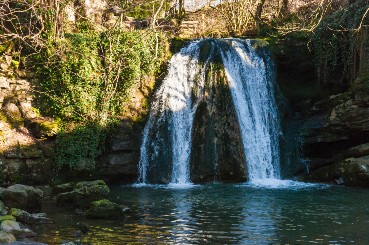

Britain’s coastline offers some of the most spectacular road trips in Europe, and we’ve rounded up the very best coastal drives for your next adventure.
There’s something utterly magical about a coastal drive. That moment when the sea first comes into view, and the promise of hidden coves and clifftop vistas are around every bend.
1. The North Coast 500, Scotland – The Ultimate Scottish Coastal Drive
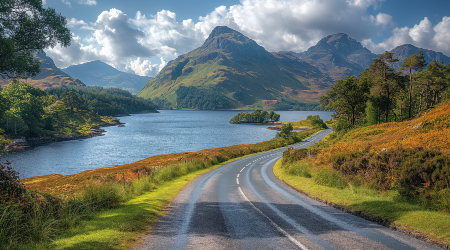
Prepare yourself for arguably Scotland’s most dramatic scenery. This coastal drive in Scotland showcases rugged coastlines, white sandy beaches, and mountains that plunge straight into the sea.
You’ll pass through quaint fishing villages like Ullapool and John O’Groats, with the landscape shifting from the wild beauty of Sutherland to the gentler shores of the Black Isle.
What to Expect Along the Route
Large sections of this drive hug the coastline magnificently, especially from Durness to John O’Groats.
You’ll often be driving just metres from the water, with waves crashing against dramatic cliffs and the Atlantic stretching to the horizon.
The wildlife is extraordinary. Watch for dolphins and porpoises in the Moray Firth, seals on rocks, and possibly white-tailed eagles. The area is home to Highland cattle, red deer, and puffins during spring and summer.
History buffs will find plenty to explore. Dunrobin Castle sits grandly overlooking the sea with its fairytale turrets. There’s also Smoo Cave near Durness, a vast limestone cavern, and countless Iron Age brochs dotting the landscape.
Mapping Your Adventure
On this glorious 516-mile adventure, you’ll be navigating a mix of A-roads. Primarily the A9, A99, A836, and A835. But don’t let the road numbers fool you into thinking this is just another drive. This is one of the best coastal drives and bucket-list territory.
You’ll find excellent cafés and restaurants, particularly in Ullapool, Lochinver, and Dornoch. The Winking Owl in Avoch serves wonderful coffee with harbour views, while the Seafood Shack in Ullapool does fish and chips to die for.
Car parks and viewpoints are plentiful, including stunning spots at Achmelvich Beach and Balnakeil Bay. Many informal lay-bys offer breathtaking photo opportunities.
How Long You’ll Need
Now, here’s the thing: this isn’t a route to hurry through with your foot down. You’ll want to give yourself at least five days to do it justice, though honestly, a full week is ideal. Trust us, you’ll be stopping constantly (in the best possible way) and you’ll be grateful for every extra day you’ve allowed yourself.
2. The Causeway Coastal Route – The Best in Northern Ireland
This coastal drive in Northern Ireland is consistently ranked among the world’s best scenic routes, and for good reason.
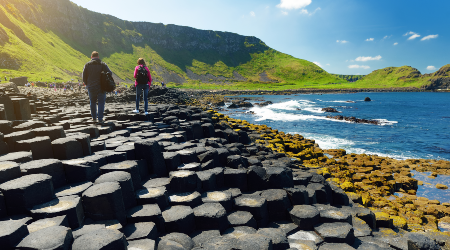
The Causeway Coastal Route treats you to the famous Giant’s Causeway (a UNESCO World Heritage Site), the hair-raising Carrick-a-Rede rope bridge, and the romantic ruins of Dunluce Castle perched precariously on a cliff edge.
What to Expect Along the Route
The scenery is wonderfully varied, with sandy beaches, dramatic cliffs, the Causeway’s hexagonal basalt columns, and the nine Glens of Antrim cutting down to the sea. On clear days, you can see Scotland’s Mull of Kintyre.
Beyond the Giant’s Causeway (formed by volcanic activity 60 million years ago), you’ll find Dunluce Castle, which lost its kitchen to the sea in 1639. The Dark Hedges, slightly inland, are worth a detour—this atmospheric beech tree tunnel featured in Game of Thrones.
The area is steeped in myth, with tales of Finn McCool, the giant said to have built the Causeway. Rathlin Island (accessible by ferry from Ballycastle) is home to thousands of seabirds, including puffins, and you might spot grey seals or basking sharks in summer.
Mapping Your Adventure
This 120-mile coastal drive follows the A2 from Belfast to Londonderry, hugging Northern Ireland’s spectacular shoreline. Much of the route runs right beside the sea, winding over clifftops and through charming coastal villages. Around Cushendun and Torr Head, the road clings to the cliffs with dramatic Atlantic views below.
The Bushmills Distillery (the world’s oldest licensed whiskey distillery) offers tours and tastings. Ballycastle has lovely cafés and beaches, while Portrush is a bustling seaside resort with excellent fish and chips. Don’t miss the Fullerton Arms in Ballintoy for harbour views, or Roark’s Coastal Kitchen in Portrush for locally-sourced seafood.
How Long You’ll Need
Plan for two to three days to enjoy the journey fully. Though you can drive it in a day, it’s worth taking time to stop at viewpoints, sample local cafés, and explore the seaside towns that make this route so special.
3. The Atlantic Highway – Classic Cornwall Coastal Drive
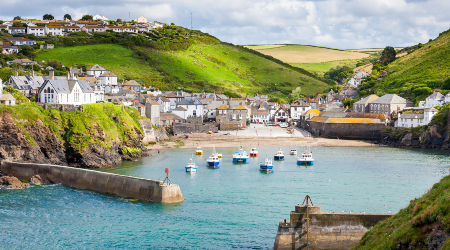
The Atlantic Highway delivers classic British seaside charm mixed with wild, windswept drama. You’ll encounter famous surfing beaches like Fistral, rugged cliffs at Tintagel, and the charming fishing village of Port Isaac (of Doc Martin fame). The coast here is raw and beautiful, with waves rolling in from thousands of miles away.
What to Expect Along the Route
Parts of this coastal drive run very close to the sea, particularly around Boscastle and Port Isaac. While much of Cornwall’s dramatic coastline requires a short walk, the driving itself offers constant glimpses of azure waters and golden beaches.
Tintagel Castle, legendarily linked to King Arthur, sits spectacularly on a wild headland. Ruins of engine houses from Cornwall’s mining heritage dot the clifftops—this area was once the world’s leading copper and tin producer. St Michael’s Mount, accessible by causeway at low tide, is topped by a medieval castle.
Cornwall’s waters are home to dolphins, porpoises, and seals. Between May and September, you might spot basking sharks cruising offshore. The coast path is ablaze with wildflowers in spring and summer, with sea thrift, campion, and bluebells transforming the clifftops.
Mapping Your Adventure
This 280-mile coastal journey runs from Barnstaple in Devon to Newquay in Cornwall, following the A361, A39, and scenic B-roads. The route winds through rugged cliffs, golden beaches, and charming seaside towns, showcasing some of the South West’s best views.
Car parks are plentiful but fill quickly in summer. Bedruthan Steps has a dramatic National Trust car park overlooking the beach.
Cornwall and Devon are brilliant for food lovers. Rick Stein’s empire in Padstow offers everything from fish and chips to fine dining. Port Isaac has lovely pubs and cafés, while Newquay has beachfront eateries aplenty.
The Hidden Hut near Portscatho does seasonal outdoor feasts, and the Beach Hut at Watergate Bay offers stunning sea views. For a classic cream tea, stop at almost any village. Remember, cream on first in Cornwall, jam on first in Devon!
How Long You’ll Need
Allow three to four days to explore at a relaxed pace. While it’s possible to drive the route in less time, taking a few days lets you enjoy coastal walks, beach stops, and the characterful villages along the way.
4. The A379 Coast Road – A Delightful Devon Scenic Drive
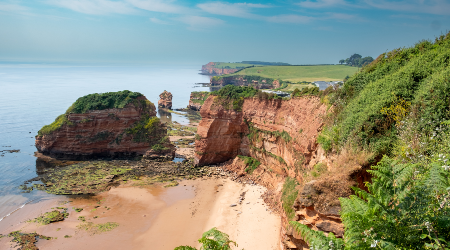
Another of our best coastal drives is along the Devon coast, with red cliffs, sheltered estuaries, thatched villages, and gentle beaches. The road winds through Exmouth, Budleigh Salterton (with its distinctive pebble beach), and Sidmouth, a regency gem with elegant architecture.
You’ll cross the mouth of the Exe Estuary and later pass through Torcross, with Slapton Sands stretching alongside the road.
What to Expect Along the Route
The landscape here is softer than in Cornwall, with rolling green fields meeting the sea and fishing villages tucked into coves. This drive delivers on proximity to water, particularly at Dawlish, where the road runs right beside the beach with waves sometimes crashing over the sea wall in winter. Torcross also puts you directly beside the shingle beach and lagoon.
The Jurassic Coast (England’s only natural UNESCO World Heritage Site) begins at Exmouth, offering 185 million years of geological history. Fossil hunting is excellent at Lyme Regis. Dartmouth Castle has guarded the harbour since the 14th century, while Slapton Sands was used for D-Day rehearsals in 1944.
The Exe Estuary is internationally important for wading birds. Seals are regularly spotted, and dolphins occasionally visit the bay. The red cliffs get their colour from iron oxide in Triassic sandstone—a photographer’s dream at golden hour.
Mapping Your Adventure
Covering around 45 miles from Exeter to Dartmouth, this scenic drive follows the A379. The route meanders through picturesque countryside and coastal villages with beautiful views, though be prepared for narrow sections and passing places, especially in summer.
Devon excels at cream teas, fresh crab, and local cider. The Rockfish in Exmouth and Dartmouth serves excellent seafood, while Otterton Mill near Budleigh Salterton is a working watermill with a lovely café. The Cary Arms at Babbacombe Bay offers upscale dining with spectacular views.
Dawlish and Slapton Sands both have parking near the beach, while Sidmouth’s seafront has ample parking with bay views.
How Long You’ll Need
While you could complete the drive in half a day, it’s worth allowing a full day to stop and explore the charming villages and viewpoints along the way. Taking your time makes the journey far more rewarding.
5. Wales Coastal Road Trip – Pembrokeshire’s Stunning Scenery
Pembrokeshire delivers staggering natural beauty. Cathedral-like sea stacks, sweeping bays, secret coves, and some of Britain’s finest beaches.
St David’s, Britain’s smallest city, has a magnificent cathedral tucked in a hollow. The coastline ranges from gentle sandy beaches to dramatic cliffs where Atlantic waves have carved incredible rock formations.
What to Expect Along the Route
The colours here are remarkable, with turquoise waters that rival the Mediterranean, golden beaches, and wildflower-strewn clifftops.
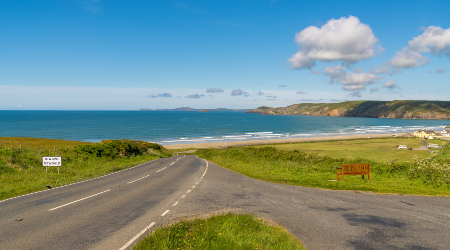
Parts of this route run close to the water, particularly near Newgale, where you’re driving with the surf just metres away. Around the many bays and inlets, the road dips and climbs, offering constantly changing perspectives. While Wales’s best coastal views often require short walks, the driving itself is magnificent, with the sea rarely out of sight.
This is wildlife-watching heaven. Puffins, razorbills, and guillemots nest on islands and clifftops. Ramsey and Skomer Islands (accessible by boat) offer unforgettable seabird encounters. Grey seals are abundant, and between May and September, dolphins and porpoises are regularly seen. Cardigan Bay has the UK’s largest population of bottlenose dolphins.
Mapping Your Adventure
This 90-mile circular drive explores the Pembrokeshire Coast National Park, following the A487 and scenic B-roads. Beginning in Haverfordwest or St Davids, the route winds through dramatic coastal scenery, charming villages, and sweeping sea views.
The Pembrokeshire food scene is excellent. The Shed near Porthgain serves fantastic seafood in a quirky setting, while Café Môr at St Davids has lovely harbour views. The Grove near Narberth is a Michelin-starred restaurant for a special meal.
National Trust car parks are well-maintained at beaches including Marloes Sands, Whitesands Bay, and Barafundle Bay. Book boat trips to Skomer or Ramsey Island well in advance in summer, as spaces are limited.
How Long You’ll Need
Plan for at least two days to truly appreciate the route’s beaches, cliffs, and coastal trails, though a week wouldn’t be too long if you want to explore at a relaxed pace and take in all the highlights.
6. The Antrim Coast Road – Northern Ireland’s Eastern Gem
This dramatic section of the Antrim coast deserves its own entry. The road was carved into the cliffs in the 1830s and offers breathtaking views around every corner.
You’ll pass through the picturesque villages of Glenarm, Carnlough, and Cushendall, each nestled in one of the nine Glens of Antrim.
What to Expect Along the Route
The glens are lush, green valleys cutting down to the sea, creating a landscape unlike anywhere else in the UK. Watersmeet in Cushendall and the distinctive Red Bay are particularly striking.
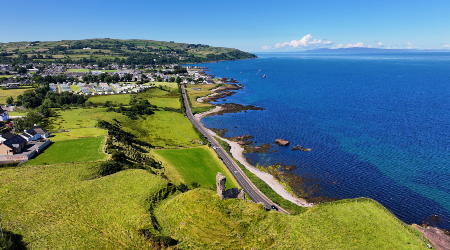
The A2 truly hugs the coast, with just a low wall between you and steep drops to the sea in places. It’s thrilling driving with constantly changing sea views, often just metres from the water’s edge, with waves crashing below.
Glenarm Castle has been home to the McDonnell family for over 400 years. The limestone caves at Cushendun were used as a filming location for Game of Thrones.
The glens host rare plants and wildlife including red squirrels and peregrine falcons. Common and grey seals frequent the coast.
Mapping Your Adventure
Stretching 60 miles from Larne to Cushendun, the A2 Coastal Route offers a stunning drive along Northern Ireland’s rugged coastline. The road winds through charming seaside villages, each with its own unique character, and connects seamlessly with the Causeway Coastal Route for those looking to extend their journey.
Each village has its charms. The Londonderry Arms in Carnlough is a historic coaching inn with excellent food. Lurig View in Cushendall does lovely coffee and home baking. The Antrim coast is less tourist-developed than some areas, which is part of its charm.
Car parks are available in each village, often right by the harbour or beach.
How Long You’ll Need
Allow a full day to enjoy this section at a relaxed pace. Taking time to stop in the villages and admire the sea views makes the experience far more rewarding, especially if you plan to continue toward the Causeway Coast.
7. The North Norfolk Coast Road – England’s Gentle Beauty
North Norfolk offers a completely different coastal experience with vast skies, endless beaches, and that special quality of light that’s attracted artists for generations.
This is a coastline of salt marshes, sand dunes, and traditional seaside towns that time seems to have treated gently.
What to Expect Along the Route
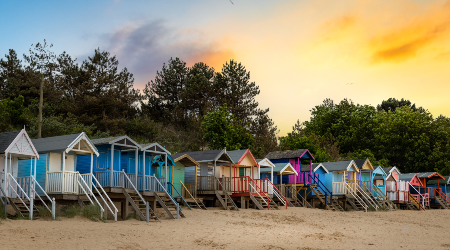
You’ll pass Wells-next-the-Sea with its colorful beach huts, Blakeney’s seal colonies, and Georgian Holt across famously flat landscapes with distant horizons.
The road hugs the coast, sometimes buffered by salt marshes. At Hunstanton, you’ll drive the promenade beside the Wash, while elsewhere short walks lead to the shore. The open landscape offers miles-long views across wetlands to the sea.
Visit Holkham Hall, a magnificent Palladian mansion, Holkham Beach. and Blakeney’s 13th-century Guildhall which reflects its medieval wool-trading wealth.
This Norfolk Coast Area of Outstanding Natural Beauty is crucial for wildlife. Winter brings pink-footed geese, marsh harriers, and spectacular murmurations of thousands of knot. Common and grey seals breed at Blakeney Point, and rare plants like samphire thrive in the salt marshes.
Mapping Your Adventure
You’ll pass through Wells-next-the-Sea, Blakeney with its seal colonies, and Georgian Holt. The famously flat landscape allows uninterrupted views to impossibly distant horizons.
At Hunstanton, you’re right beside the beach, driving along the promenade with the Wash stretching before you. Holkham Hall is one of England’s finest Palladian mansions, set in an estate that includes Holkham Beach, often considered one of Britain’s best.
This is one of Britain’s most important wildlife areas. In winter, you might see pink-footed geese, marsh harriers, and thousands of knot creating spectacular murmurations. Common and grey seals breed at Blakeney Point (accessible by boat), one of the UK’s best places to see them up close.
How Long You’ll Need
Allow a full day, or ideally two, to take it all in at a relaxed pace. Pack binoculars for birdwatching and a jumper for the bracing North Sea breeze, even in summer.
Planning Your Coastal Self-Drive Adventure
Practical Considerations for Your Road Trip
- Vehicle Preparation: Before setting off, check tyre pressure (including the spare), oil, coolant, and windscreen washer fluid. Coastal roads can be narrow and winding, so a smaller vehicle often makes navigation easier.
- Fuel Stations: Rural coastal areas have sparse fuel stations, especially in Scotland and Wales. Fill up when you can rather than waiting until nearly empty.
- SatNav Limitations: GPS can be unreliable in remote areas and occasionally sends drivers down unsuitable tracks. Keep a road atlas as backup.
- Weather Preparation: British coastal weather is changeable. Pack layers, waterproofs, and sunscreen. Check forecasts before heading out, particularly for exposed routes where conditions can be severe.
Our blog about long-distance driving tips might help to make sure you are fully prepared.
Driving Etiquette on Coastal Roads
British coastal roads often narrow to a single track, particularly in Scotland, Cornwall, and Wales. Passing places are marked – pull in when you see one, even if you have right of way, to let traffic flow smoothly. A friendly wave to acknowledge courtesy is standard practice.
Drive to the conditions, not the speed limit. Coastal roads can have blind bends, steep gradients, and unexpected hazards like sheep, cyclists, or agricultural vehicles. In summer, expect slower progress due to traffic, particularly on popular scenic drives.
Mindful driving will lead to a safer, calmer, and enjoyable journey.
Choosing The Best Coastal Drive
Britain’s coastal drives offer something no amount of motorway miles can match – that sense of being on the edge, where land meets sea and the horizon beckons. Whether you choose the wild drama of Scotland’s northern coast, the artistic beauty of Cornwall, or the gentle charm of Norfolk, you’re in for magnificent driving along some of Europe’s best coastal roads.
The key is to slow down. These aren’t routes to rush. They’re journeys to savour, with time for spontaneous stops, leisurely lunches overlooking the water, and moments just standing on a clifftop breathing in the salt air.
Safe travels and enjoy every mile of Britain’s spectacular coastline!
For beautiful woodland landscapes, take a look at Britain’s Enchanting Forest Drives, for autumn colours, the Best Autumn Road Trips in the UK, or head inland to Derbyshire for the Top Three Drives in the Peak District.
This information was accurate at the time of writing.